







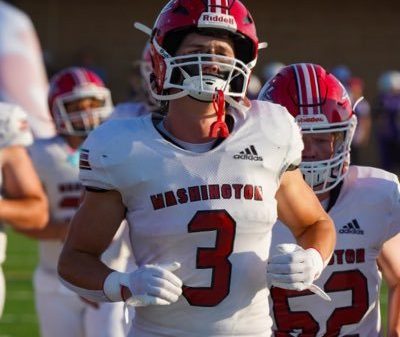

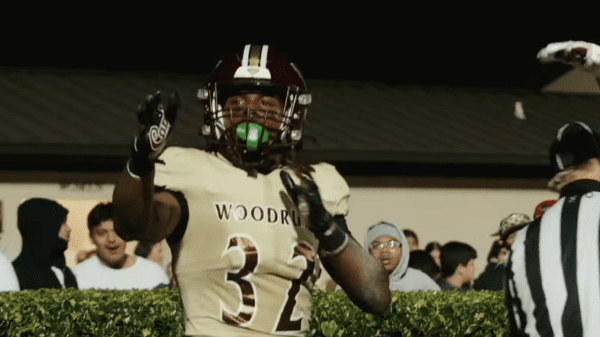


The transfer portal officially closed Friday, bringing a much-needed sense of stability and predictability to Penn State football’s projected 2026 roster.
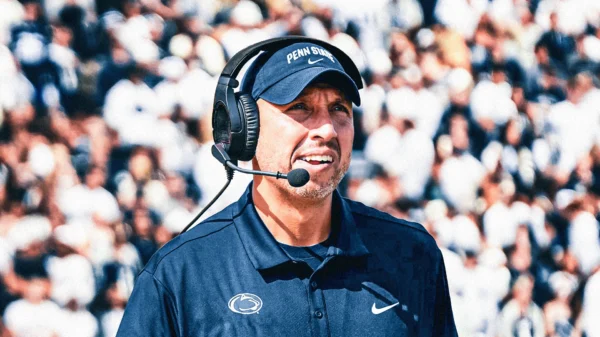
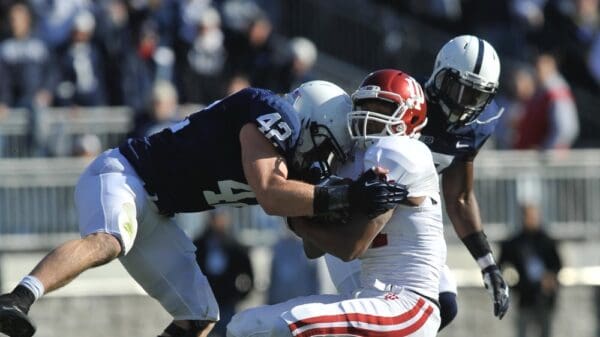
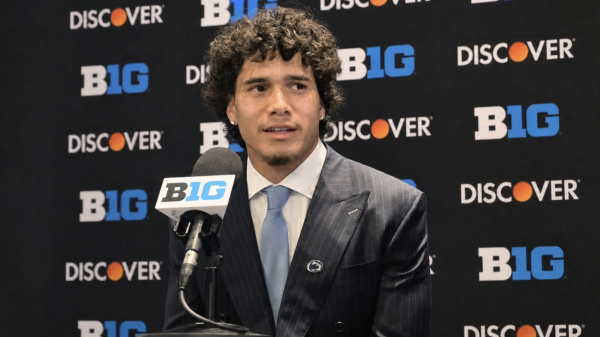
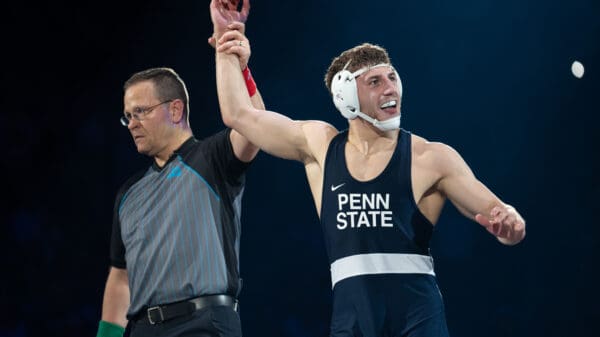
As part of an ongoing series, we are examining the top five players who arrived, who stayed and who the PSU lost during the portal cycle. This installment focuses on the Top 5 players who recommitted to Penn State and avoided the transfer portal, a group that forms the backbone of Matt Campbell’s first roster in State College.
#5 Quinton Martin – RB

Martin made just one appearance running the ball in 2025, but it was a meaningful one. In the Pinstripe Bowl against Clemson, the former five-star running back rushed for 103 yards, averaging 6.4 yards per carry, while forcing multiple missed tackles. His presence immediately unlocked the play-action game, as Penn State averaged more than nine yards per attempt on play-action passes with Martin on the field. With Kaytron Allen and Nicholas Singleton exhausting their eligibility, Cam Wallace briefly entering the portal, and Corey Smith departing, Martin’s decision to stay gives Penn State a high-upside foundational piece at a position of need.
#4 Anthony Donkoh / Cooper Cousins – OL
Donkoh’s return was a major win for new offensive line coach Ryan Clanton. He logged 693 snaps, the most of any returning offensive lineman, and allowed pressure on fewer than 4.5 percent of pass-blocking reps, a strong efficiency mark given his workload. A semifinalist for the Shaun Alexander Freshman of the Year Award in 2024, Donkoh projects as a stabilizing presence.
Cousins, meanwhile, made his first extended appearance in the Pinstripe Bowl and impressed analytically, allowing just one quarterback hurry across 78 snaps, with no sacks or hits surrendered. His performance graded out as Penn State’s most efficient offensive lineman in that game.
 Add Nittany Sports Now as a preferred source in Google! Click here to add us.
#3 Yvan Kemajou / Max Granville – EDGE
With Chaz Coleman’s departure, retaining Kemajou became a priority. Kemajou posted a tackling grade above 70 in seven of eight starts, consistently setting the edge and limiting explosive runs. He averaged 30.6 snaps per game, nearly double Coleman’s usage, while providing stronger run-defense reliability.
Granville’s return is equally important. Though sidelined by a long-term injury, his pre-injury practice metrics and athletic testing placed him among the staff’s highest-upside edge prospects, giving Penn State a valuable developmental piece entering 2026.
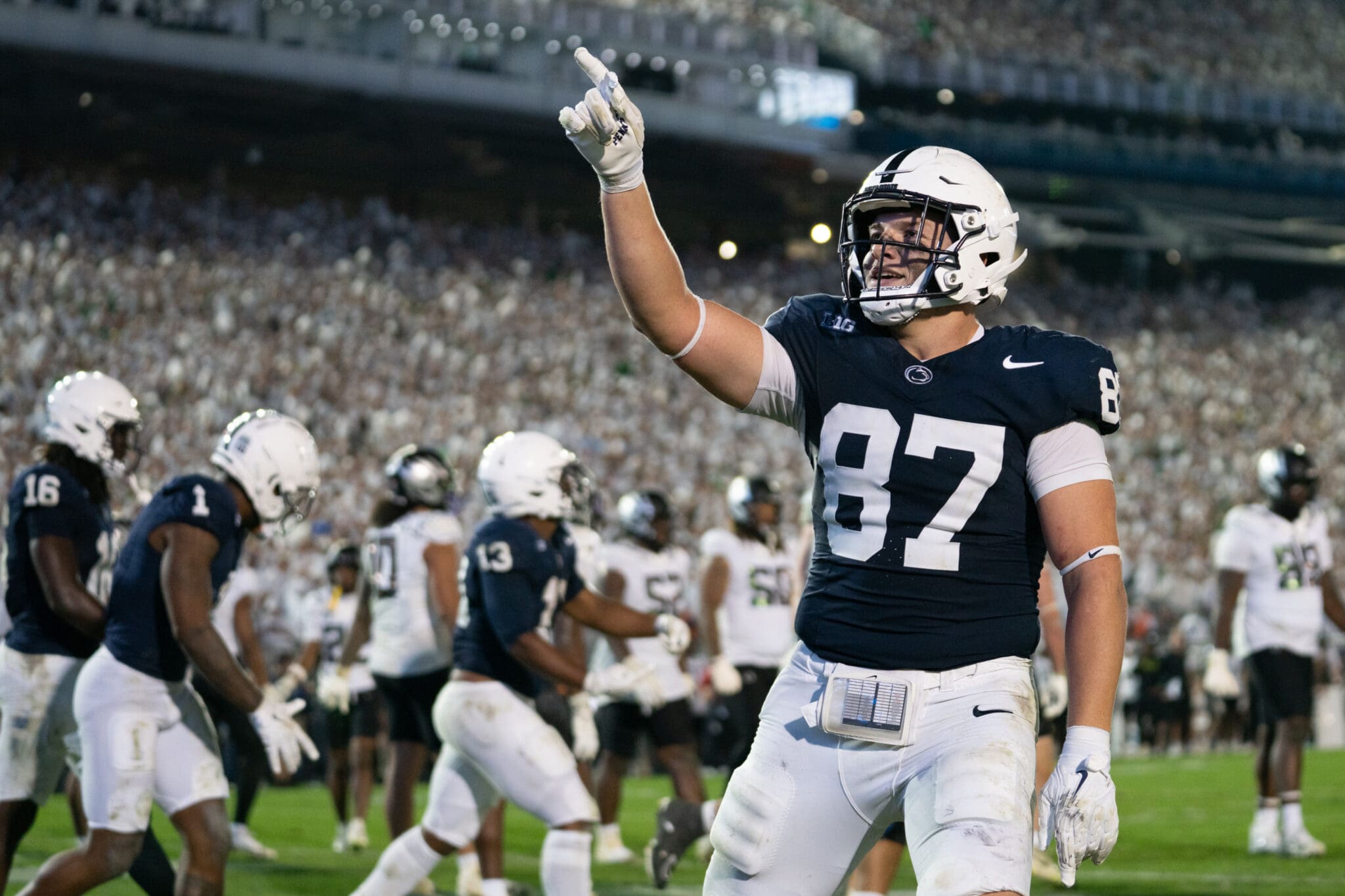
#2 Andrew Rappleyea – TE
By season’s end, Rappleyea emerged as Penn State’s most complete tight end. He led the group in yards per route run and improved his run-blocking grade by nearly 15 points from early season play. His ascension solidified Penn State’s tight end room alongside John Mackey Award semifinalist Benjamin Brahmer.
#1 Tony Rojas – LB
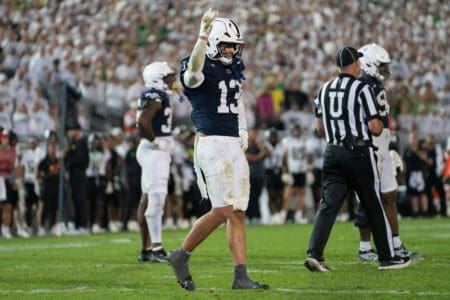
Photo by Matt Lynch, Nittany Sports Now
Rojas’ impact is best illustrated by his absence. Before his season-ending injury, he ranked among team leaders in run stops, coverage snaps, and missed tackle avoidance. Penn State’s rushing defense allowed over 1.2 additional yards per carry after he went down. Rojas’ decision to stay gives Campbell a proven, analytics-backed cornerstone at linebacker entering 2026.