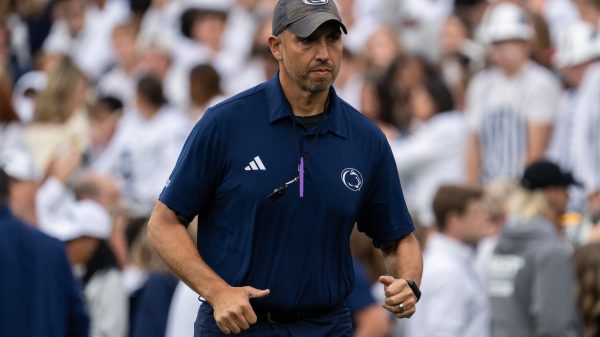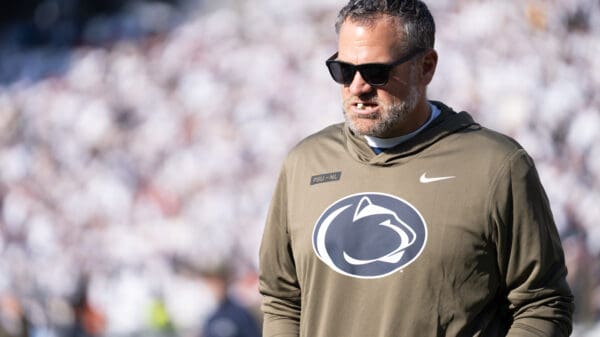

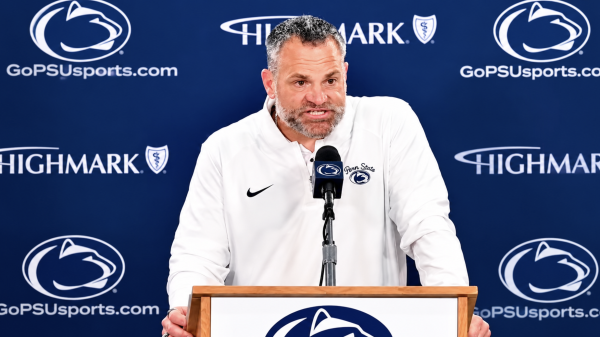
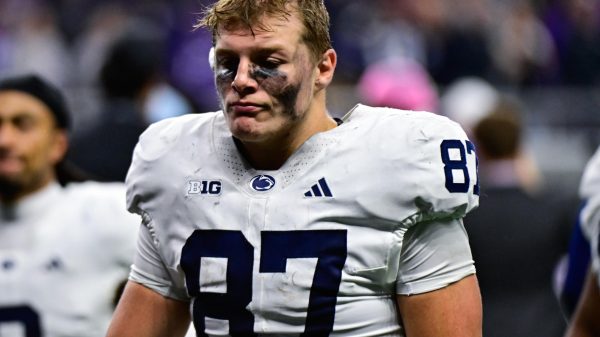







When Matt Campbell arrived at Penn State, tight end Benjamin Brahmer was among the Iowa State players who followed him from Ames to State College.
Brahmer’s arrival is part of a larger transition under Campbell, but the new coach quickly made it clear that Penn State’s past still matters.
One of the first things that struck Campbell was the Letterman Wall inside the Lasch Football Complex. The wall, lined with more than a century of Penn State football history, left an immediate impression on the Nittany Lions’ new head coach.
“This incredible lettermen wall, 2,200 names. You could almost feel goosebumps going down the side of your arms looking at some of these incredible names,” Campbell said when he was introduced as Penn State’s coach.
Brahmer did not transfer to Penn State simply to join a tight end room. He transferred into a standard.
Few position groups have resonated through Penn State history quite like tight end.
Ted Kwalick, whose name is now attached to the Big Ten’s award for the conference’s top tight end, helped define the position in the 1960s. He was the kind of athlete Joe Paterno marveled at, a player who helped set the standard for what the position could become in State College.
In the decades that followed, names such as Dan Natale, Mickey Shuler, Mike McCloskey, Brian Siverling, Troy Drayton and Kyle Brady carried that tradition forward. Brady, notably, was a name Campbell invoked early in his tenure, a reminder that Penn State’s tight end history is not just long, but central to the program’s identity.
Over the last decade, the Nittany Lions have entered a modern tight end renaissance.
Jesse James, Mike Gesicki, Pat Freiermuth, Brenton Strange, Theo Johnson and Tyler Warren all helped shape the position in recent years. Warren elevated that standard even further in 2024, winning the Mackey Award after a record-setting receiving season.
Now, Brahmer is trying to become the next name in that lineage.
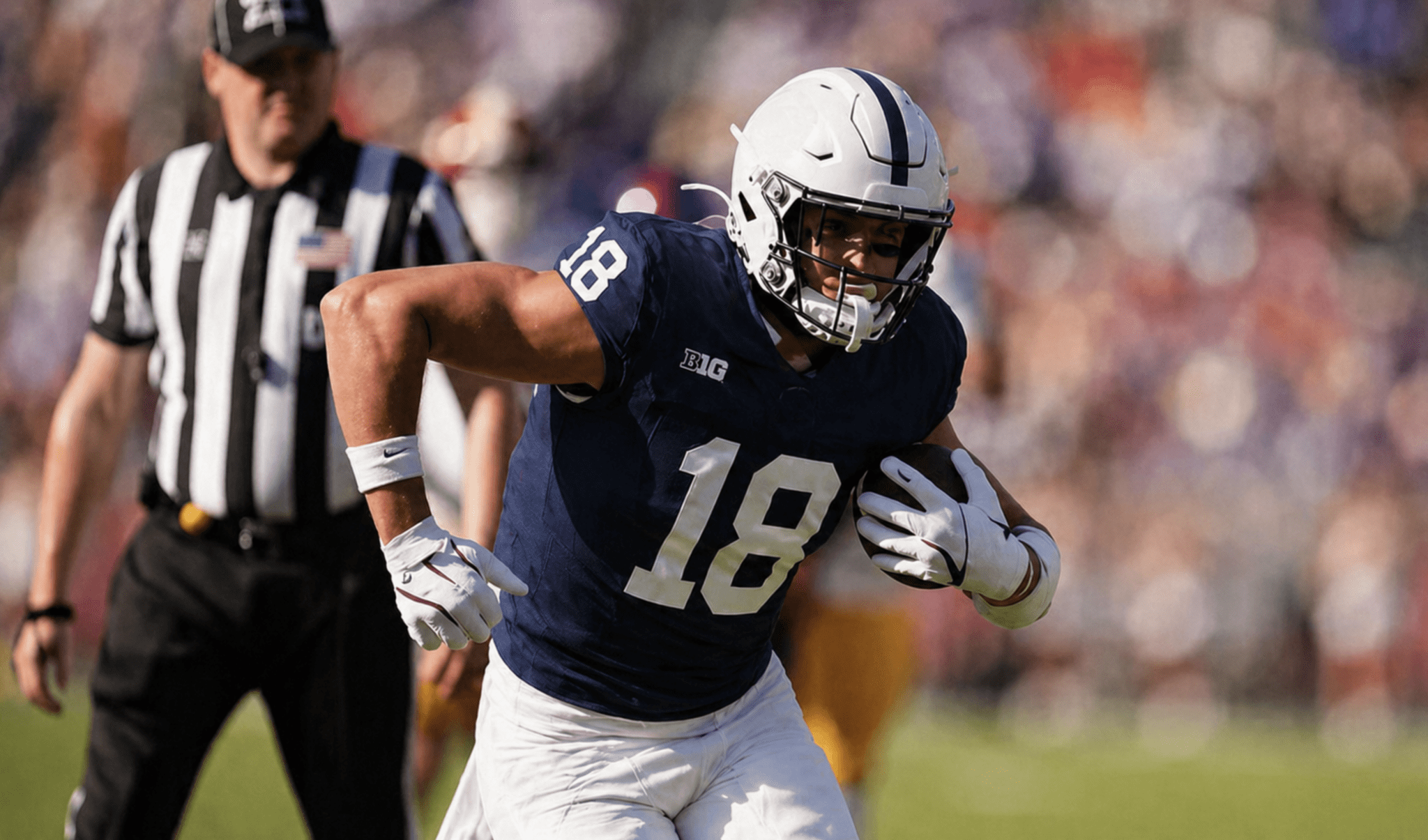
Brahmer, an Iowa State transfer and 2025 Mackey Award semifinalist, arrives at Penn State with both production and familiarity. He followed Campbell and offensive coordinator/tight ends coach Taylor Mouser from Ames to State College, bringing with him a proven track record and a clear understanding of the offensive system Penn State is installing.
He also understands the expectations that come with playing tight end at Penn State.
“I’m really excited to play here,” Brahmer said. “Obviously, the tight end culture here is different. Pat Freiermuth texted me and told me about the standard. It was a really good gesture from him, and now it’s about carrying that standard.”
Brahmer is coming off an excellent 2025 season at Iowa State, where he led the Cyclones in receptions with 37 and touchdown catches with six. He was one of the most reliable pieces in Iowa State’s passing game and established himself as one of the better tight ends in the country.
According to Pro Football Focus, Brahmer ranked 13th nationally among tight ends with at least 250 receiving snaps, earning a 73.3 receiving grade.
That production matters because Brahmer steps into a role at Penn State that could carry significant responsibility.
He gives the Nittany Lions a proven target over the middle, a red-zone option and, perhaps most importantly, a player who already understands the details of Mouser’s system. In a transition year, that familiarity may matter as much as his production.
At 6-foot-7 and 252 pounds, Brahmer gives Penn State a different kind of matchup problem. He can work the seams, use his frame to create throwing windows and become a safety valve for Rocco Becht as the offense continues to take shape.
During Penn State’s Blue-White practice, the full offensive script was difficult to evaluate, but Brahmer was still featured several times in key series and situational periods Campbell wanted to emphasize.
 Add Nittany Sports Now as a preferred source in Google! Click here to add us.
That usage matters for an offense still trying to answer questions in the passing game.
One position group that remains under the microscope is wide receiver. The Nittany Lions’ wide receiver unit has been one of the program’s biggest question marks over the past three seasons, and Campbell’s staff will be tasked with unlocking more consistency and explosiveness from that group.
Brahmer will be part of that solution, but he will not be alone.
Brett Eskildsen and Chase Sowell also came with him from Iowa State. Together, Brahmer, Eskildsen and Sowell accounted for 47% of Iowa State’s receptions, 55.4% of its receiving yards and 81.3% of its touchdown catches last season. Their familiarity with the offense should help Penn State’s transition, while younger receivers such as Koby Howard and others continue to develop.
Brahmer has already seen encouraging signs from the wide receiver room this spring.
“The talent level really stood out,” Brahmer said. “They’ve grown a lot this spring, especially from a character standpoint. Even if they don’t get the ball on a play, they’re running as hard as they can on the route because they know it can affect me or another receiver. Seeing them grow in that area has been awesome.”
The tight end room itself could also become one of Penn State’s deeper groups once fully healthy.
Andrew Rappleyea and Gabe Burkle continue working back from injuries, but the spring gave others in the room an opportunity to earn reps and show where they fit in the offense. Brahmer pointed to that depth as one of the encouraging developments coming out of spring practice.
“It really just instills confidence in us because we know we’re a deep group,” Brahmer said. “The guys who were working a lot today, Finn Furmanek, Brian Kortovich and Cooper Alexander, had a great showing. To see them work that hard and grow a lot in the new offense was special.”
Brahmer also emphasized the competitive edge inside the room.
“It’s a deep room,” Brahmer said. “We’ve got six guys in there, and everybody has been working.”
That group is being led by Mouser, who serves as both offensive coordinator and tight ends coach. Mouser’s first season running Iowa State’s offense in 2024 was historic. The Cyclones finished 11-3, reached double-digit wins for the first time in program history and advanced to the Big 12 Championship Game after going 7-2 in conference play.
His work with tight ends also earned him national recognition, as FootballScoop named him its 2025 Tight Ends Coach of the Year.
For Brahmer, this is now his third season in Mouser’s system. That familiarity should help him become a stabilizing presence for Penn State’s offense, especially as the Nittany Lions adjust to a new staff, new terminology and a new offensive identity.
Brahmer described the mindset of the offense in blunt terms.
“It’s a knockdown, drag-out mindset,” Brahmer said. “He’s going to yell in your face. The guys in our offense are aligning with that mindset right now, and it’s been really good this spring.”
Penn State already has the tight end standard. Brahmer did not come to State College to learn what it is.
He came with a chance to extend it.