








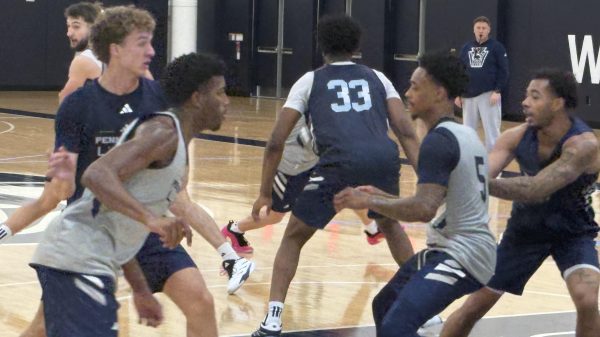













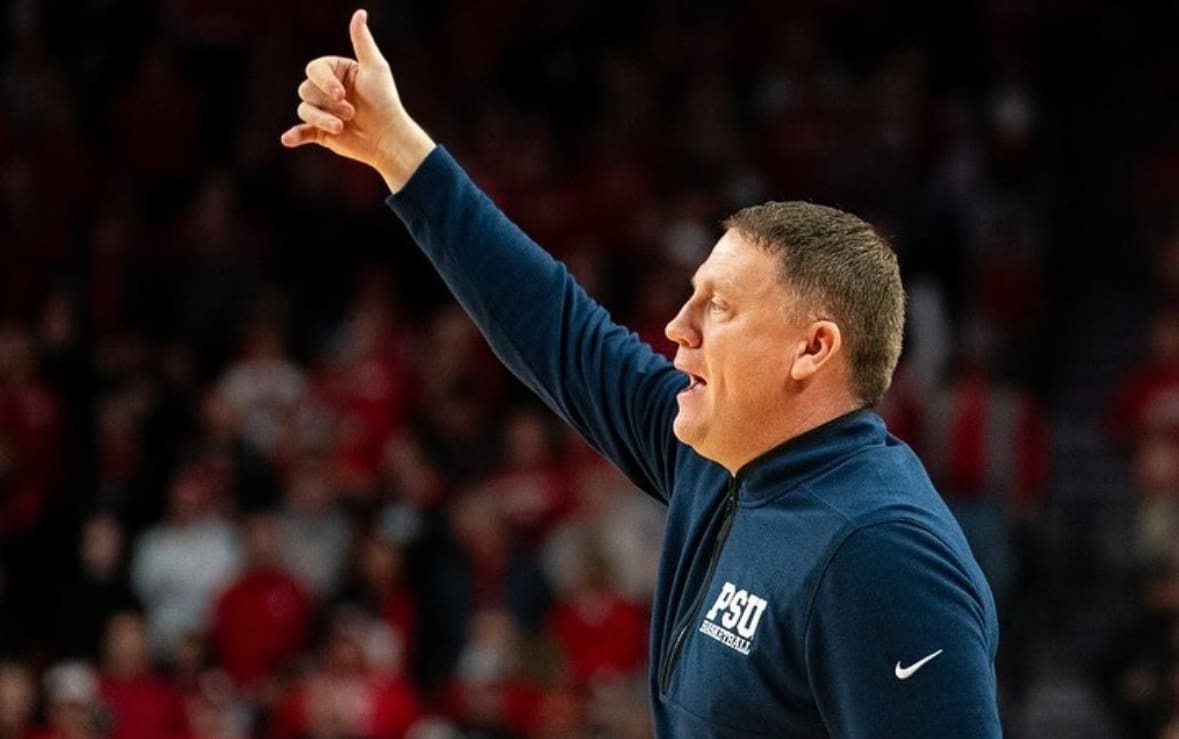
Penn State head coach Mike Rhoades is not one to switch up his defensive coverages. In fact, Rhoades’ pressing, man-to-man defensive philosophy is such a staple that his recent deployment of a zone scheme has been an adjustment for Nick Kern Jr.
“I haven’t played zone all up until now my senior year” the senior forward said following an 80-72 win over Rutgers on Monday. While that is not all true (Penn State had 89 possessions of zone defense last season), the frequency with which the Nittany Lions have used zone defense recently has stood out.
PENN STATE BASKETBALL AND ZONE DEFENSE
Per Synergy Sports tracking data for the 2024-25 season, PSU has already logged 75 possessions of zone defense through 19 games. That total is only 14 less than Penn State’s 89 all of last season and is the third most a Rhoades team has used zone since his 2017-18 VCU squad (79 possessions). Even more noteworthy is that 50 of the 2025 Nittany Lions’ zone defensive possessions have come within the last three games against Oregon, Michigan State and Rutgers. Those three opponents shot a combined 17-for-43 (39.5%) against Penn State’s zone and scored 42 points on 50 possessions (.840 points per possession).

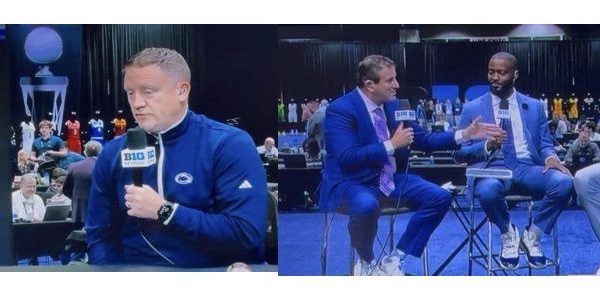
Mike Rhoades coaching from the sidelines. (Penn State Athletics)
“You wish you could throw your fastballs all the time and we wish we could play man-to-man,” Rhoades said following his team’s win on Monday.
“… but sometimes you just got to throw a change-up and you know, I’ve always had this zone in our back pocket. We’ve used it other places I’ve been as a change-up or just to get the other team to not score so quickly or feel good about it. And today (against Rutgers) what had happened was it stopped them from getting downhill and they were throwing it back and forth around the horn.”
 Add Nittany Sports Now as a preferred source in Google! Click here to add us.
A change-up is the appropriate way to describe how Rhoades utilizes zone defense. Even though the last three games have displayed more zone than the previous 16 contests in aggregate, 142 of Penn State’s defensive possessions over that same stretch have been man-to-man coverage (for the season, man-to-man has been used 93.9% of the time by Rhoades). The default will always be to apply pressure in both the full and half court (fastball), but by switching to a zone (curveball) momentarily, a team’s rhythm can be thrown off.
HAVE YOU SEEN ZONE RECENTLY?
Against Oregon, the Ducks shot 5-for-11 against the zone but made only two of their first eight field goal attempts when the switch occurred. At Michigan State, PSU was in a zone for 28 possessions — the most all season for a single game — and held the Spartans to 10-of-24 shooting while forcing three turnovers. Against Rutgers, the Scarlet Knights were 20-for-37 (54.1%) against PSU’s man defense but went 2-for-8 (25%) against the zone. The shift in coverage played a role in Penn State running off 11 straight unanswered points in the second half, guiding the Nittany Lions to a much-needed conference win.
“We got to keep drilling it so they have a clear understanding of what we want out of a two-three,” Rhoades said during his media availability on Wednesday.
“And, I kid about the two-three because everybody knows I love playing full-court man-to-man … But as a coach, you got to make adjustments that’s going to help your team win the game.”
Rhoades isn’t shy from making adjustments and given the success the two-three zone has had, it seems that another tool has been added to the Penn State defensive belt.