














Talking about attendance isn’t exactly my favorite subject.
Too often, somebody takes a picture of an empty section and puts an entire fan base on trial.
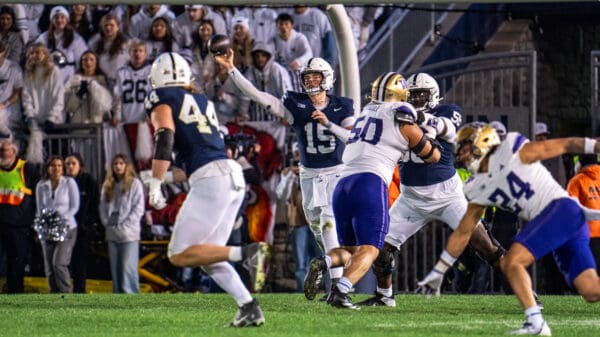
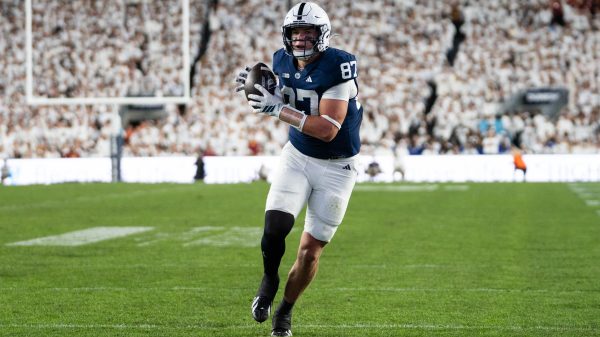
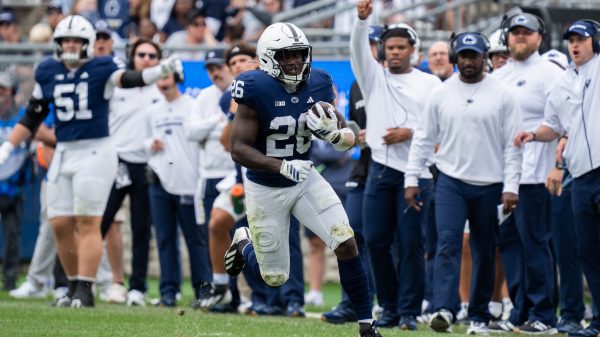
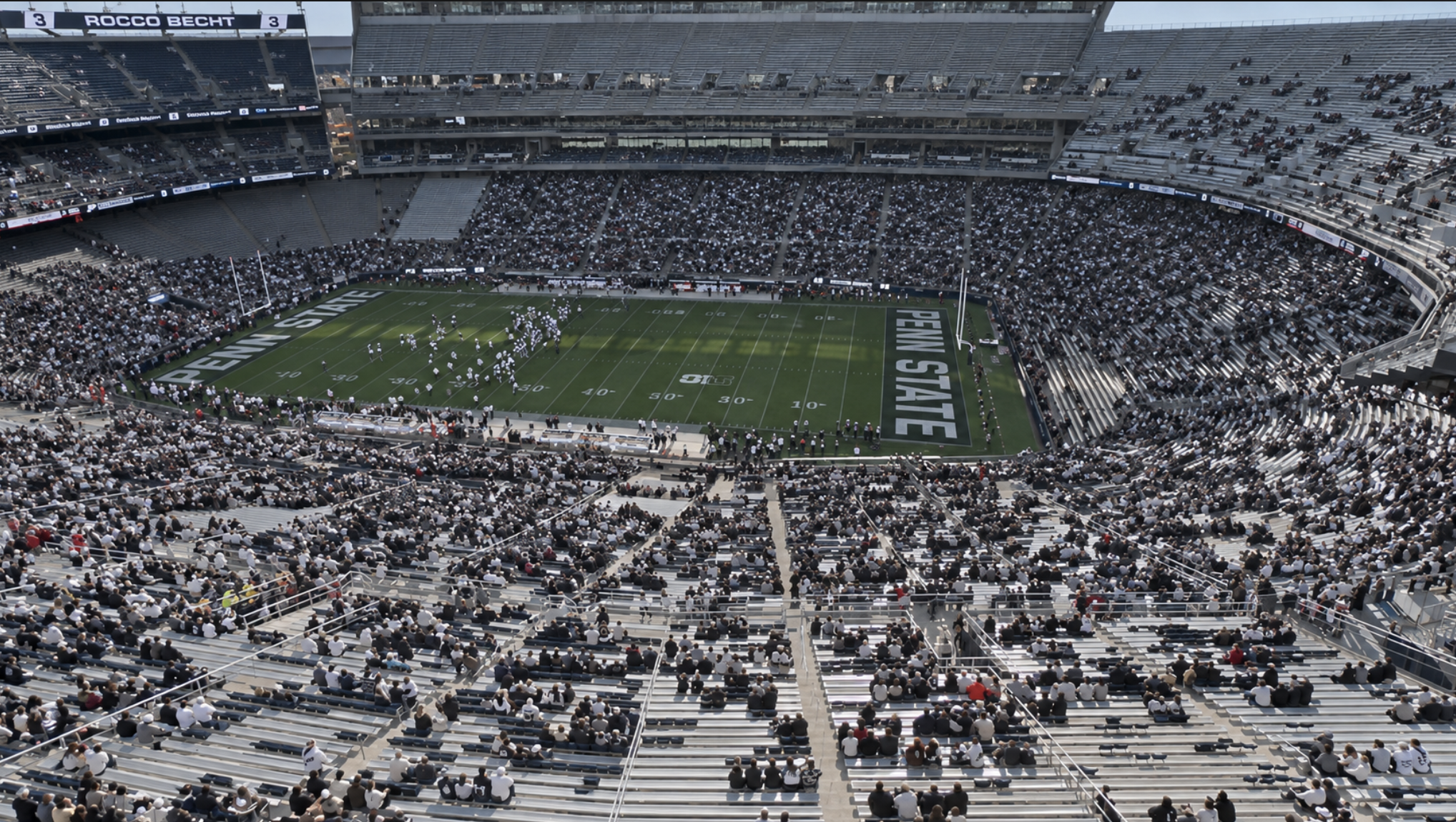
But Halloween gave us one of the more beautiful late-season nights you could ask for at Beaver Stadium. Penn State beat Purdue 31-17, and for much of the game I kept thinking about how many people had decided to do something else.
The announced attendance was 102,041. By Penn State standards, the place looked sparse. Three weeks earlier, after the Nittany Lions had already lost their first two Big Ten games, a stadium-record 114,419 showed up for USC. By Purdue week, two conference losses had become four, and Penn State was fighting to qualify for a bowl. Maybe some folks were disgusted with what they’d seen. Maybe taking the kids trick-or-treating sounded better. I can understand either decision.
Penn State has company. UCLA has undergone a football rebirth, yet only 33,757 came to the Rose Bowl to watch the Bruins beat Michigan State and improve to 7-0. Across town, USC celebrated selling out the Coliseum for Ohio State. Maryland offered students a chance to win spring tuition if they stayed into the fourth quarter against Illinois. The stands still looked awfully spartan.
Around Penn State, athletic director Pat Kraft might be one of the least popular figures in any conversation about what it costs to be a fan. He’s the unfortunate face of college football’s push to make money from every corner of a stadium, and he needs that money to keep Penn State competitive. But as schools ask more of their customers, those customers are getting choosier. Here are five reasons why.
We Lost The Neighbors.
This isn’t a new revelation.
When Penn State got rebuffed by the Big East back in the 1980’s and eventually became the Big Ten’s easternmost outpost in 1990, geography was no longer Penn State’s friend for foes.
Gone were the eastern independents of Pitt, West Virginia, Syracuse, Boston College, and Temple that were all commutable to more difficult locations in the midwest to schools like Iowa, Minnesota, Wisconsin, Illinois, and Northwestern.
But Penn State grew into it, but the thing that changed throughout college football is so did the sport.
The cannibalization of the original Pac-12 sent schools across various Power 4 conferences. Texas and Oklahoma defecting to the SEC turned the Big XII into a national conference a model the Big Ten emulated in their contribution to the demise of the Pac-12 that saw USC, UCLA, Oregon, and Washington join the league.
Regionality made college football what it is but that loss is starting to be felt now more than ever.
Some Conferences Get The Benefit of the Doubt.
Put a one-loss SEC team next to a one-loss Big 12 team and listen to which one has to explain itself.
In my view, the Big Ten and SEC start every August with an advantage in the rankings and the playoff conversation.
The ACC and Big 12 get treated as second-tier leagues. The Group of Six might as well have its own standings.
If a fan is going to spend all Saturday watching a conference race, it helps to believe winning that race will count for something.
Penn State has the benefit of being in the Big Ten, but at some point it will be pitted against one of the other teams and you know part of the argument will be what conference Penn State plays in.
Somebody Please Let The Band Play.
I go to a college football game to tailgate, watch football and hear the marching band.
 Add Nittany Sports Now as a preferred source in Google! Click here to add us.
One of my favorite sounds at Beaver Stadium is the crowd catching on to what the Blue Band is playing. That requires being able to hear it.
Between the blaring recorded music of the same five songs it seems, sound effects, flashing lights and a PA announcer who sounds winded trying to get everybody excited, when does the crowd get a turn?
Give me a third down and trust the people who bought tickets to know what to do.
The Playoff Has Swallowed The Bowl Chase.
Expanding the playoff gave more teams a shot. Somehow, it also made the rest of the schedule feel smaller.
Penn State getting its first conference win against Purdue mattered to the players who spent October trying to get one. It ought to matter to fans, too.
But after months of hearing every Saturday discussed in terms of the playoff bracket, nobody should be surprised when a family decides a game for bowl eligibility can go on the television versus making a trek to Beaver Stadium.
It’s Harder To Get Attached To Players You Barely Know.
I don’t begrudge a backup finding a place to start. I do miss knowing who was behind the senior on the depth chart and looking forward to seeing him win the job.
When half a roster changes, try naming 10 guys without checking your phone. Then think about how many jerseys in those stands have a story attached to them. Those stories take time.
Penn State watched a failed coaching search gut a roster and leave Matt Campbell in a very tight window to fill a roster that included many from his previous stop at Iowa State and from other schools leaving fans wondering who are these guys?
Give fans some stability. Put familiar opponents back on the schedule. Give more leagues a fair shake, let the band finish a song and give people time to get to know the kid wearing their favorite number.
Penn State already knows how to fill Beaver Stadium for USC.
The harder job, and the one worth doing, is making people want to come back for Purdue.