
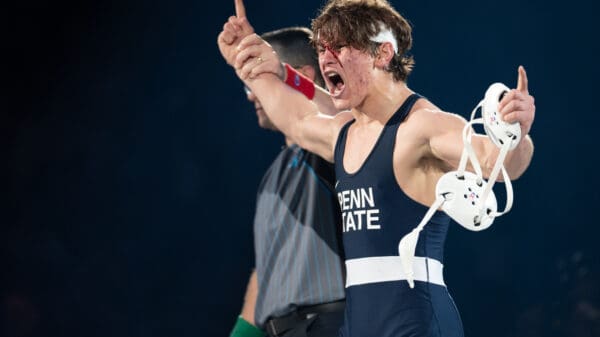
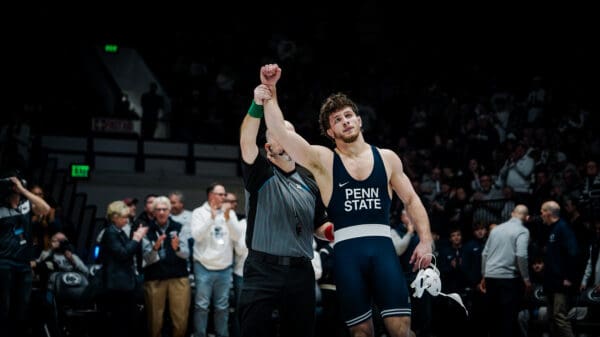










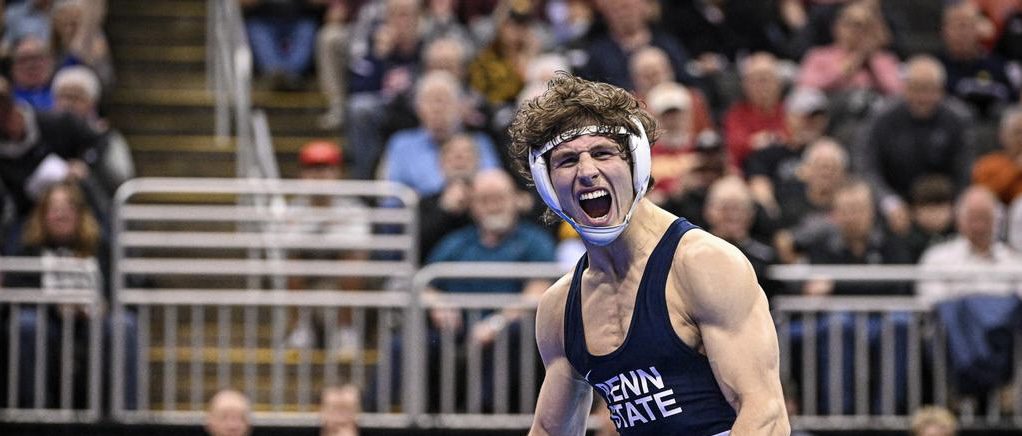
The biggest surprise that came out of the pre-seeds for the Big Ten Wrestling Championships was that Penn State star Levi Haines wasn’t the No. 1 seed at 174 pounds.
‘I Can’t Explain It’: Penn State Wrestling HC Puzzled by Levi Haines’ Seeding
Haines won Big Tens last year at 174 and won it the previous two seasons at 157.
This season, Haines is the top-ranked wrestler in the country at 174 pounds, coming into the postseason 18-0 with an 84.2% bonus point rate.
Yet somehow, when the Big Ten announced its pre-seeds for the wrestling championships Monday, Nebraska’s Christopher Minto was the top seed at 174, with Haines being behind at No. 2. But these were just the pre-seeds, and when the coaches met Friday afternoon, it was decided that Haines would be No. 1.
So how does the seeding system work?
 Add Nittany Sports Now as a preferred source in Google! Click here to add us.
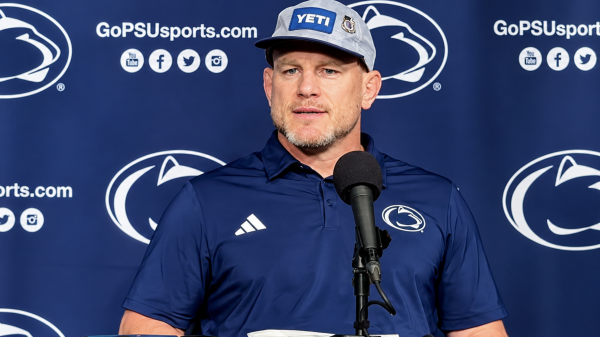
Rutgers coach Scott Goodale explained it to reporters on a Zoom call earlier this week.
“We went to WrestleStat. It’s an algorithm that spits it out,” Goodale said. “There certain categories. There’s head-to-head, conference allocation, whether you (a school) qualified the weight or not (for the NCAA Tournament). There’s Big Ten record and you get a certain amount of points each area – common opponents, there’s a coaches’ rank. There’s RPI, quality matches and then there’s a conference dual record.
“There’s a bunch of weights where there’s some guys within 15 points (of the wrestler directly in front of them) and some head to heads, too,”Goodale said. “Last year, you had to be within three points, which never really happened. This year, there’s a lot more of these that will be brought up for sure.”
Penn State has seven No. 1 seeds: Luke Lilledahl (125), Marcus Blaze (133), Shayne Van Ness (149), Mitchell Mesenbrink (165), Haines, Rocco Welsh (184) and Josh Barr (197).