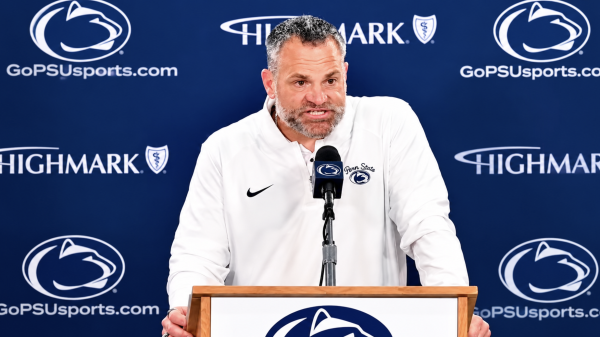


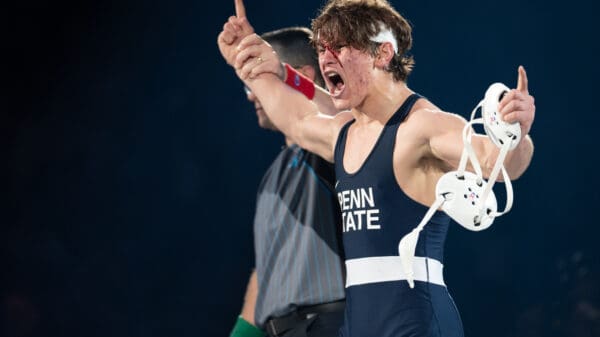
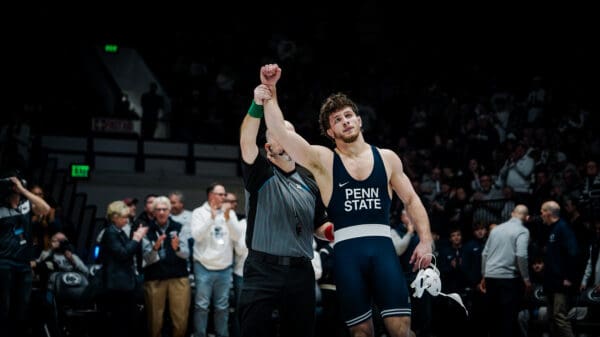
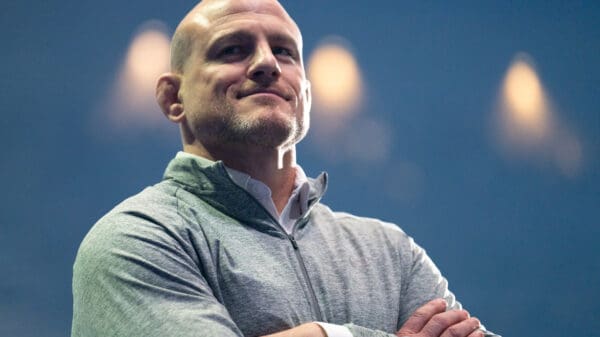
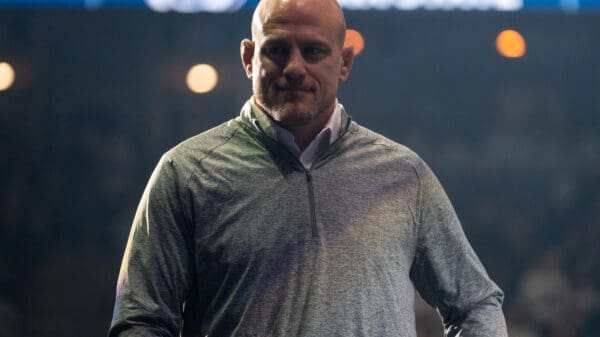
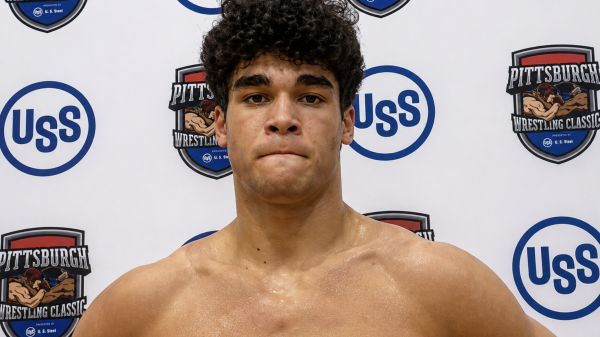

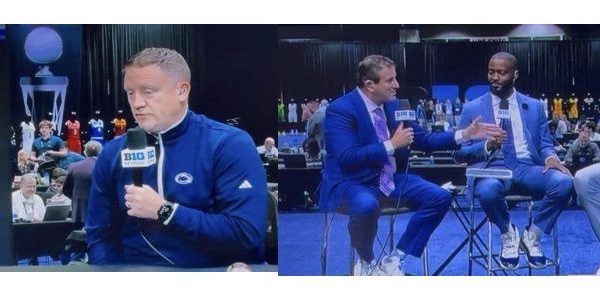

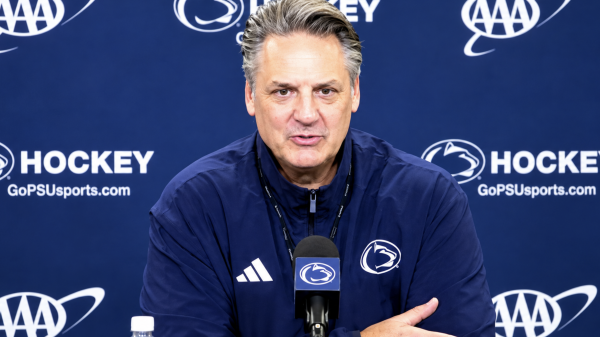





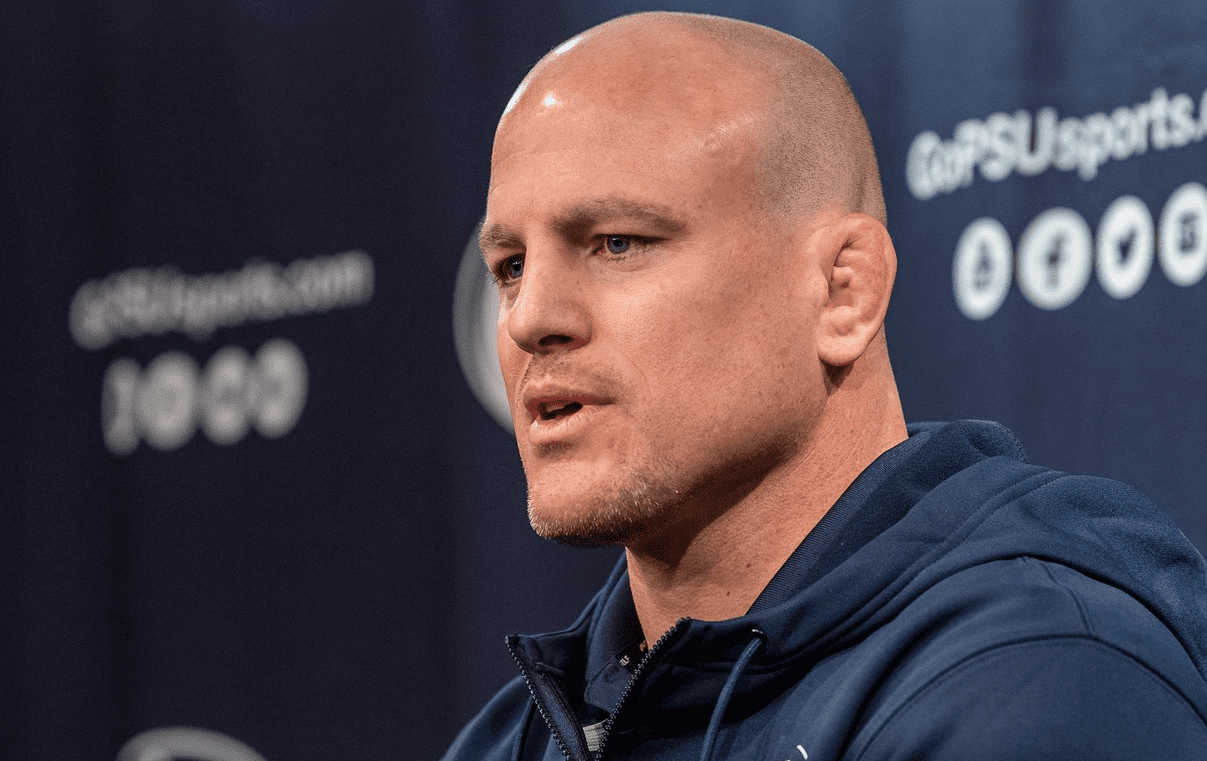
As the postseason begins in Big Ten Conference wrestling, Pennsylvania State coach Cael Sanderson met with media Monday afternoon to outline his team’s mindset, conditioning and reaction to several major storylines including the controversial pre-seeding of star wrestler Levi Haines.
Penn State Wrestling: Former National Champ not No. 1 Seed in Shocking Decision
Frustration Over Haines Seeding
Sanderson didn’t hide his confusion regarding the tournament seeding process that placed Haines behind competitors despite his résumé.
“I can’t explain it,” Sanderson said, noting coaches previously handled seeding themselves.
He suggested reliance on a third-party system lacked the “common-sense application” necessary for a sport as nuanced as wrestling. Sanderson emphasized that head-to-head results and undefeated records should carry obvious weight, adding that many matchups now scheduled for early rounds feel like they belong later in the tournament.
Despite the frustration, he stressed the team will focus on competing regardless of bracket placement.
Conditioning Remains a Penn State Strength
If there’s one area where Sanderson expressed full confidence, it was conditioning. He said Penn State’s preparation has positioned it well for the grueling conference tournament.
“Our guys are always in top shape,” he said. “Conditioning gives them confidence.”
Sanderson described the program’s approach as a year-round plan blending physical work with mental preparation, noting that one can’t exist without the other. For him, physical readiness fuels mental toughness a philosophy that has become a hallmark of Penn State’s dominance.
Mental Preparation and Perspective
Sanderson highlighted consistency of mindset as critical entering high-stakes competition. Wrestlers are encouraged to maintain perspective regardless of circumstances, executing technique under pressure rather than simply drilling it in practice.
 Add Nittany Sports Now as a preferred source in Google! Click here to add us.
“It doesn’t do any good to drill technique if you aren’t willing to execute it in a match,” he said.
Remembering a Coaching Legend
The session also took an emotional turn as Sanderson reflected on the passing of legendary coach Bobby Douglas, who had a profound influence on his career.
Sanderson called Douglas “the perfect coach” and credited him as a mentor whose technical innovations remain embedded in Penn State’s system. He praised Douglas for his calm demeanor, respect for athletes, and lasting impact on Olympic and collegiate wrestling.
“His legacy will live on forever in the sport,” Sanderson said.
Douglas was Sanderson’s coach at Iowa State with Sanderson succeeding Douglas in 2006 after the coach spent 15 seasons in Ames.
Staff and Wrestler Contributions
Sanderson also highlighted the impact of assistant coach and former Penn State individual national champion Nick Lee, describing him as a passionate leader unafraid to share ideas despite being early in his coaching career. He noted that athletes trust Lee and respond to his competitive mindset.
International standout Masanosuke Ono was praised for bringing energy and confidence to the room, particularly in high-pressure moments. Though limited folkstyle opportunities have delayed his integration, Sanderson expects him to be a major factor moving forward.
Mesenbrink’s Unique Personality
Sanderson also offered a glimpse into the personality of 165-pound standout Mitchell Mesenbrink, describing him as a creative, intellectually curious athlete passionate about music, philosophy, and psychology.
“He just loves life,” Sanderson said, noting Mesenbrink’s enthusiasm and wide-ranging interests make him a unique presence on the team.
With the Big Ten Wrestling Championships looming, Sanderson’s message was clear: despite controversy and distractions, Penn State remains focused, conditioned, and mentally prepared for another postseason run, trusting that performance on the mat will ultimately settle any debates.