






























The fiscal year 2025 financial snapshot for Penn State athletics, submitted to the NCAA last week, reveals a department navigating record revenue, escalating expenses, and a rapidly evolving college sports landscape. The report illustrates both the enormous earning power of elite programs and the mounting costs required to remain competitive at the highest level.
1. Record Revenue But Only a Razor-Thin Profit
Penn State generated a record $254.9 million in total revenue, a roughly 15% increase year over year. However, expenses nearly matched that figure at $254.6 million, leaving the department with a net profit of just $223,679 essentially breaking even despite historic income.
One unusual expense was severance obligations, including payments to former football head coach James Franklin. Penn State paid $1.1 million toward his $9 million separation agreement during the fiscal year.
Overall, only three sports operated at a profit: football, men’s basketball ($836,943), and men’s ice hockey ($268,659). Meanwhile, the university’s most dominant program competitively in men’s wrestling operated at a loss of more than $2.5 million, underscoring the financial challenges faced by Olympic sports.
2. Football Remains the Financial Engine
Football continues to drive the department’s finances, producing $146.8 million in revenue, which accounted for about 57% of total athletic income. With expenses of $89.2 million, the program generated a staggering $57.6 million surplus, effectively subsidizing most other sports.
Football’s dominance is also evident in ticket sales. Of the $50.4 million generated in total ticket revenue, football accounted for $44.3 million, or approximately 89% of the total.
3. Media Rights and Donations Drive Income
Penn State’s largest revenue streams came from three primary sources:
- Contributions: $64.6 million
- Big Ten media rights: $58.5 million
- Ticket sales: $50.4 million
After football, men’s ice hockey produced the second-highest ticket revenue at $2.3 million, followed by men’s basketball and wrestling at $1.7 million. Among women’s programs, volleyball led the way with $202,374 in ticket sales, reflecting strong fan support despite smaller venues.
 Add Nittany Sports Now as a preferred source in Google! Click here to add us.
4. Expenses Are Skyrocketing Especially Salaries
Personnel costs remain the department’s largest expense category. Spending included:
- Coaching salaries and benefits: $43.5 million
- Support staff compensation: $41.1 million
Scholarships, facility debt service, NIL revenue sharing, and game-day operations also represent significant expenditures, highlighting the rising cost of competing in modern college athletics.
Penn State distributed $18.4 million in NIL-related revenue sharing about 90% of the allotted $20.5 million cap. Football athletes received the largest share at $13.34 million, followed by men’s basketball at $3 million, driven largely by television exposure and ticket demand.
Wrestling ranked third at $1.45 million, while women’s basketball received the largest share among women’s programs at $110,000.
5. Debt and Revenue Sharing Will Shape the Future
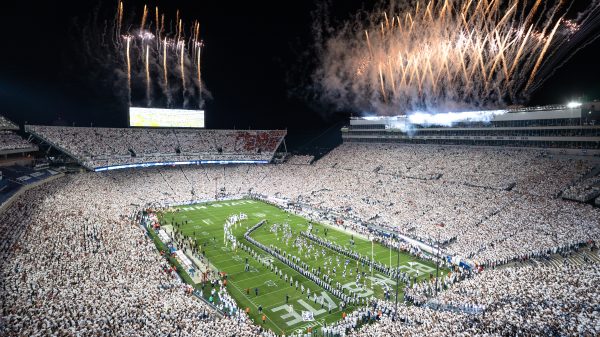
Penn State reported $534.7 million in total debt, primarily tied to the ongoing renovation of Beaver Stadium. The project aims to modernize the historic venue, add premium seating, and transform the facility into a year-round destination capable of hosting concerts, conferences, and major events.
Athletic department leaders anticipate that expanded premium experiences and increased event usage will help recoup much of the investment over the next decade.
Bottom Line
Penn State athletics is generating more revenue than ever before, but rising operating costs, facility debt, and athlete compensation are tightening margins. The 2025 report reinforces a central reality of major college sports: financial stability still depends heavily on football, while the price of maintaining national prominence continues to climb.