









Penn State hockey’s recruiting momentum is no longer just about landing strong college players.
It is about landing NHL-caliber talent.
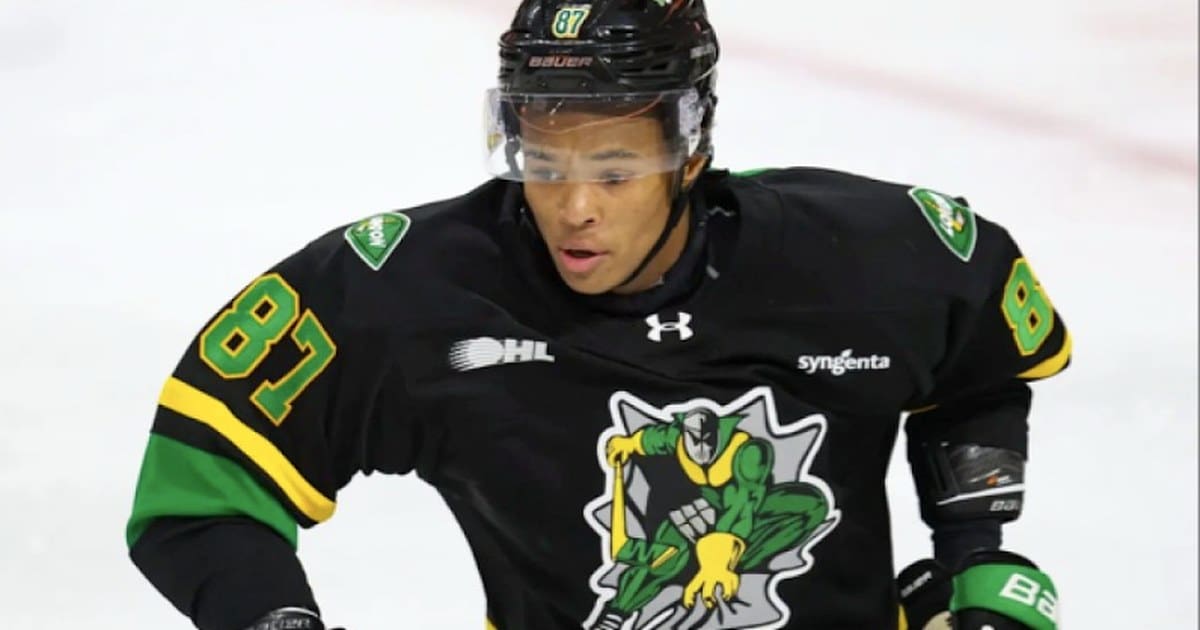
That is what makes Jaxon Cover’s presence at the 2026 NHL Scouting Combine so meaningful for the Nittany Lions. Cover, a Penn State commit and 2026 NHL Draft prospect, will get another opportunity to be evaluated by NHL clubs as teams continue sorting through one of the more intriguing players in the draft class.
Cover is not a typical prospect.
The London Knights forward was born in Miami, Florida, raised in the Cayman Islands and first developed through inline hockey before eventually making the transition to high-level ice hockey in Canada. That background makes him one of the more unusual players in the 2026 class, but it also helps explain what makes his game so interesting.
Cover plays with creativity, deception and natural puck skill. He is not simply a straight-line winger who wins by playing heavy. His inline hockey background shows up in his hands, lateral movement and confidence attacking defenders one-on-one.
At 6-foot-1 and around 185 pounds, Cover also has the frame NHL teams can project on. He is not just a small-skill prospect who needs everything to go perfectly. He has the size to become more than a perimeter player if his physical game continues to develop.
That is what NHL teams will be trying to gauge at the combine.
The tools are obvious. The projection is exciting. The question is how quickly Cover can put everything together.
Cover produced 20 goals and 32 assists for 52 points in 67 games with London during the 2025-26 season. For a first-year OHL player on one of junior hockey’s premier programs, that production matters. It also explains why NHL teams are interested and why Penn State’s commitment is so intriguing.
His offensive game starts with his hands. Cover can beat defenders with skill, create space with lateral movement and make plays off the rush. He has enough creativity to become a dangerous transition winger, and his shot gives him legitimate scoring upside. He is not merely a setup player. When he gets clean looks, he can finish.
Cover’s power-play potential is also important. He has shown the ability to work into dangerous areas, use his release and create offense in structured situations. That skill set should fit well at Penn State, where Guy Gadowsky’s system has long rewarded players who can play with pace, generate volume and turn offensive-zone possession into pressure.
 Add Nittany Sports Now as a preferred source in Google! Click here to add us.
But the combine will also be about answering questions.
The concern with Cover is not talent. It is refinement.
Because he is still relatively new to high-level ice hockey compared with many draft peers, his game can still look raw. NHL teams will want to see how he tests physically, how he handles interviews and how well he explains his development path. They will also be evaluating whether he can continue improving his details away from the puck, his shift-to-shift consistency and his ability to use his size more effectively.
That is where Penn State could be an ideal fit.
Cover’s game should benefit from a development environment that allows him to play fast, attack offensively and keep building confidence while also demanding more structure. If he reaches Hockey Valley for the 2027-28 season, he could arrive as a drafted NHL prospect with a skill set that fits Penn State’s identity.
For the Nittany Lions, Cover represents the type of upside swing that can change a recruiting class.
He is not a finished product, and that is part of the appeal. His background, frame, puck skill and offensive creativity give NHL teams something to dream on. If his development curve keeps climbing, Cover has the tools to become one of the more fascinating long-term bets in the 2026 NHL Draft.
For Penn State, his trip to the scouting combine is another sign of where the program is headed.
The Nittany Lions are no longer just recruiting players who can help them win Big Ten games.
They are recruiting players NHL teams are watching closely.