









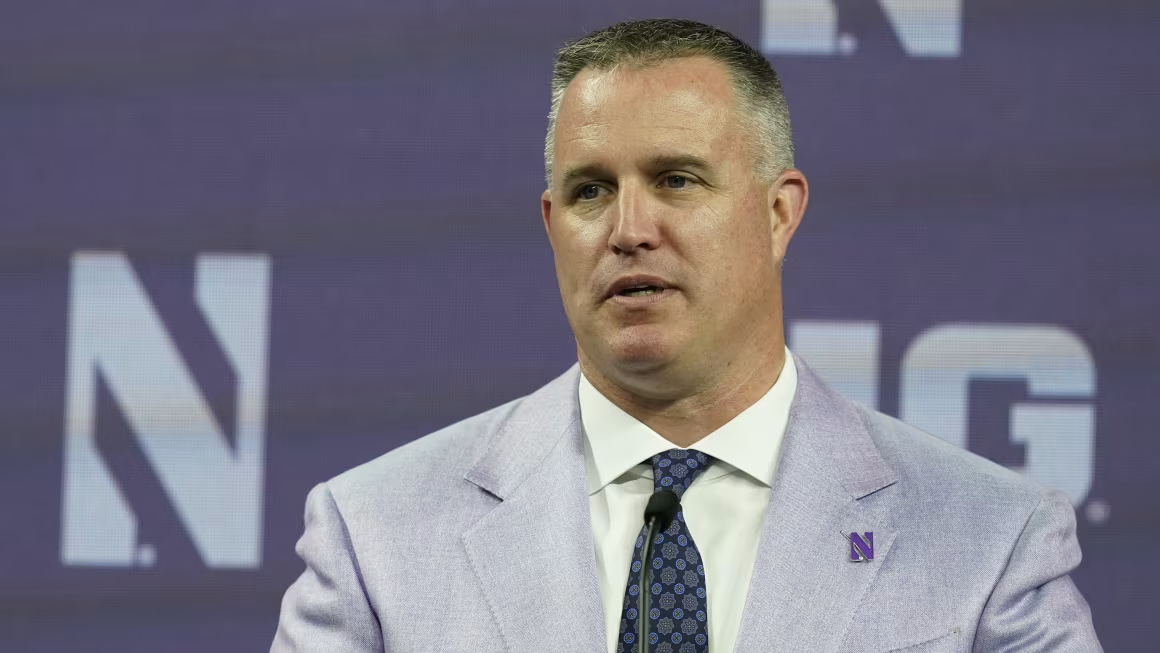
Former Northwestern head coach Pat Fitzgerald, who hasn’t coached since the 2022 season, is reportedly eager to return to the sidelines, and Penn State needs a coach.
Those close to Fitzgerald reportedly say that, after settling a lawsuit in the hazing scandal that led to his downfall at Northwestern, he has been itching to get back into coaching.
But is he the right fit for Penn State?
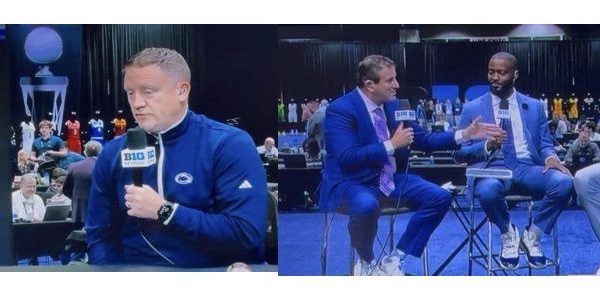
ESPN’s Greg McElroy believes he would be the best candidate for the Nittany Lions.
“(Fitzgerald was) famous in his time as head coach for doing more with less. Very few in the country were able to overachieve the way Pat Fitzgerald did in his 17 years at Northwestern.”
Let’s examine the pros and cons of Fitzgerald’s potential to succeed James Franklin at Penn State.
Fitzgerald’s Pros
McElroy’s comments highlight Fitzgerald’s biggest strength as a candidate for athletic director Pat Kraft to consider.
Before Fitzgerald took over, Northwestern had appeared in just six bowl games in its history. Under his leadership, the Wildcats went to 10 bowls, won four straight postseason games, and captured two Big Ten West titles (2018 and 2020). He also guided Northwestern to three of the program’s five double-digit-win seasons and became the winningest coach in school history with 101 victories.
Now, 50 years old and several seasons removed from coaching, Fitzgerald has had time to recharge from the grind of the profession. His energy, combined with his proven ability to attract top athletes to a traditionally challenging academic program, speaks to his strength as a recruiter.
Doing what he did at Northwestern with limited resources is nothing short of remarkable. Pairing Fitzgerald’s renewed motivation with Penn State’s ambition—outlined in the “Kraft Manifesto” of winning a national championship—could be an intriguing combination. With Penn State’s resources, Fitzgerald might finally have the tools to showcase how good a coach he truly is.
A former linebacker himself, Fitzgerald shares his name with the legendary Dick Butkus on the Big Ten Linebacker of the Year Award. His toughness would fit naturally into the DNA of “Linebacker U” and could help restore that hard-nosed identity.
Another strength is his knack for developing elite offensive linemen. Rashawn Slater and Peter Skoronski, both first-round NFL draft picks, are prime examples of his ability to identify and develop front-line talent.
Fitzgerald’s Cons
While Fitzgerald’s time away from coaching has likely refreshed him, college football has changed dramatically in the past three years.
 Add Nittany Sports Now as a preferred source in Google! Click here to add us.
Northwestern was among the first programs to navigate NIL, but the transfer portal has since evolved into an annual free-agency cycle. Players can now redshirt and announce their intent to transfer mid-season, revenue sharing, and roster retention are part of a new financial reality that requires constant management and adaptability.
Another concern: Fitzgerald has never faced the kind of expectations he would inherit at Penn State.
At Northwestern, simply reaching a bowl game was reason to celebrate. At Penn State, James Franklin built a consistent Top-10 program—but one that fans and boosters still criticize for not breaking through in marquee matchups.
Would Fitzgerald want that kind of pressure? He may embrace it, but he must recognize how slim the margin for error is in State College.
Recruiting is another question mark. Fitzgerald excelled at developing three-star prospects into NFL-caliber players, but can he consistently close on the five-star recruits that Franklin often landed? His message resonated at Northwestern, but it’s unclear if it will connect with the elite national talent Penn State covets.
If hired, Fitzgerald would also need to surround himself with elite offensive minds—especially at coordinator—to help Penn State evolve on the perimeter, an area where Ohio State has consistently outclassed the Nittany Lions in recent years.
Defensively, Fitzgerald’s background ensures a continued focus on elite linebacker and front-seven play. But offensive innovation would be essential for Penn State to compete for championships.
Verdict
Fitzgerald would be a safe hire, much like if Kraft were somehow able to lure Matt Rhule back to Happy Valley.
There’s little doubt that Fitzgerald could lead a perennial 10-win team. However, that may not align with Kraft’s stated mission of elevating Penn State into a national-championship contender.
Fitzgerald would still need to prove he can thrive under higher expectations—managing top-tier recruiting, staff hiring, and organizational detail at a level far beyond what was required at Northwestern. These are areas in which Franklin excelled and that Fitzgerald would need to quickly master.
In short: Fitzgerald would bring stability, discipline, and proven leadership.
But the lingering question remains—can he elevate Penn State from very good to elite?