












UNIVERSITY PARK, Pa. — Penn State spent the first three weeks of the season showing flashes of what it could become under Matt Campbell.
Its first test against Power Four competition showed just how far it still has to go.
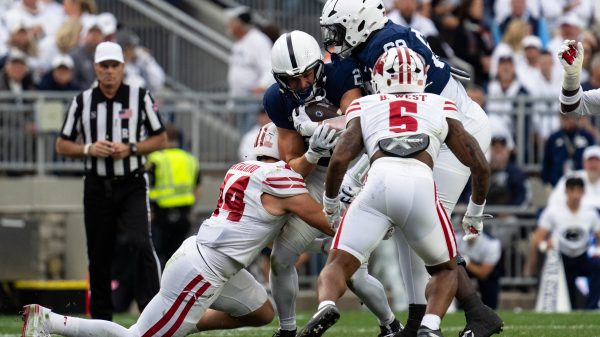
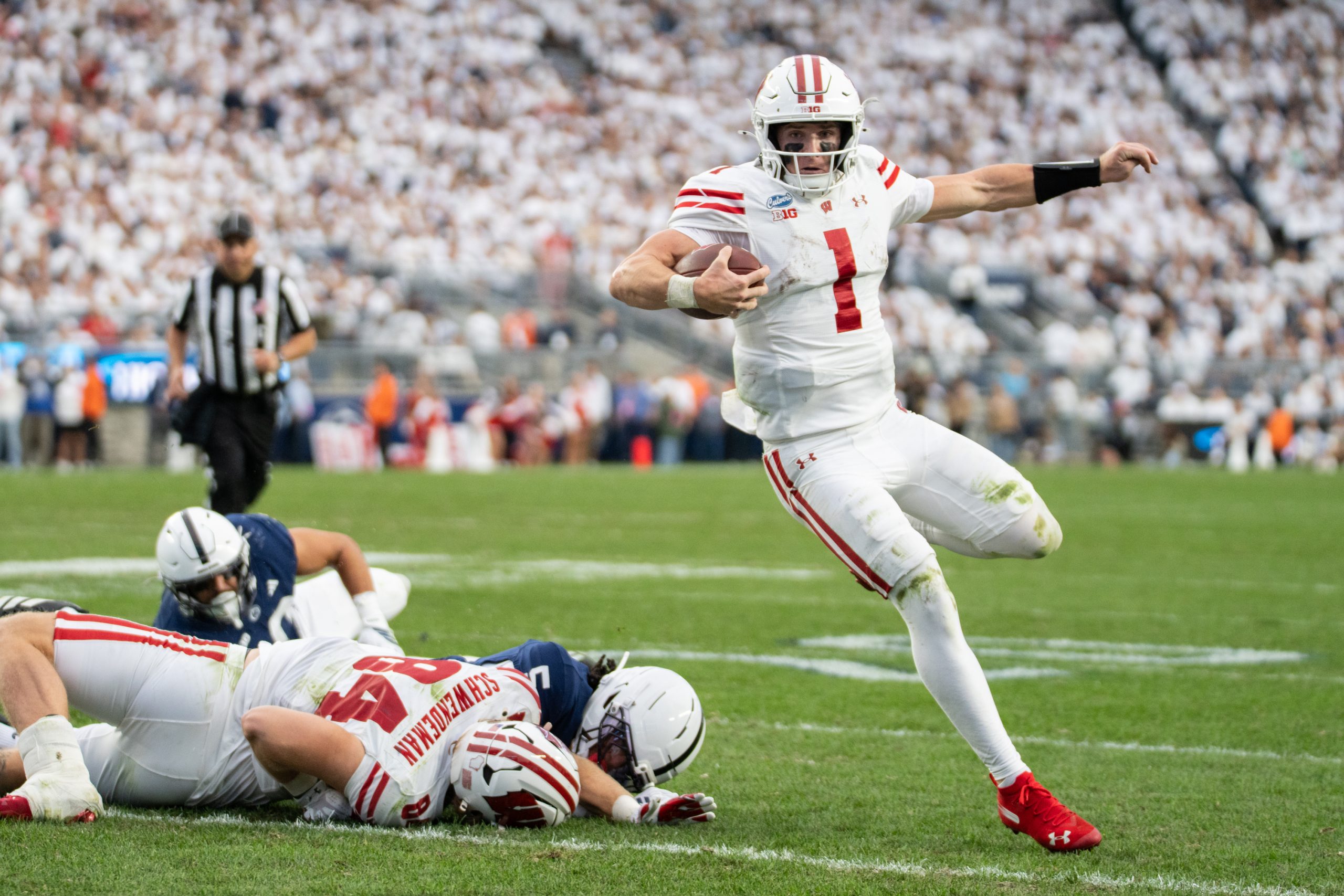
The Nittany Lions blew a 17-point lead and were outscored 17-3 in the second half of Saturday’s 24-20 loss to Wisconsin, their first defeat against the Badgers since 2011.
What made the loss particularly troubling wasn’t simply the comeback. Penn State intercepted Wisconsin quarterback Colton Joseph three times, scored 14 points off turnovers and led 20-10 entering the fourth quarter.
Yet Wisconsin still outgained Penn State 355-233, while the Nittany Lions averaged only 3.6 yards per play. Penn State’s passing game managed 114 yards, and the offense failed to score a touchdown after taking a 17-0 lead.
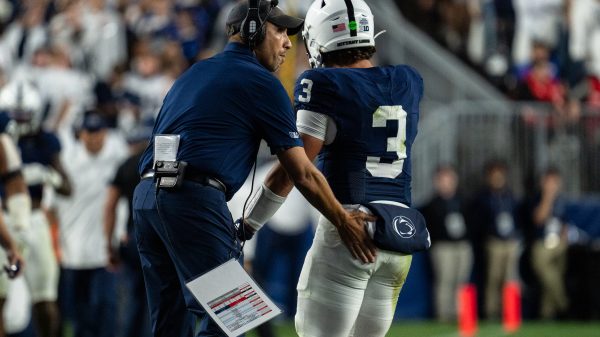
“We left chances, and we had so many opportunities to put the game away, and we just didn’t take advantage of those opportunities,” Campbell said.
Wisconsin didn’t expose just one weakness. It uncovered several.
5. Penn State is Generating Pressure, but the Pass Rush Still Isn’t Finishing
There is a difference between affecting the quarterback and actually getting him on the ground.
Penn State is doing the first part. The second remains a problem.
Pro Football Focus (PFF) credited the Nittany Lions with 14 pressures against Wisconsin where the defense got one sack, four quarterback hits and nine hurries. EDGE Ike Ezeogu led the way with four pressures, while linebackers Tony Rojas and Kooper Ebel each generated three.
But 14 pressures produced only one sack against 38 Wisconsin pass attempts, that distinction became enormous later.
When Wisconsin needed two touchdown drives to win, Joseph remained upright enough to get them. The Badgers went 75 yards in 10 plays to cut Penn State’s lead to 20-17, then went 85 yards in only six plays for the winning touchdown.
Pressure is encouraging. Eventually, Penn State has to finish it.
4. Penn State Couldn’t Finish – Offensively or Defensively
This might have been the most concerning development of the night.
Penn State entered the fourth quarter leading 20-10. Its offense had a chance to drain the clock and finish the game. Its defense had several opportunities to slam the door.
Neither happened.
Penn State went 0-for-5 on third down in the fourth quarter and possessed the football for only 5:36. Its first three full possessions of the quarter gained five yards, lost one yard and gained six yards. Even after Rojas intercepted Joseph and handed the offense possession at the Penn State 45 with 8:09 remaining, the Nittany Lions went backward and punted.
Then the defense finally cracked.
Wisconsin scored twice in the final 3:31, covering 160 yards on those two possessions.
Campbell acknowledged that the late 72-yard touchdown will receive most of the attention, but he viewed the collapse as much bigger than one busted play.
“That play will stick out,” Campbell said. “But the reality of it is, defensively, I thought we played a tremendous football game. We gave ourselves every opportunity to win the football game, and we didn’t take advantage as a team when we had the opportunity to do that.”
Penn State didn’t lose because of one snap. It lost because it repeatedly failed to make the snap that would have ended the game.
3. Is Penn State’s RB Depth Becoming Dilution?
Penn State has spent the opening month emphasizing the depth of its running back room.
Wisconsin raised another question: When does depth start preventing the hot hand from taking over?
James Peoples was clearly Penn State’s most productive running back Saturday. He carried 14 times for 67 yards, averaging 4.8 yards per attempt. Quinton Martin, Carson Hansen and Cam Wallace combined for only 29 yards on 12 carries (2.4 yards per attempt).
Peoples didn’t pad those numbers with one explosive run, either. His longest gain was nine yards. PFF’s rushing-direction data shows he consistently found something, particularly running right, where he gained 48 yards on seven attempts between right guard, right tackle and right end.
 Add Nittany Sports Now as a preferred source in Google! Click here to add us.
“I thought James ran the ball really well today,” Campbell said. “I thought he made really key plays in some key situations.”
Campbell also described the entire operation as “choppy,” saying Penn State needs significant improvement from its offensive line, receivers and running backs.
The issue isn’t that Penn State has four capable running backs. That’s a luxury. The question is whether the Nittany Lions need to become more willing to ride the back who establishes a rhythm.
Against Wisconsin, that player was Peoples.
2. Wisconsin took away Benjamin Brahmer, Penn State Didn’t Have Another Answer
For one quarter, Benjamin Brahmer looked like Rocco Becht’s solution to everything Wisconsin threw at him.
Brahmer caught three passes for 33 yards in the opening quarter, including a nine-yard reception on third-and-five and a 19-yard catch that moved Penn State inside Wisconsin’s 10-yard line.
Then he essentially disappeared.
Brahmer caught one pass for three yards over the final three quarters, finishing with four receptions for 36 yards on eight targets. The bigger problem was what happened behind him.
Gabe Burkle and Andrew Rappleyea combined for zero receptions.
When Wisconsin made Brahmer less accessible, Penn State didn’t find another tight end capable of punishing that adjustment.
That’s particularly important because Brahmer has become one of Becht’s security blankets. When the quarterback needs a manageable completion or Penn State needs to stay ahead of the chains, Brahmer has been one of the players capable of providing it.
Wisconsin took that away after the first quarter, and Penn State never found a counterpunch.
1. Penn State Found Out Exactly How Much Koby Howard Changes Its Offense
Koby Howard didn’t play a snap Saturday, but his value may have been more apparent than ever.
Penn State entered Big Ten play without its most explosive receiver, and suddenly the field looked considerably smaller.
Chase Sowell did his part, catching six passes for 70 yards. The rest of Penn State’s wide receivers combined for zero receptions.
Brett Eskildsen was targeted six times without a catch. Zay Robinson was targeted once without a reception. Becht finished only 12-of-29 for 114 yards with no touchdowns and an interception, averaging 3.9 yards per attempt.
Campbell wasn’t interested in pretending Howard’s absence didn’t matter.
“I’d be a fool to sit up here and say we didn’t miss Koby,” Campbell said. “I would also say I have great belief in the rest of our guys, and the rest of our guys had some opportunities.”
Campbell was also surprised when told Sowell was the only Penn State wide receiver to record a catch.
“We’re going to have to have more production from the receiving room and from the other players on the opposite side of the ball,” Campbell said.
That’s the real exposure.
Howard’s absence didn’t simply cost Penn State one receiver. It removed the player capable of stretching the defense vertically and creating space elsewhere. Without him, Wisconsin could play Penn State differently, and nobody else in the receiving corps made the Badgers pay.
Wisconsin provided Penn State with its first real measuring stick of the season. The result showed a team with enough talent to build a 17-point lead and enough flaws to give every bit of it back.
Now Campbell gets to find out which of those problems were one bad night and which ones opponents will continue attacking.



Timothy Gilliom
September 27, 2026 at 8:51 am
Yes, quite a lot of deficits and things exposed that won’t cut it in the B10.