

















The easiest way to describe a defense is to give it a number.
When Matt Campbell was at Iowa State, his longtime defensive coordinator Jon Heacock became synonymous with a distinct 3-3-5 scheme that had innovative safety play that many duplicated it across college football.
D’Anton Lynn comes from a multiple 3-4 background.
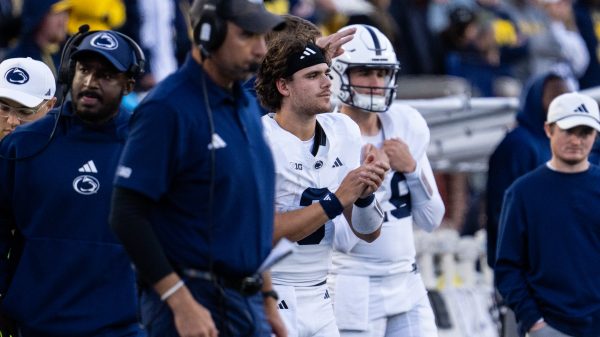
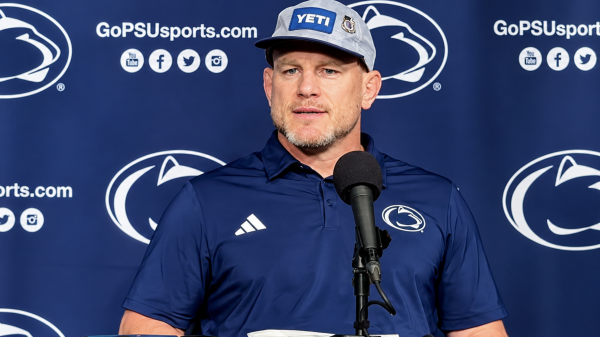
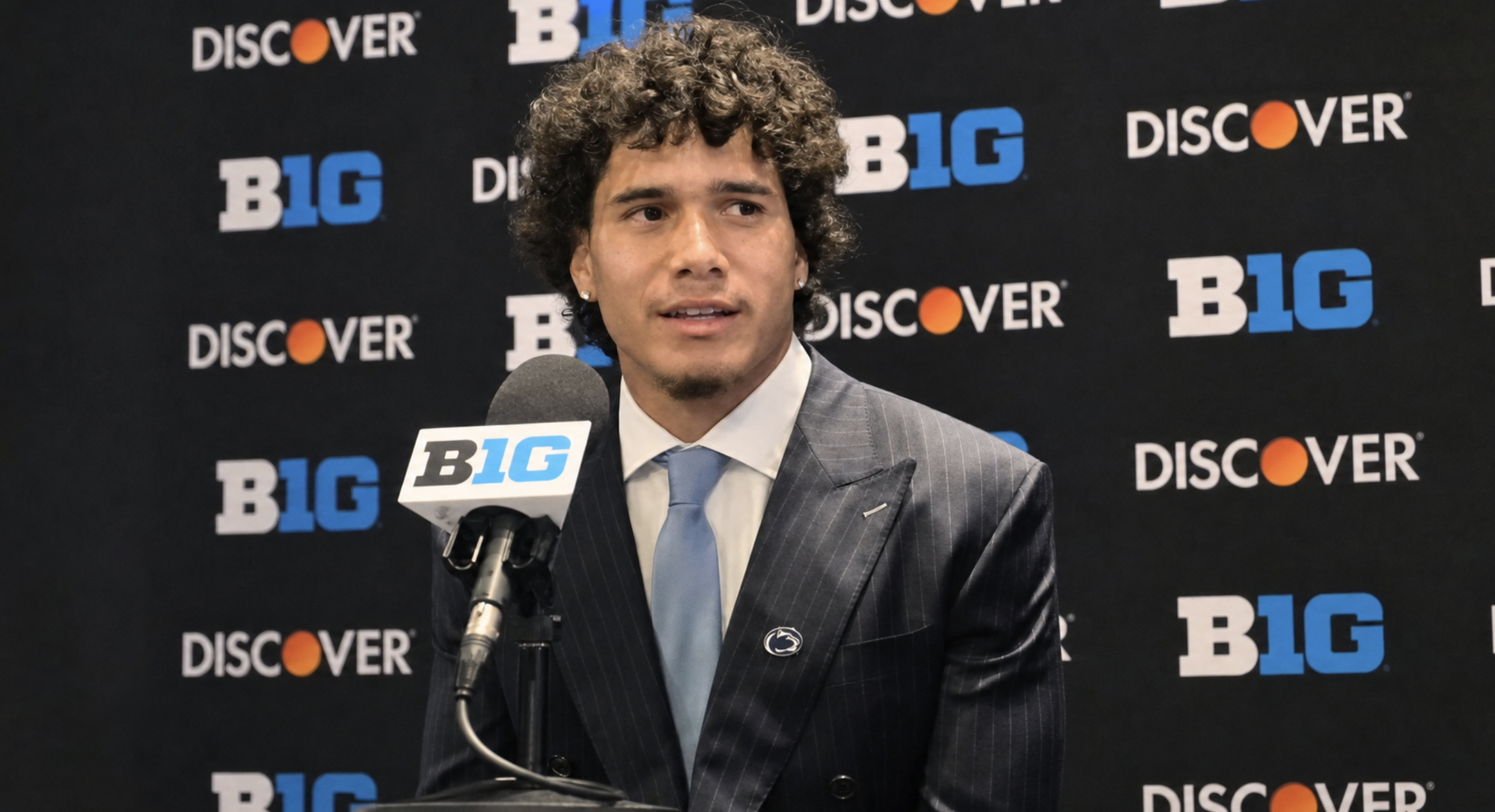
Campbell said Tuesday at Big Ten Media Days in Chicago that Penn State will begin with a four-down front.
So, what exactly are the Nittany Lions going to play?
The most honest answer may also be the most encouraging: whatever gives their players the best chance to succeed.
“He wants to call the plays that we’re best at, not what he likes,” linebacker Tony Rojas said of Lynn at Media Days. “I think that’s a big change for us.”
Lynn isn’t arriving in State College to install one rigid system like former defensive coordinator Jim Knowles tried to do last season.
Campbell is not attempting to reproduce Heacock’s Iowa State defense with different uniforms.
Penn State appears to be building a new defense by combining the most useful parts of both philosophies: Campbell and Heacock’s adaptability, Lynn’s pressure disguises and the familiar four-man foundation that best fits the current roster.
The result should be a defense with a clear starting point but no obligation to stay there.
“When we got to Penn State, we evaluated who we are, what our personnel looks like, and what gives us the best opportunity to succeed,” Campbell said. “Multiplicity remains extremely important to us. … We’ll continue to be multiple defensively, but our foundation will begin from a four-down front.”
The word “foundation” is imperative when trying to determine what direction the defense will be going.
A foundation is where a defense begins, not necessarily where every play ends.
Penn State can put four players on the line of scrimmage without becoming a predictable, old-fashioned 4-3 defense or a modern 4-2-5 scheme the Nittany Lions have been utilizing the past two seasons that has had the signature rotating safeties that was a signature to Heacock’s scheme.
One of those four could be a stand-up edge defender, another lineman could drop into coverage after showing pressure. The interior gap could show signs of pressure from a lineman or a linebacker before opting into pass coverage and play underneath a passing lane. A safety could rotate into the box while another moves into the deep middle.
The offense may count four defensive linemen. The quarterback still has to determine which four players are actually coming.
Lynn wants his third-down pressures to share the same pre-snap appearance.
The defense might show five or six potential rushers, then bring three, four, five or six. The picture remains the same until the ball is snapped. Only then does the quarterback discover whether he is facing man coverage, zone pressure or a simulated blitz in which an apparent rusher drops away.
 Add Nittany Sports Now as a preferred source in Google! Click here to add us.
The objective isn’t to blitz recklessly. It’s to make the offense account for pressure that may or may not arrive.
That is also where Lynn’s philosophy connects with what Campbell and Heacock built at Iowa State.
Heacock’s 3-3-5 changed the way teams defended the wide-open Big 12. Its success wasn’t simply about putting three linemen, three linebackers and five defensive backs on the field. It was about removing clean answers from the offense. The Cyclones used interchangeable defenders, late rotations and disciplined coverage to force quarterbacks to hold the ball and offenses to earn their way down the field.
The results endured as the personnel and opposing offenses changed. Iowa State consistently finished near the top of the Big 12 in scoring defense under Heacock. In 2022, the Cyclones led the conference in scoring, total, rushing and passing defense. Two years later, they led the nation in passing defense.
The lasting lesson from Heacock’s tenure under Campbell isn’t that the 3-3-5 is a magic formation. It is that a defense must be willing to evolve without losing the principles that make it effective.
That appears to be the lesson Campbell is carrying into Penn State.
The Nittany Lions don’t need to become the Nittany Cyclones. They also should not ask players recruited and developed for aggressive four-man fronts to suddenly occupy unfamiliar roles solely because a coach has used them elsewhere.
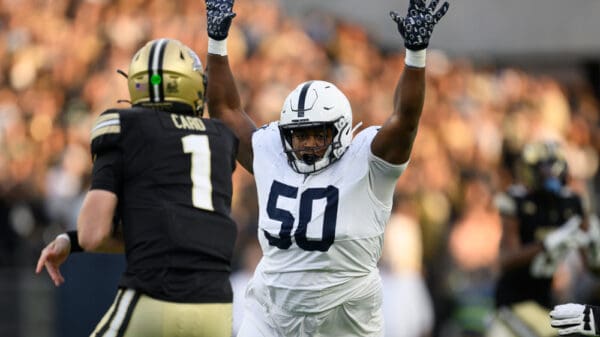
Penn State’s recent defensive success was built on players attacking gaps, creating negative plays and turning elite athletes loose. Manny Diaz used overloads and delayed pressures to manufacture havoc – notably with his “Prowler Package” that Terry Smith reintroduced when he took over for James Franklin last season.
Tom Allen maintained much of the four-down structure while incorporating three-safety packages and more disguise in the secondary. Much of those three safety principles will be familiar in the systems that Lynn and Campbell have been associated with.
Lynn can preserve that aggression while making it harder for offenses to locate.
His defensive line can still attack. His edge defenders can still chase quarterbacks. The difference will be in how Penn State creates those opportunities. Instead of announcing where the pressure is coming from, the Nittany Lions can force the offense to find out after the snap.
Lynn understands that creativity only helps when the people responsible for carrying it out can play fast.
A perfectly disguised pressure is worthless if a linebacker is thinking through three assignments while the ball is being snapped. A sophisticated coverage rotation becomes a liability when a safety is uncertain about his responsibility. Multiplicity is valuable only when it creates confusion for the offense and not the defense.
That will be Lynn’s balancing act.
The exact number will change.
The principle should not.
Penn State’s best defense not be the one Lynn likes drawing on a whiteboard or the one Campbell remembers from Iowa State. It will be the one the Nittany Lions’ players can execute best.
If the offense cannot identify that defense until after the snap, that is even better.