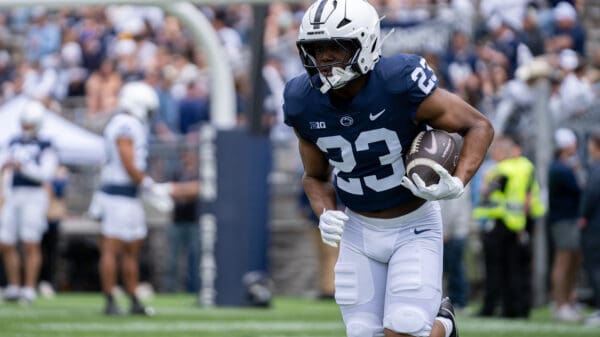






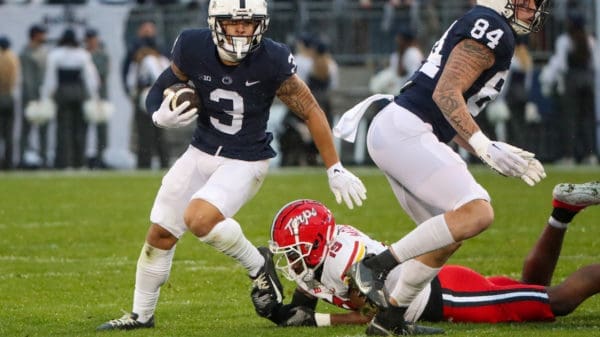




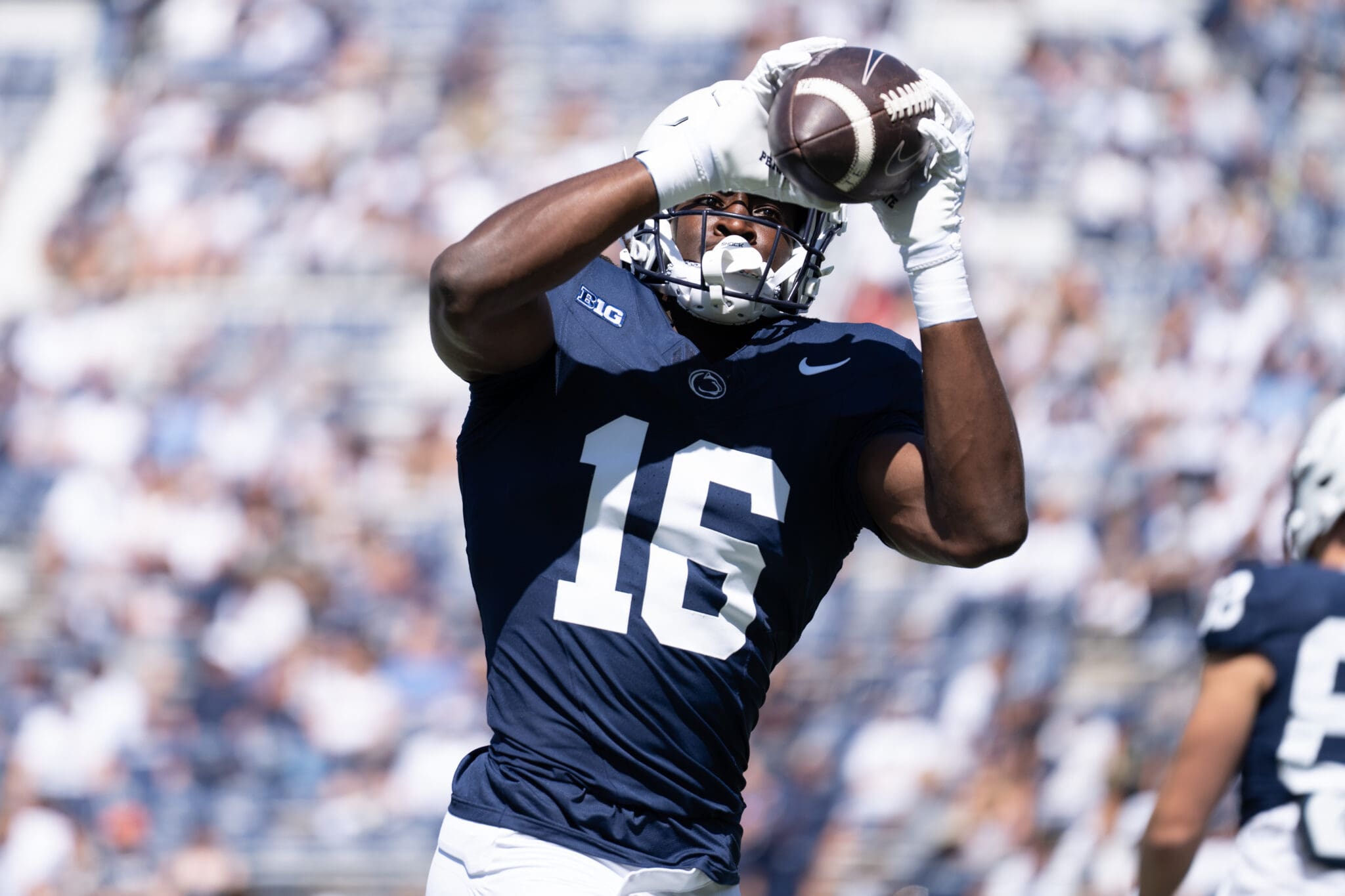
Penn State tight end Khalil Dinkins wasn’t happy about a targeting call against Ohio State’s Caleb Downs getting overturned Saturday.
It’s hard to blame Dinkins.
For one, he was the player who got hit, and a play like that could have injured the fifth-year tight end.
The consensus is also that the officials got it wrong.
“You know, the referees get paid to do a job,” interim coach Terry Smith said during his weekly press conference Monday. “From our naked eye, it looked like the definition of targeting.”
Dinkins agreed.
“I think it was kind of BS that they called it back,” Dinkins told reporters Wednesday via Lexie Linderman of The Daily Collegian.
Dinkins also suggested that Big Ten officials tend to favor Ohio State.
 Add Nittany Sports Now as a preferred source in Google! Click here to add us.
“But I think that’s just how OState refs operate,” he said. “Sometimes they give them more penalties (against the other team) than you know that they wouldn’t give to anybody else.”
Whether or not Ohio State gets preferable treatment is subjective.
But there have been cases where Ohio State has benefited from controversial decisions to Penn State’s detriment.
In 2014, two controversial officiating decisions in regulation were a factor in Ohio State escaping Happy Valley with a double overtime win.
That Ohio State team ended up winning the national championship.
Two years later, Penn State beat Ohio State head-to-head and won the Big Ten. Yet, Ohio State went to the College Football Playoff that season.
Although that decision had nothing to do with any officials, it’s an example some would point to as proof that Ohio State gets preferential treatment.
To be fair, Downs’ targeting being upheld wouldn’t have changed the outcome of Saturday’s game, which Ohio State won 38-14.
Penn State will look to bounce back against No. 2 Indiana at home Saturday.
Kickoff is at noon on Fox.