
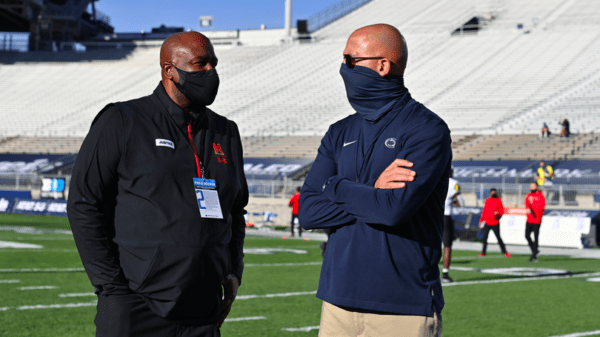
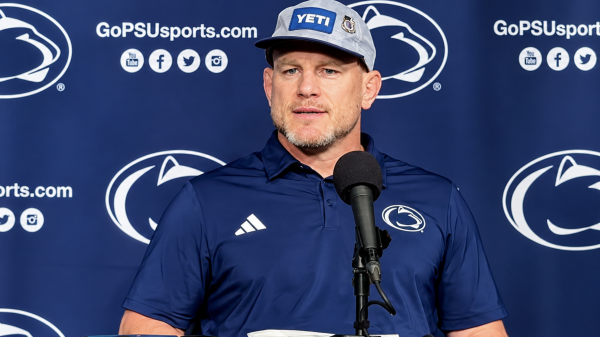
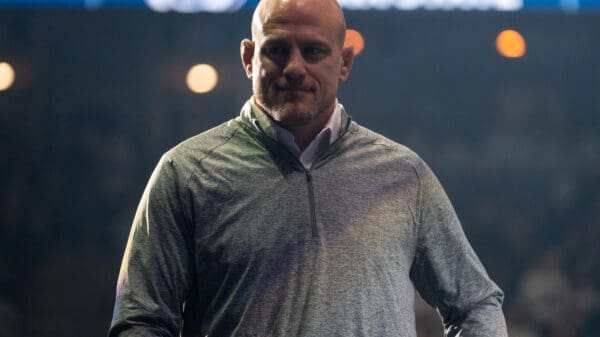







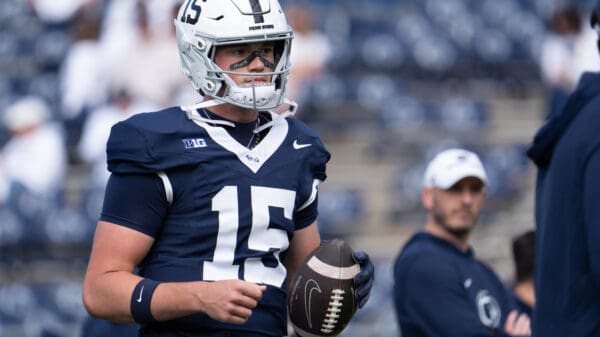






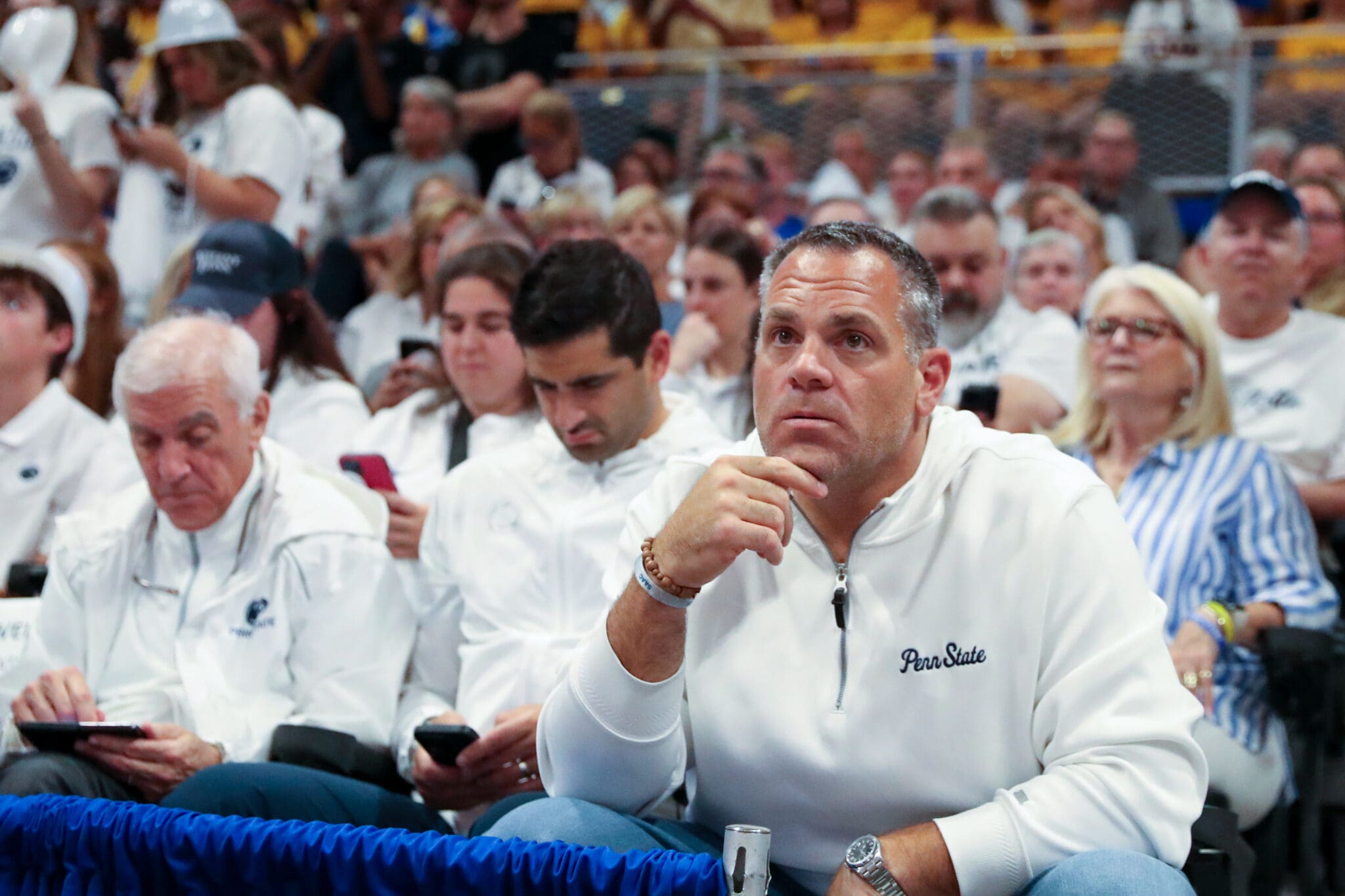
Penn State Vice President for Intercollegiate Athletics Dr. Pat Kraft met with the media following his decision to dismiss head football coach James Franklin six games into his 12th season leading the Nittany Lions.
Kraft began the press conference by thanking Franklin for his service to the university, crediting him for restoring the football program during challenging times and elevating it to national prominence.
“Let me begin first by saying, James Franklin is a tremendous man, husband, father, mentor to countless student-athletes, and a good friend who has always carried himself with dignity and represented Penn State with absolute class,” Kraft said.
“Beyond the wins and the accolades, James has been a trusted ambassador for this university and a friend of the Penn State community. We are all incredibly fortunate to have had James Franklin lead our football program for over a decade, and we will be forever grateful to him and his family.”
The question Kraft faced was why he chose to move on from a coach who had achieved so much success.
During his tenure, Franklin became the second-winningest coach in program history and guided Penn State to a record 13-win season and its first College Football Playoff appearance last year.
“My job is to evaluate everything and make hard decisions that are in the best interest of our athletes, our program, and our department,” Kraft said.
“Football is our backbone. We’ve invested at the highest level, and with that comes high expectations. Ultimately, I believe a new leader can help us win a national championship, and now is the right time for this change.”
Kraft described the role of an athletic director as one that requires constant assessment, especially when expectations are as high as they are for Penn State football.
 Add Nittany Sports Now as a preferred source in Google! Click here to add us.
“In this role—as athletic directors and CEOs—you have to be ready for anything,” Kraft said. “Did I expect to have to walk up those stairs yesterday at the Lasch Building and have that conversation with James? No.
“But you’re built, or should be built, to handle adversity and to do what you think is right for the program. I weigh everything when I make a decision. The Ph.D. nerd in me looks at data, analytics—everything. When you look at where we’re going and how this year has played out, all of that factors in.”
Kraft emphasized that the decision wasn’t based solely on recent losses.
“You cannot make decisions of this magnitude lightly,” he said. “It’s not just, ‘We lost to Oregon and UCLA.’ It’s about: Where are we as a program? Where are we going? How do I give our student-athletes the best chance to win? How do I continue to build this into the best program in the country?”
In closing, Kraft underscored the importance of preparation and decisiveness when faced with difficult choices.
“As you start to put all those things together, you have to make the call—and that’s where we were,” Kraft said. “You’re prepared, even if you don’t expect it. You always have to be ready. That’s the nature of this business.”