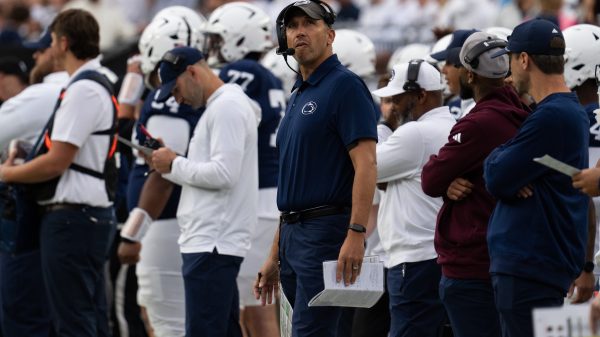








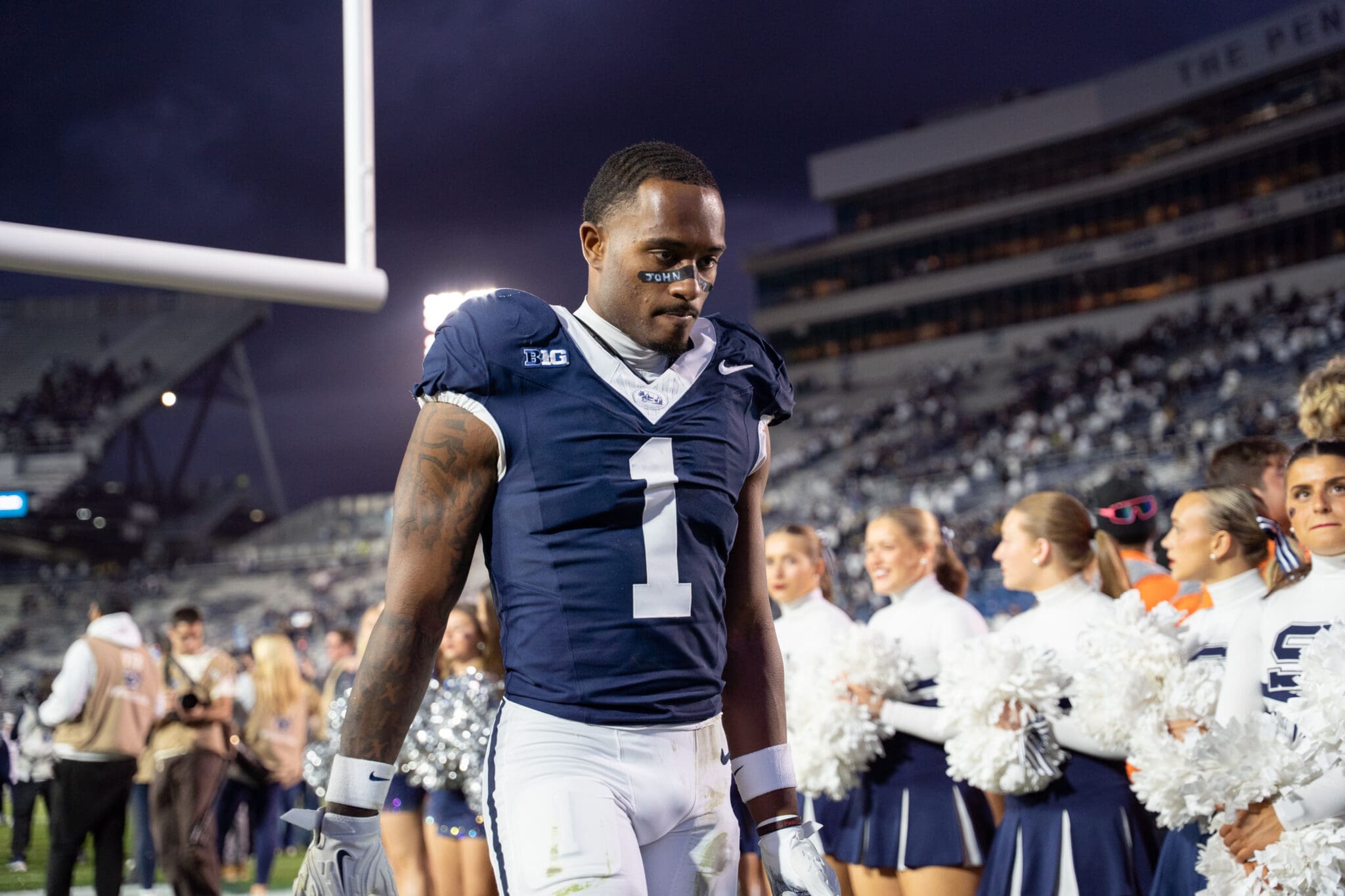
I can unequivocally tell you I wasn’t in James Franklin’s locker room following Penn State’s 22–21 loss to Northwestern Saturday night.
The only time I’ve ever been in a losing Penn State locker room happened by mistake. After the 2023 Peach Bowl loss to Ole Miss, a group of us were funneled in the wrong direction for postgame availability. As we entered, we were met with death stares and a suffocating silence.
What I remember most from that experience was the tension. Even though we’d walked in accidentally, you could feel the uneasiness in the air. It wasn’t anger as much as exhaustion — the collective weight of a team that had expected more. That night, it felt like players were paying the price for “business decisions” made by others. The results weren’t theirs alone to own, yet the fallout was theirs to live with.
Fast forward to this season, and that same heaviness seems to hang over the 2025 Nittany Lions. It’s harder to put a finger on, but the signs are there — in how players talk, how they respond, and how they carry themselves after another gutting defeat.
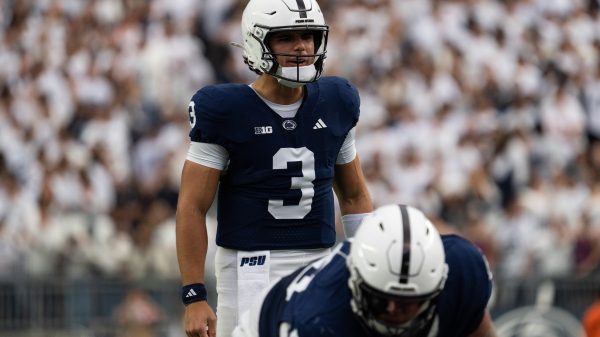
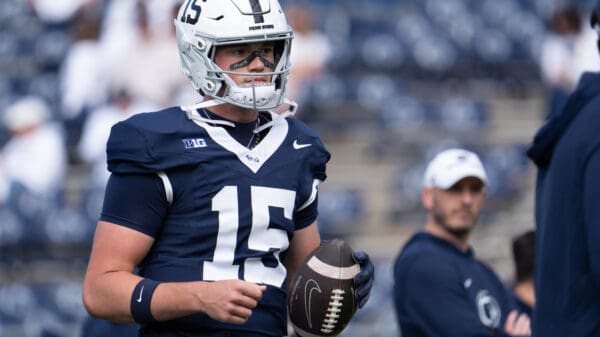
After last week’s 42–37 loss to winless UCLA, quarterback Drew Allar gave the first visible glimpse that something deeper might be wrong. When asked about the team’s playoff hopes, his responses dripped with sarcasm and frustration.
“What do you think?” he said.
“Yeah.”
Short answers. Cold tone. A mix of bitterness and weariness that said far more than his words.
It was the first real sign that things were starting to unravel.
For most college athletes, media sessions after losses are exercises in discipline. Players stay on message: We didn’t get it done. We have to execute better. We’ll watch the film and fix it. It’s about accountability, at least outwardly, even when frustration runs deep.
That’s why defensive end Dani Dennis-Sutton’s response stood out last week. He didn’t sugarcoat it.
“It’s embarrassing. It’s bad,” Dennis-Sutton said. “We all got to look in the mirror. There’s not one person, it’s not one coach, not one player. It’s literally everybody.”
That’s the kind of accountability you want from a leader — honest, collective, and direct.
But not everyone followed that script.
Defensive tackle Zane Durant had one of his best statistical games of the year: eight tackles, a sack, and a tackle for loss. After the game, I asked him why opposing offensive lines continue to impose their will late in games.
At first glance, the question might have seemed misplaced. Durant had produced well, and on paper the defensive front didn’t collapse entirely. But the numbers told a different story.
Northwestern controlled the second half — possessing the ball for nearly two-thirds of the time (19:12), securing 10 first downs, and averaging nearly five yards per carry when you exclude quarterback kneel-downs. Quarterback Preston Stone completed 73% of his passes and repeatedly found ways to move the chains.
In reality, Northwestern’s offense dictated the pace.
So yes, my question had merit.
Durant’s answer was telling:
“Yeah, I don’t know about nobody imposing it well on the D-line. I haven’t seen it, especially with me.”
 Add Nittany Sports Now as a preferred source in Google! Click here to add us.
That “me” jumped out.
In a game defined by a collective defensive failure, Durant’s answer was an individual defense — an attempt to separate himself from the result. Later in the same interview, he pivoted.
“We got to watch film. We got to get the techniques better. That’s the only way to get better.”
That second part was what you expect — the safe, team-centered response. But it came only after a reflexive deflection.
You can sense cracks forming in the locker room through moments like that. When players stop saying “we” and start saying “me,” it’s not just a linguistic change — it’s a cultural one.
By all measures, the defense once again didn’t get it done. Northwestern dictated tempo, wore Penn State down, and exposed a lack of composure when it mattered most.
I’ve covered enough of this program to know when something is off. And right now, it feels broken.
To me, it comes down to ownership — or rather, the lack of it.
That’s why Dennis-Sutton’s later comments about Franklin being under fire were so revealing.
“Yeah, I don’t know. It’s tough when you hear people wanna fire your coach,” he said. “But fans have their opinions, so you can’t really do much about it.”
There’s empathy in that response, but also distance — a detachment from the larger accountability that should follow. Dennis-Sutton, Durant, and others have all expressed respect for Franklin. But respect without results means little.
Right now, this team has failed its coach, plain and simple.
The most common phrase floating around this week is that Penn State is now playing for pride.
That’s a polite way of saying the goals that truly mattered — a playoff berth, a Big Ten title, a statement season — are gone. “Playing for pride” is what’s left when hope is gone but the schedule isn’t. It’s not meaningless, but it’s different.
Still, there’s an opportunity buried in that phrase. When you’re stripped of tangible goals, all that remains is character. What you do next — how you practice, how you respond, how you treat teammates — becomes your defining statement.
Pride isn’t the prize; it’s the test.
The 2025 Nittany Lions don’t need to chase redemption in the standings. Their biggest win might not show up in a box score or a bowl game. It might come quietly, behind closed doors — in fixing a fractured locker room and rebuilding a culture of accountability that once made this program proud.
James Franklin has weathered plenty of storms in Happy Valley. But this one feels different — not because of the losses, but because of the fractures they’ve exposed.
Before Penn State can win again, it must rediscover what binds it together.
And that process doesn’t start on Saturdays. It starts in the locker room.