











Through Penn State’s first three games, Matt Campbell has seen enough from his pass rush to believe it is trending in the right direction.
The numbers support him.
They also show why the Nittany Lions remain a work in progress heading into Big Ten play as the Nittany Lions have the 89th overall graded pass rush at 66.9.
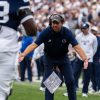
“I still think that group has grown,” Campbell said. “I feel it’s like, what area has made the best growth in three weeks? It’s probably been the ability to watch that group grow forward.”
Penn State has generated 50 total pressures through three games, according to Pro Football Focus (PFF), including five sacks, 12 quarterback hits and 33 hurries.
But the more revealing story is how those pressures have developed.
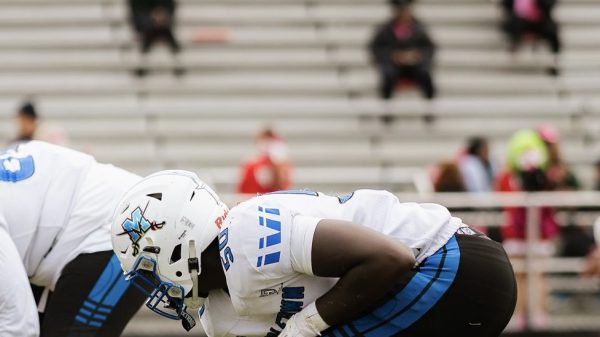
Against Marshall, Penn State produced 17 pressures on 56 pass-rush opportunities: one sack, four quarterback hits and 12 hurries. The production increased against Temple with 15 pressures on just 37 pass-rush opportunities, including three sacks, two hits and 10 hurries.
Against Buffalo, Penn State generated 18 pressures on only 34 pass-rush opportunities, its best pressure-to-opportunity ratio of the season. That included a sack, six quarterback hits and 11 hurries.
The sack total might not jump off the page, but Penn State affected the quarterback more consistently than at any point through the first three weeks.
Sacks remain the ultimate result, but evaluating a pass rush solely through sacks can hide how frequently a defense is disrupting the pocket. Penn State’s Buffalo performance showed a front getting home without necessarily finishing every rush with the quarterback on the ground.
It also showed exactly what Campbell likes about this group: there isn’t one player carrying it.
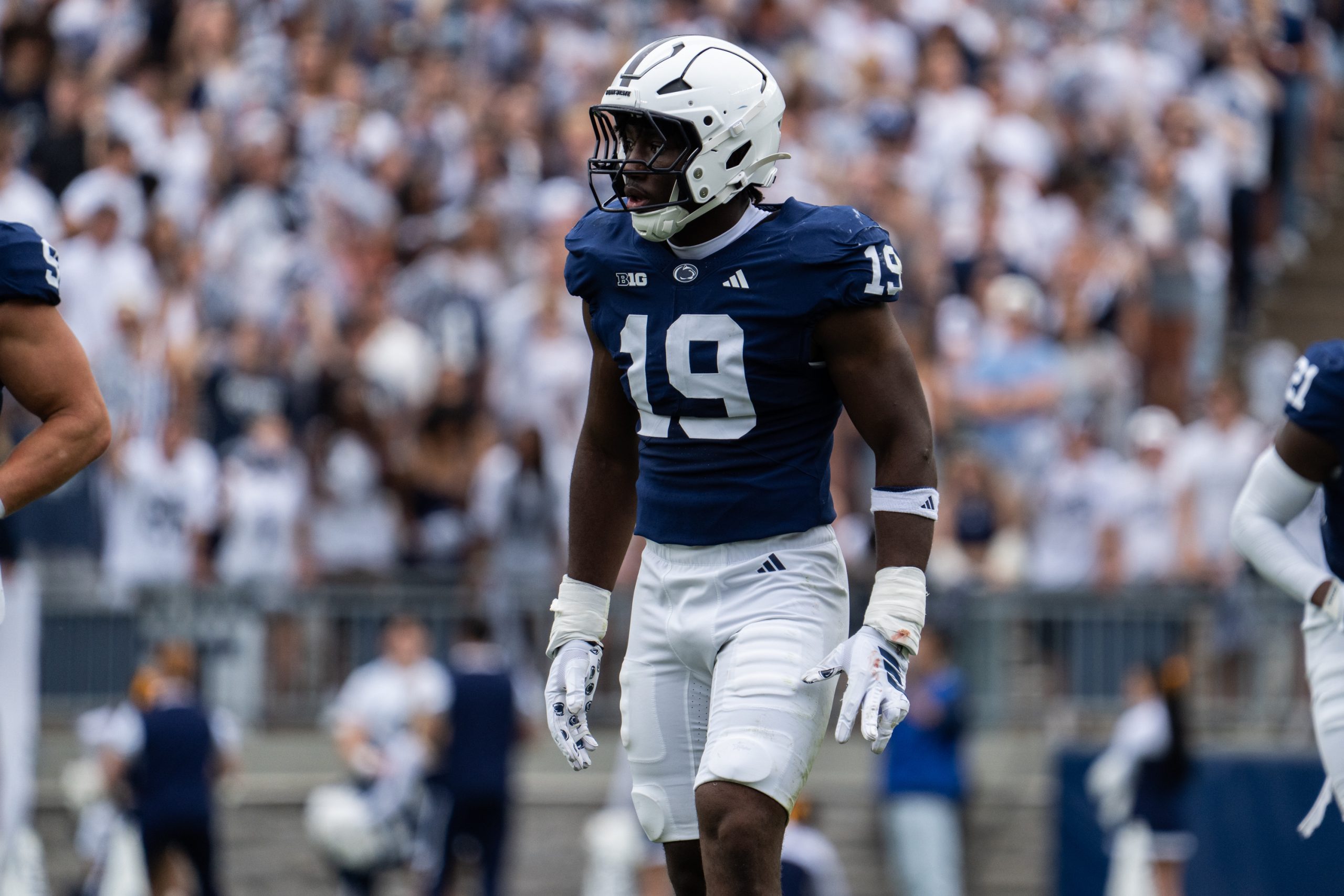
Yvan Kemajou has emerged as Penn State’s most productive overall pass rusher. Through three games, he leads the team with 10 pressures, recording one sack, three hits and six hurries. His 72.0 PFF pass-rush grade is also the team’s best among regular contributors.
His progression is noteworthy.
Kemajou graded just 61.3 as a pass rusher against Marshall before improving to 65.1 against Temple. Against Buffalo, that number exploded to 79.0, with four pressures on 16 pass-rush snaps.
Ike Ezeogu provides another consistent presence. He has eight pressures with a sack, a quarterback hit and six hurries while earning a 71.5 season pass-rush grade.
 Add Nittany Sports Now as a preferred source in Google! Click here to add us.
But Campbell’s point about versatility becomes apparent farther down the chart.
Penn State has generated pressure from defensive ends, defensive tackles and linebackers. Tony Rojas has two sacks. Siale Taupaki has four pressures. Kooper Ebel has three. Alexander McPherson has six despite operating as part of the rotation.
Against Buffalo, the interior became particularly noticeable. Keanu Williams earned a 74.5 pass-rush grade, while Taupaki finished at 71.6. Ebel posted a 78.3 grade on his opportunities.
“I think that’s the unique thing that I feel like we have the ability to move a lot of guys around and create pass rush, whether it’s from the D-ends, our D-tackles, our linebacker group,” Campbell said. “You’ve got some guys that have unique ability to pressure the quarterback.”
That’s potentially more valuable than having one obvious designated pass rusher.
An offense can identify where an elite edge defender is lined up and slide protection toward him. The equation becomes more complicated when Penn State can bring Rojas or Ebel, create pressure inside with Taupaki or Williams, or allow Kemajou and Ezeogu to attack from the edge.
The concern is finishing.
Penn State’s 50 pressures have produced only five sacks. Against Buffalo, 18 pressures resulted in one sack. The Nittany Lions are affecting quarterbacks, but there is still considerable room to turn disruption into drive-ending negative plays.
In comparison, Penn State had the No. 1 graded pass rush in the nation in 2023 that generated 268 pressures and produced a nation’s best 55 sacks.
Consider in 2023 the defense got home to the quarterback on the rush 20.5% of the time in comparison to 10% this season – that is why declaring the pass rush a finished product after three nonconference games would be premature.
The encouraging development is its trajectory.
Penn State went from generating pressure approximately once every 3.3 pass-rush opportunities against Marshall to once every 2.5 against Temple and roughly once every 1.9 against Buffalo.
Now that improvement has to translate against Big Ten offensive lines and quarterbacks capable of punishing an undisciplined rush.
“I don’t know if it will ever be just one,” Campbell said. “I think that’s a positive thing because I think, man, the more guys you can put in different positions to win the one-on-one pass rush…I think those things are really important.”
Three games in, Penn State may be void of a singular star in the vein of Dani Dennis-Sutton, Abdul Carter, and Chop Robinson that has defined the program in recent years. hasn’t discovered its next singular pass-rusher but it may not need to.
The early evidence suggests its answer could instead be waves of pressure coming from everywhere.