
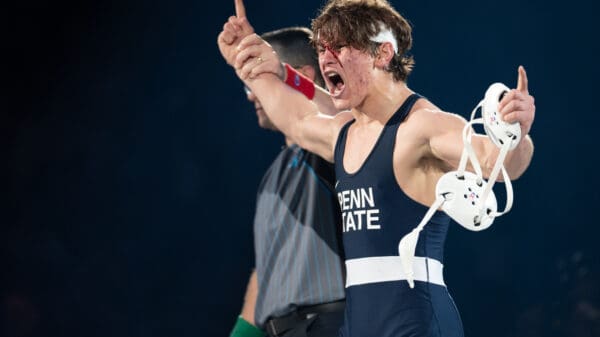
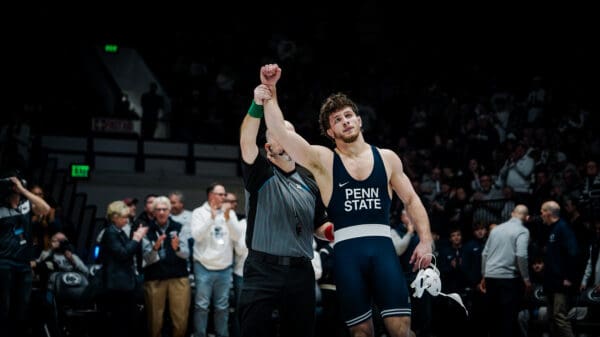








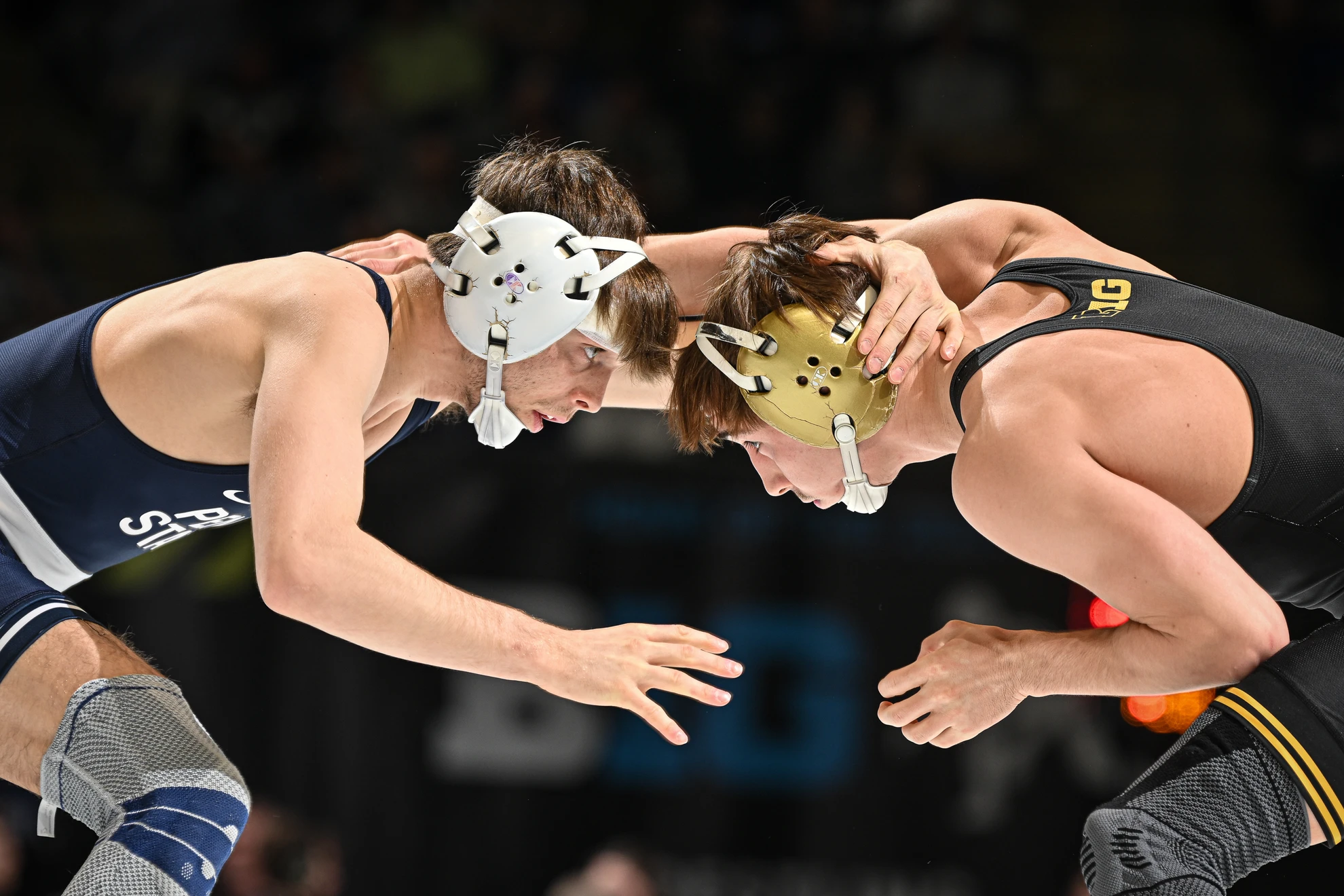
Penn State wrestling’s season doesn’t end in March: it just changes uniforms.
That’s what makes Final X so compelling from a Penn State perspective.
PSU’s NCAA dominance is already well established, but Friday’s event at the Prudential Center in Newark, New Jersey, offers a different kind of measuring stick. This isn’t about Big Ten points, NCAA bonus points or another team trophy. This is about spots on the United States Senior World Team.
Final X will determine who represents Team USA at the 2026 Senior World Championships, and for Penn State and the Nittany Lion Wrestling Club, the event has become something close to a State College showcase.
The headline is hard to miss: a Nittany Lion Wrestling Club member is involved in six of the 10 men’s freestyle Final X matchups.
It reflects what Penn State wrestling has become under Cael Sanderson and what NLWC has built around the college program: a complete developmental ecosystem that takes wrestlers from elite recruits to NCAA champions to World and Olympic contenders.
Final X is a best-of-three series, which is part of what makes it so revealing. A wrestler can steal one match with a big sequence, a late takedown or one tactical wrinkle. Winning a series requires something more. It requires adjustments. It requires freestyle maturity. It requires poise through shot clocks, par terre positions, edge exchanges and match-to-match problem solving.
For Penn State and the NLWC, this isn’t only a rooting-interest event. It’s a legacy-measuring event.
At 57 kilograms, Luke Lilledahl faces Spencer Lee in one of the most fascinating matchups on the card. Lilledahl gives Penn State fans the young-star storyline, and Lee brings established senior-level credibility and one of the most dangerous top games in American wrestling. Lee has the experience edge, but Lilledahl’s breakthrough win over Lee at the U.S. Open added real intrigue to the series.
Penn State Wrestling: Luke Lilledahl’s Statement Win Over Spencer Lee Highlights U.S. Open
The question is whether Lilledahl can keep the match in neutral, manage the pace and win late exchanges again, or whether Lee can get to his offense early and turn one takedown into a match-breaking sequence.
At 61 kilograms, Marcus Blaze meets Jax Forrest in a matchup that could become one of the sport’s best rivalries. Blaze has wrestled beyond his age for years. He is composed, positionally strong and difficult to pull into bad exchanges. Forrest, however, thrives in motion and chaos. He is dangerous in scrambles, willing to create action and capable of changing the feel of a match quickly. For Blaze, the key is structure. If he keeps the series clean, center-mat and tactical, he can dictate terms. If Forrest turns it into a scramble-heavy track meet, the danger level rises.
 Add Nittany Sports Now as a preferred source in Google! Click here to add us.
At 70 kilograms, Zain Retherford faces Ridge Lovett in what feels like the legacy match of the Penn State/NLWC group. Retherford is not merely a Penn State great. He’s one of the defining figures of the NLWC era, a wrestler whose style has always translated through pressure, hand-fighting, pace and discipline. Lovett brings length, motion and a different rhythm. This is the kind of series where one step-out, one shot-clock point or one late exchange could swing a match. Retherford’s advantage is experience and the ability to make opponents wrestle every second. Lovett’s challenge is to create enough space and motion to keep Retherford from turning the series into a grind.
At 79 kilograms, Levi Haines gets Chance Marsteller in one of the better Pennsylvania wrestling storylines of the event. Haines represents the Penn State pipeline at its most polished: a college star, a freestyle medalist and now a serious senior-level presence. His poise is the part of his game that stands out. Haines rarely looks rushed, and that quality travels well in freestyle. Marsteller, though, is a veteran, physical and battle-tested opponent who will not be overwhelmed by the Penn State aura. This could become a position-by-position series where Haines’ technical control meets Marsteller’s ability to make matches gritty and uncomfortable.
At 86 kilograms, Kyle Dake faces Zahid Valencia in the biggest pure star-power matchup with an NLWC connection. Dake is one of the most accomplished American wrestlers of his generation, and his move up in weight has added another layer to this stage of his career. Valencia beat Dake in last year’s Final X series, but Dake has now had more time to settle into 86 kilograms. That makes the rematch fascinating. Dake’s case is built around experience, strength, feel and his ability to adjust over the course of a series. Valencia’s case is built around explosion, confidence and the ability to score in sudden bursts. If this goes three matches, it may come down to who makes the better adjustment between bouts.
At 97 kilograms, Kyle Snyder faces Stephen Buchanan in the standard-bearer matchup. Snyder remains one of the clearest examples of what the NLWC represents at the senior level. He is an Olympic champion, a world champion and still one of the faces of American freestyle wrestling. Buchanan is skilled enough and dangerous enough to make the series uncomfortable, but Snyder’s consistency has long been his calling card. His pace, hand-fighting, strength and big-match experience make every opponent prove they can score cleanly and repeatedly.
The larger Penn State story is not just how many Final X matches the program touches. It’s what those matchups say about the structure around the program.
Penn State has the college machine. NLWC has the senior-level machine. Final X is where those two worlds overlap.
Lilledahl and Blaze represent the future. Haines represents the present. Retherford, Dake and Snyder represent the standard that has already been built. Together, they show why Penn State wrestling feels different from every other college program. It doesn’t simply produce NCAA champions. It gives elite wrestlers a place to keep chasing World and Olympic teams without leaving State College.
For Penn State/NLWC, three winners on Friday would be strong. Four would be excellent. Five or six would be a statement. But even before the results come in, the presence itself matters. Final X has become another reminder that the center of American freestyle wrestling runs heavily through State College.
Newark is not Rec Hall. It is not the Bryce Jordan Center. There are no team points, no dual-meet crowd and no NCAA trophy waiting at the end.
But if you want to understand the full power of Penn State wrestling in 2026, Final X might tell you as much as March did.