




















CLEVELAND, Ohio — Penn State did not just win another NCAA Wrestling Championship this weekend. The Nittany Lions once again redefined what dominance looks like on the sport’s biggest stage.
After setting the NCAA Championships scoring record with 177 points in Philadelphia last season, Penn State returned in 2026 and raised the bar even higher, finishing with 181.5 points to establish a new all-time mark.
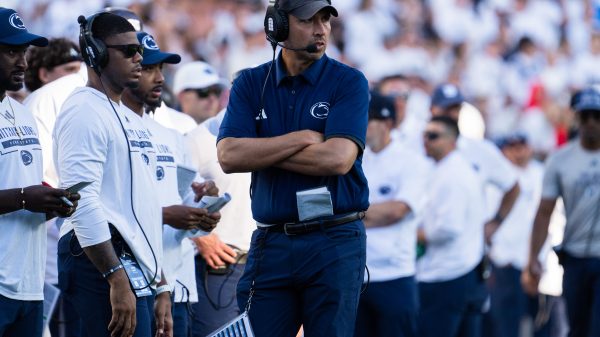
The latest record is another staggering achievement for head coach Cael Sanderson’s dynasty, which has turned greatness into routine and record-breaking into expectation. In a sport where simply winning a team title is difficult enough, Penn State has now authored back-to-back scoring performances that stand above every team in NCAA history.
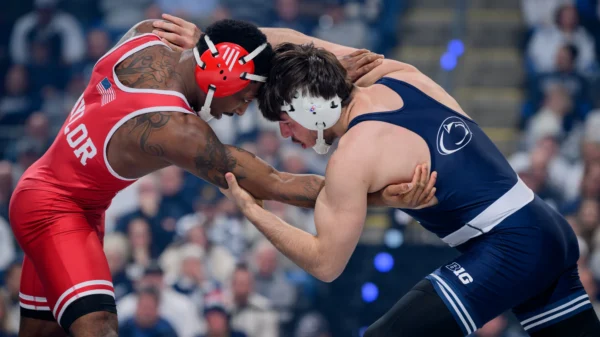
This year’s run was powered by a lineup that overwhelmed the field from the opening session through the Saturday night finals.
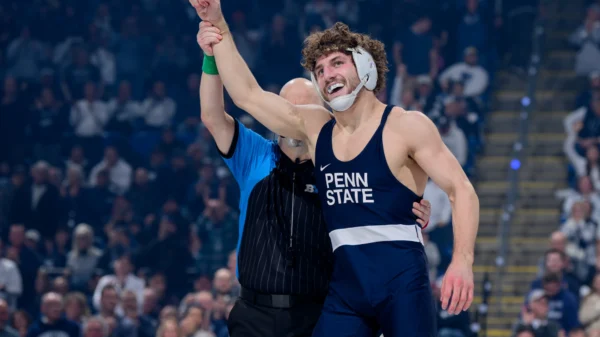
Overall, Penn State had four individual national champions with Luke Lilledahl (125), Mitchell Mesenbrink (165), Levi Haines (173), and Josh Barr (197).
Penn State also medaled at three other classes with Shayne Van Ness (149), Rocco Welsh (184) at silver, and PJ Duke (157) at bronze.
The Nittany Lions had eight overall All-Americans that included all medalists and Marcus Blaze (133) who finished fourth
Penn State’s depth was just as important as its star power. The Nittany Lions consistently put wrestlers deep into the bracket, and when they got there, they did not just survive they dominated. That formula allowed Sanderson’s squad to blow past the rest of the field and then surpass the record it had set just one year earlier.
 Add Nittany Sports Now as a preferred source in Google! Click here to add us.
Breaking 177 points had already seemed like a near-impossible standard after last season’s historic performance in Philadelphia. Penn State somehow made it look temporary.
Now the new number is 181.5, and the Nittany Lions once again own the top spot in the NCAA record book.
For a program that has already built one of the greatest dynasties in college sports, this performance added yet another layer to its legacy. Penn State did not merely defend its crown in Cleveland. It made history again, proving that even its own impossible standard was still not the ceiling.