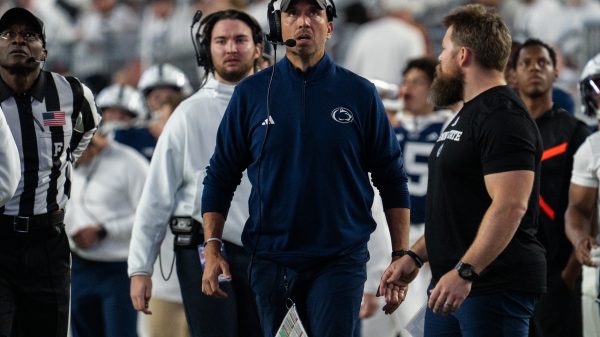

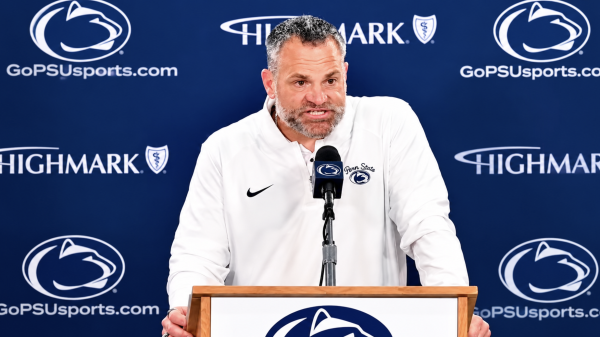

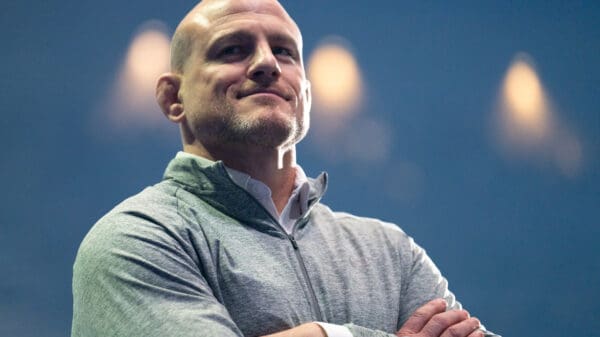










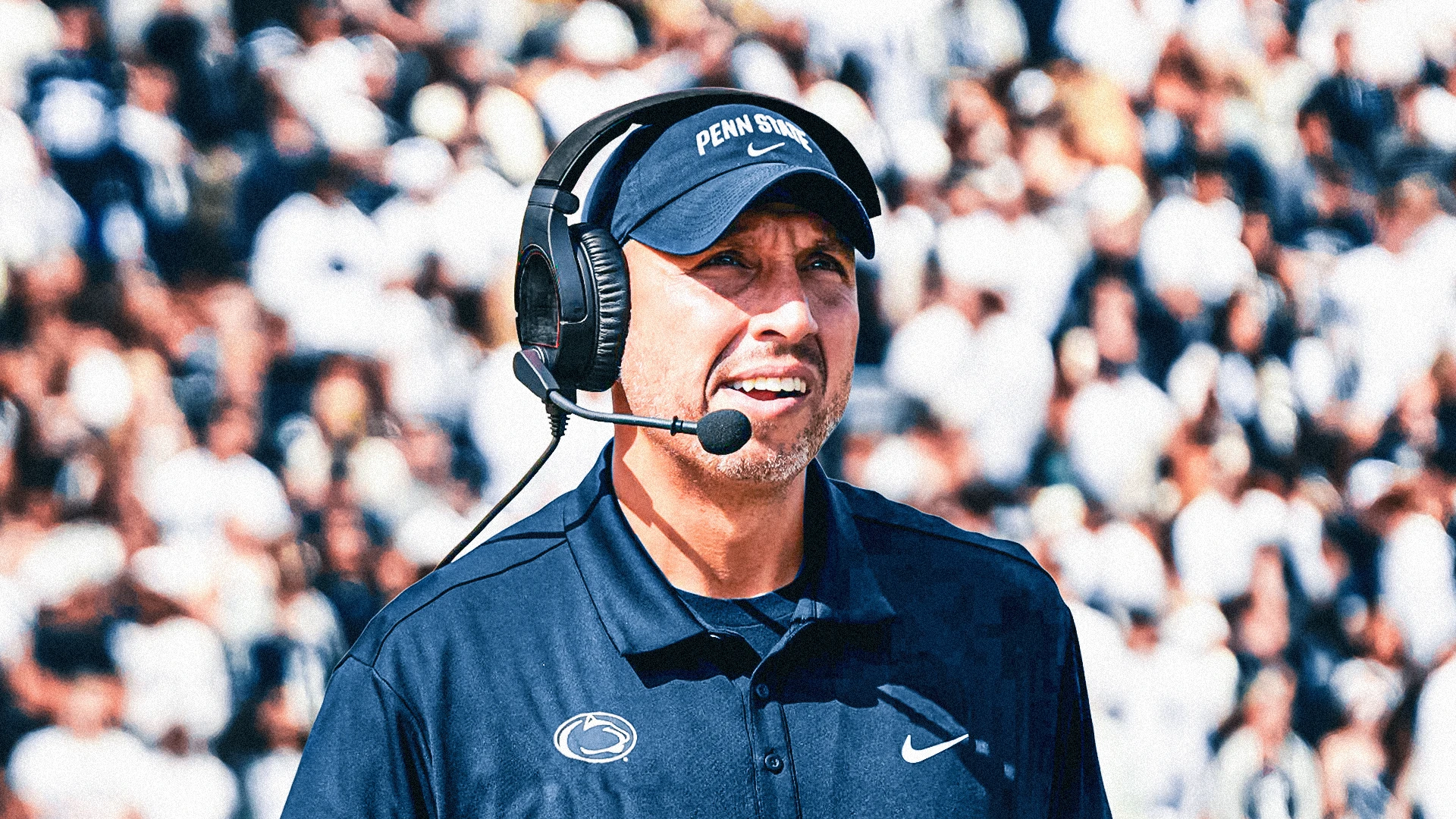
One silver lining for new Penn State head coach Matt Campbell as he begins his tenure is that expectations on the recruiting front can’t fall much lower than where the Class of 2026 currently stands.
With early instability, staff turnover and de-commitments shaping the narrative, Campbell inherits a recruiting board that’s largely a blank canvas—one that can be rebuilt with his philosophy, energy and evaluation standards.
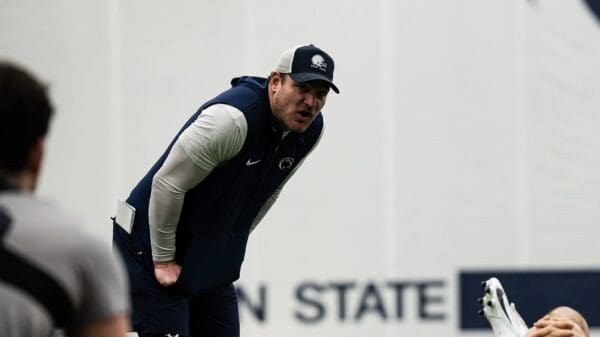
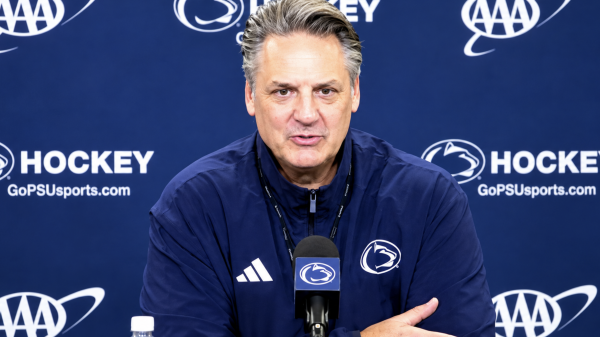
Campbell made it clear during his introductory press conference that he believes Penn State’s location provides a major competitive advantage.
“I think one of the great reasons for being here is that you’re in the most fertile ground for high-level high school football within a six-to-eight-hour radius,” Campbell said. “Everything will start with building high school football and continuing to do a great job in this state and in our surrounding states. Nobody is going to attack more than us. Nobody will be better at developing our student-athletes and our high school football players than us.”
Campbell’s ex-players, such as Brock Purdy, Breece Hall, David Montgomery, and Will McDonald IV are examples of how development, not recruiting stars, ultimately drives success.
“The flash and the stars are cool on signing day,” he said. “But winning football games on Saturday is about development, and we’re going to have to be better than anybody in college football.”
To regain recruiting momentum and construct a foundation for future classes, Campbell must rebuild relationships and assert a strong regional presence.
Here are five recruiting footprints he must prioritize to return Penn State to national prominence.
#5 Pennsylvania District III
While multiple regions in Pennsylvania are important, few are as essential as District III, which includes Harrisburg and the surrounding areas. Campbell must treat this district as a priority from day one.
The Class of 2026 demonstrated its importance when Penn State lost two elite Harrisburg-area prospects in running back Messiah Mickens (to Virginia Tech) and offensive lineman Kevin Brown (to West Virginia).
These de-commitments highlighted a weakening connection that must be rebuilt.
District III has historically produced some of the best players in the country, including LeSean McCoy and Penn State’s own Micah Parsons.
It’s also a mere 90-minute drive from State College, making it easily accessible for Campbell to visit frequently and begin rebuilding trust. Success in Pennsylvania begins with success in District III. If Campbell can’t secure relationships here, other programs will continue to capitalize.
#4 WPIAL (PA District 7)
The WPIAL has long been a national recruiting battleground. Schools from across the country aggressively recruit southwestern Pennsylvania because of its consistent production of elite talent. Historically, Penn State has benefited and suffered from this pipeline; too often, generational stars have left the region without a strong push from the Nittany Lions (Buffalo Bills legend Jim Kelly being an example).
The list of players produced by the WPIAL is staggering: Tony Dorsett, Dan Marino, Joe Namath, Kelly, Jason Taylor, Rob Gronkowski, Joe Montana, Curtis Martin, Darrelle Revis and Aaron Donald, among many others.
When even a fraction of that talent leaves the state, and leaves for other national programs instead of Penn State, it indicates a missed opportunity.
The Class of 2027 alone features several elite prospects once committed to Penn State: five-star running back Kemon Spell (McKeesport) and four-star receivers Khalil Taylor (Pine-Richland) and Gabe Jenkins (Imani Christian). Campbell must reconnect these pipelines immediately.
Leaning Terry Smith’s deep regional ties, and keeping Director of High School relations Bob Palko, a WPIAL coaching legend, would significantly help restore PSU’s influence in southwestern Pennsylvania.
#3 Virginia
James Franklin was beginning to construct a metaphorical wall around Virginia, seeking to keep elite talent in-state for Virginia Tech — ironically reversing what had become a major strength for Penn State.
 Add Nittany Sports Now as a preferred source in Google! Click here to add us.
For years, PSU plucked top Virginia prospects and developed them into high-impact players such as Tyler Warren, Kaytron Allen and Tony Rojas.
Even though Franklin may struggle to completely shut down the northeast corridor for Virginia Tech, Campbell can’t ignore this state.
Virginia remains fertile, competitive, and historically friendly to Penn State. Maintaining a presence ensures that even if Franklin succeeds regionally, Penn State continues to secure its share of the top talent.
#2 Philadelphia (PA District 12) and New Jersey
If Campbell struggles to regain traction in Virginia, he has an opportunity to succeed in areas where Franklin often struggled: Philadelphia and New Jersey.
Early in Franklin’s tenure, Penn State recruited New Jersey exceptionally, landing five Top-10 prospects in 2015.
But since 2020, PSU has secured just three Top-10 New Jersey players: Vaboue Toure, Malachi Goodman and Jahmir Joseph. Throughout Franklin’s tenure, New Jersey consistently had prospects such as Minkah Fitzpatrick (Alabama) and Rashaan Gary (Michigan) leave the region.
Reconnecting with powerhouse Catholic schools, including Don Bosco Prep, The Hun School, DePaul Catholic, and Paramus Catholic, will be vital to rebuilding New Jersey’s pipeline.
Philadelphia has been an even greater challenge. Elite prospects like Marvin Harrison Jr., DeAndre Swift, Kyle Pitts, and Jeremiah Trotter Jr. all left the region despite Penn State’s national profile. Campbell has an opportunity to rewrite that pattern.
If Penn State can regain relevance in Philadelphia and New Jersey, it can compensate for any losses in Virginia and establish a more balanced regional recruiting strategy.
#1 The WCAC and Key Maryland Programs
Although Pennsylvania is rich with talent and should always be PSU’s cornerstone, the most important battleground for Penn State remains the Washington Catholic Athletic Conference and top Maryland private schools.
The WCAC routinely produces some of the best talent in the nation. Gonzaga College High School gave Penn State Olu Fashanu, while Caleb Williams, a Heisman Trophy winner, came from the same program but never seriously considered PSU. DeMatha Catholic and Our Lady of Good Counsel continue to attract elite athletes every year.
Beyond the WCAC, Maryland powerhouses such as McDonogh (Owings Mills) and St. Frances Academy (Baltimore) have historically been essential to Penn State’s recruiting success. These schools produce difference makers, and programs like Ohio State, Alabama, Notre Dame, and now Virginia Tech aggressively recruit the region.
Campbell cannot afford to lose ground here. Reassuring coaches and families that Penn State remains a premier development destination will be essential to maintaining the program’s national competitiveness.
Campbell’s challenge is steep, but the roadmap is clear. Success will require resetting relationships, re-establishing regional dominance and proving that Penn State’s development model matches the rhetoric.
If he can reclaim these five key recruiting footprints, Campbell will not only stabilize the program, he will position Penn State to thrive for years to come.