
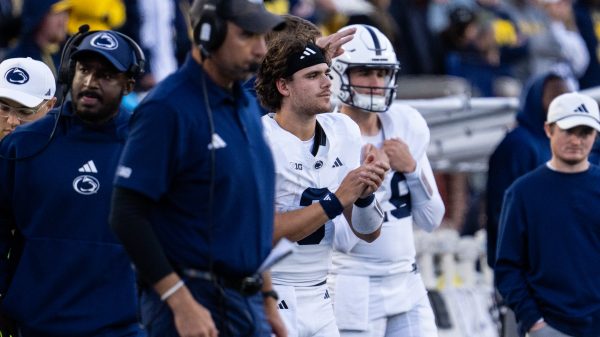
















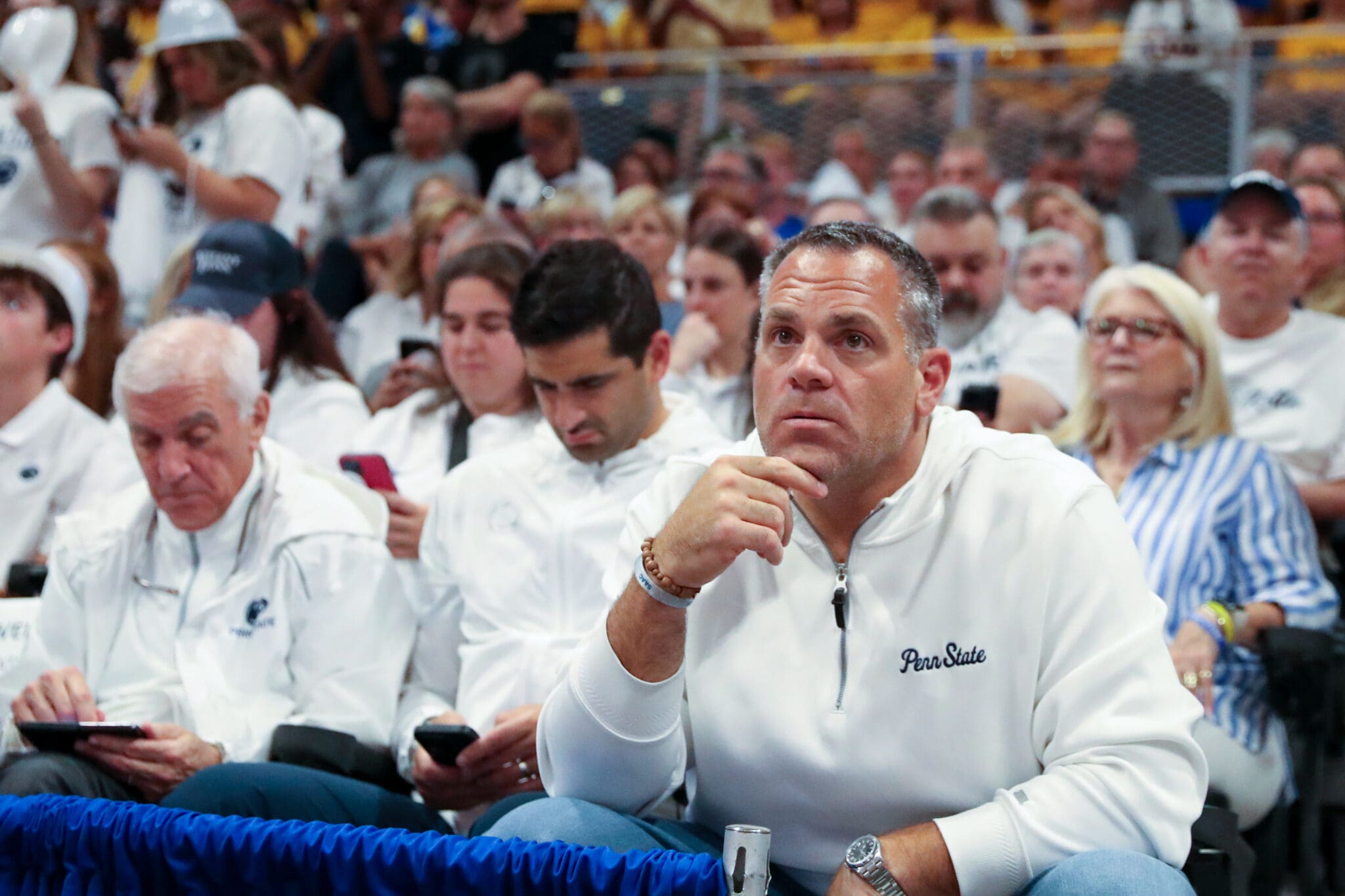
The last few columns I’ve written may have conveyed conflicting tones regarding the status of the Penn State opening.
I didn’t expect LSU to come open this quickly—but given how wild this college football season has been, I probably should have.
So, what are college football’s top jobs? And how do I assess them?
There are many ingredients, each carrying a different weight. Brand prestige still matters, but not as much as it once did. In today’s landscape—with a 12-team College Football Playoff, NIL, revenue sharing, and the transfer portal—it’s been proven that you can win anywhere and still attract elite talent.
The real differentiator between a program that enjoys a brief surge and one that sustains success lies in its infrastructure, resources, and consistency. I consider a school’s overall brand, facilities, natural recruiting footprint and pipelines, revenue generation, program stability, and its ability and willingness to spend.
Taking all of this into account, here are my Top 10 jobs in college football, if all were to become available, followed by five that just missed the cut.
The Best of the Rest
Nebraska, Notre Dame, Tennessee, USC, Florida
USC should soon re-enter the Top 10 once the upgrades to the John McKay Center are complete. Its California recruiting pipeline positions it well, but stability has been elusive since Pete Carroll’s departure. While USC isn’t as booster-driven as Florida, its internal dynamics have long been a mystery.
Florida enjoys one of the most fertile recruiting territories in the nation, competing not just in-state and in-conference, but nationally. The issue with the Gators is finding that right person to handle the pressure.
Notre Dame remains college football’s most prestigious brand but, like Oregon, depends heavily on national pipelines. Facilities have improved but haven’t advanced to the level many contemporaries are at or in the process of reaching.
Nebraska boasts Top 10 revenue, strong resources and a burning desire to win, but must reestablish its Texas recruiting connection that helped them dominate the sport.
Tennessee has Top 10-caliber assets as well, though it has occasionally run out of real estate in its climb back to national prominence.
#10 Michigan
Michigan’s national brand is a major strength, and its iconic winged helmet remains one of college football’s most recognizable symbols. The Wolverines rely heavily on talent from Ohio but have recently seen elite in-state recruits leave. As a strategic Nike/Jordan “Jumpman” school, Michigan carries added appeal.
The Stephen M. Ross South Athletic Campus Performance Center, a 280,000-square-foot complex, is among the sport’s premier facilities and a strong recruiting tool.
#9 Alabama
It’s impossible to ignore Alabama’s championship history, which cements its place among the sport’s most prestigious programs. While in-state recruiting depth isn’t elite, the Crimson Tide’s proximity to Texas, Louisiana, Georgia, and Florida provides fertile pipelines.
The Mal Moore Facility and Sports Science Center are among the best in the nation, ensuring Alabama remains equipped to meet its sky-high expectations.
#8 Oklahoma
Much of what applies to Michigan also fits Oklahoma, though its proximity to Texas and Louisiana gives it an even stronger recruiting edge.
The Sooners are currently planning major renovations to The Barry Switzer Center, mirroring Penn State’s ongoing upgrades to its football infrastructure.
#7 Penn State
Despite intense competition from Ohio State and Michigan, Penn State benefits from a solid natural recruiting base in Pennsylvania, supplemented by fertile pipelines in the DMV (D.C., Maryland, Virginia) and New Jersey.
The university’s ongoing facility upgrades will be a significant differentiator. Penn State has proven willing to spend and has strong revenue potential.
If James Franklin achieved anything in his 12 years in State College, it’s that he elevated PSU from a Top 15 job to one that could now be argued as borderline Top 5.
 Add Nittany Sports Now as a preferred source in Google! Click here to add us.
#6 Oregon
If Oregon had an in-state recruiting base comparable to Penn State, Ohio State, or Michigan, it might be the best job in the country.
The Ducks rely heavily on California talent to supplement their local prospects, but their facilities—thanks to Nike’s deep investment—are second to none. The amenities and branding in Eugene are the envy of the nation, positioning Oregon as a true national player.
#5 Texas A&M
I may think too highly of the Texas A&M job, but it truly has everything a coach could want.
Texas is the most talent-rich state in the nation, producing enough players to support 13 FBS programs while still being raided by out-of-state schools.
A&M’s Bright Complex rivals any facility in the country, and the program generated $279 million in revenue in 2024—second only to Ohio State.
The issue has been stability: Mike Elko is attempting to become the first Aggies head coach to last beyond six seasons since R.C. Slocum.
This also may explain why Elko would dismiss any overtures to leave College Station – he already has a Top 5 job.
#4 Georgia
NFL scouts long viewed Georgia as a sleeping giant—if a coach could keep the state’s elite talent home, the Bulldogs would dominate. Kirby Smart has finally delivered on that potential, becoming the first coach since Vince Dooley to fully harness Georgia’s in-state power.
The Bulldogs can contend for national titles on local talent alone, and their proximity to the Carolinas and Florida only strengthens their reach.
The Butts-Mehre Heritage Hall facilities are elite—comparable to Oregon, Alabama, and Texas in both design and amenities.
#3 LSU
Nick Saban’s blueprint at LSU has since been replicated by two other coaches, producing three national titles this century and an appearance in a fourth.
Like Ohio State, LSU dominates in-state recruiting—top Louisiana prospects almost always prioritize the Tigers.
The LSU Football Operations Center remains the envy of the SEC, offering every resource imaginable to sustain championship-level success.
#2 Texas
If Penn State AD Pat Kraft needs a mentor on large-scale athletic modernization, he should look to Texas AD Chris Del Conte, who oversaw the largest athletics facilities upgrade in history—$750 million worth.
Texas continuously upgrades its infrastructure and invests heavily in player development. Joining the SEC only strengthens the Longhorns’ national brand.
With a location in the country’s richest recruiting state and neighboring pipelines overflowing with talent, Texas has no resource limitations—its $271 million in 2024 revenue ranked third nationally.
#1 Ohio State
Ohio State remains college football’s model of sustained excellence.
While Ohio isn’t as talent-dense as it once was, the Buckeyes consistently dominate in-state recruiting and supplement it with elite prospects from neighboring states and national pipelines.
Their fan and financial support are unparalleled—$280 million in 2024 revenue, tops in the nation. The Woody Hayes Athletic Complex undergoes major upgrades roughly every decade to stay competitive with the best programs nationally.
The Ohio State brand makes it a contender in every major recruiting and transfer-portal battle. Although the pressure to beat Michigan remains immense, Ryan Day’s overall national success has quieted critics—though he surely won’t want to risk a fifth straight loss to the Wolverines.