
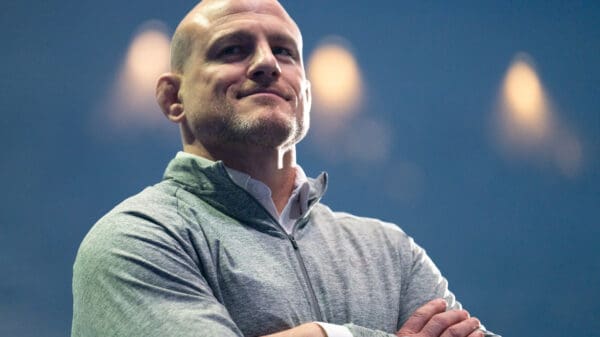
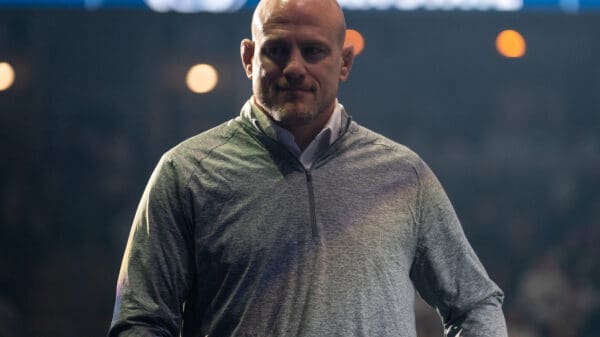









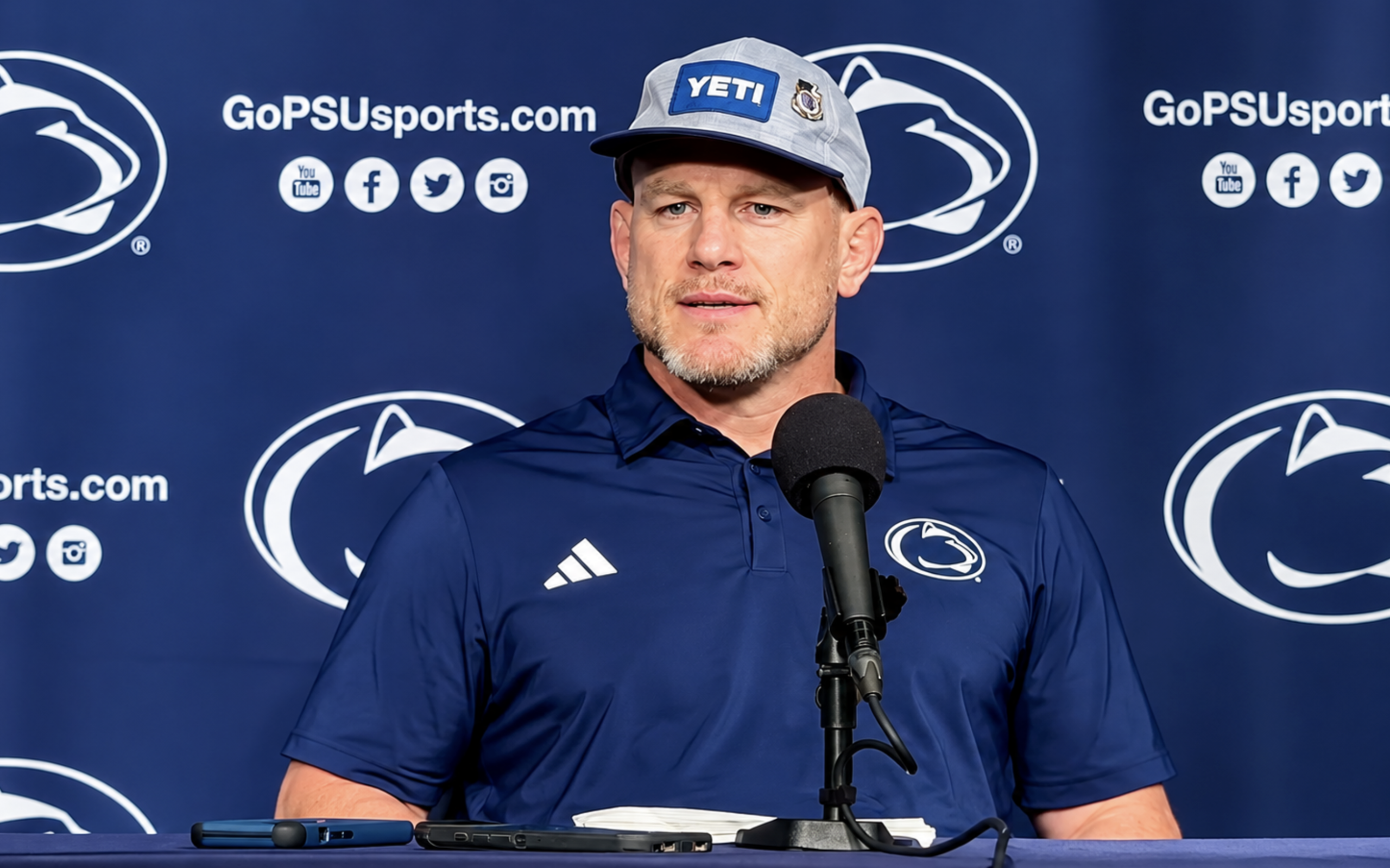
There are few coaches in college athletics who have earned the credibility to question the system quite like Cael Sanderson.
The Penn State wrestling coach has built a dynasty in Happy Valley, establishing a standard of excellence few programs in any sport can match. His teams consistently compete for national championships, attract elite talent and develop wrestlers capable of succeeding internationally.
Sanderson rarely makes himself the story. His comments are generally measured, his attention remains on his wrestlers, and controversy is something he tends to avoid.
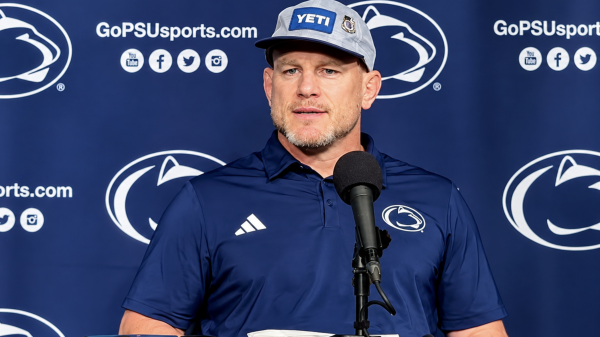
That made one moment during Penn State’s wrestling media day especially revealing.
When the conversation shifted toward NCAA eligibility, enforcement and the increasingly complicated landscape of college athletics, Sanderson’s frustration became impossible to ignore.
“It would really be nice for college sports if, at some point, the NCAA could enforce rules and have a say in what’s going on,” Sanderson said.
“It’s pretty wild right now. It’s kind of embarrassing, I think.”
Then came a moment of hesitation.
“Maybe I shouldn’t have said that. I don’t know.”
But Sanderson wasn’t finished.
“But what are we doing here? What’s the standard? What’s allowed? What isn’t allowed?”
Those questions deserve considerably more attention than another discussion about Penn State’s starting lineup.
When the most successful coach in college wrestling openly questions whether the sport operates under consistent standards, everyone involved should be listening.
Sanderson Asking for Answers
What makes Sanderson’s criticism particularly significant is the position from which it comes.
Penn State isn’t a struggling program searching for explanations about why it cannot compete. Sanderson isn’t complaining because his wrestlers lack opportunities or because the Nittany Lions cannot recruit elite talent.
Quite the opposite.
Penn State has become the destination other wrestling programs measure themselves against. Its facilities, coaching staff, developmental system and connection to the Nittany Lion Wrestling Club provide advantages few schools can replicate.
Yet Sanderson wonders whether following the rules could become a competitive disadvantage.
“If we’re following the rules, are we at a big disadvantage?” Sanderson asked.
“Our program has been blessed because we follow the rules. Everyone’s going to say that, of course.”
That question gets to the heart of what makes the current environment troubling.
Rules only matter when institutions understand them and believe they will be enforced consistently.
Without that confidence, compliance becomes less about following established standards and more about interpreting evolving exceptions, legal challenges and administrative decisions.
If Sanderson believes the system lacks clarity, imagine the uncertainty facing programs operating without Penn State’s resources.
Levi Haines Represents the Uncertainty
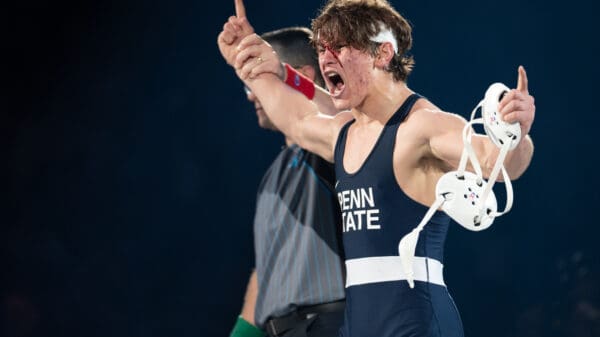
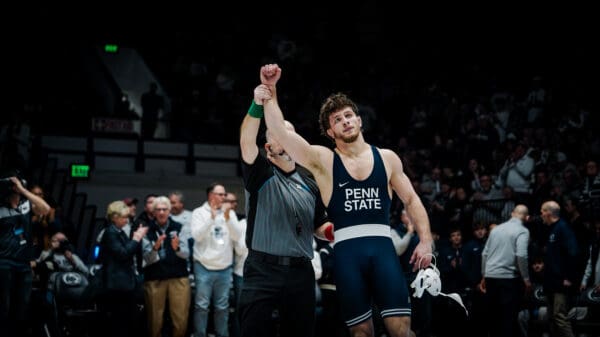
Few situations illustrate the problem better than Levi Haines.
The former Penn State national champion remains in an uncertain eligibility situation as questions surrounding his potential return to collegiate wrestling continue.
Rather than having a definitive answer about whether Haines can compete again, Sanderson and his staff are left preparing for multiple possibilities.
That’s hardly ideal for a program preparing for another championship run.
Sanderson explained that Haines has continued training, concentrating primarily on international freestyle competition.
 Add Nittany Sports Now as a preferred source in Google! Click here to add us.
“With Levi, he’s been preparing for the World Championships in freestyle. That’s what he’s been preparing for,” Sanderson said.
“If he gets the call back to folkstyle, he’s been wrestling folkstyle his whole life. He’ll be good to go.”
Sanderson even found humor in the situation.
“It’s not like he’s out in the woods hunting,” he said. “He wishes he were out in the woods hunting every day, and he is when he can.”
But behind the humor is a legitimate concern.
Haines is preparing without knowing whether another collegiate opportunity will materialize. Penn State must plan without knowing whether one of its most accomplished wrestlers could become available.
The issue isn’t whether Haines deserves another season. That determination belongs to the applicable eligibility process.
The larger problem is the uncertainty surrounding when and how those decisions are made.
Recruiting and Regional Training Centers
Sanderson’s concerns extend beyond individual eligibility cases.
His questioning of whether regional training centers could become avenues around traditional NCAA recruiting restrictions raises another important issue.
Regional training centers serve an important purpose in developing athletes for international competition. However, their relationships with university programs also create questions about recruiting boundaries and competitive advantages.
Where does legitimate athlete development end and impermissible recruiting activity begin?
That doesn’t mean regional training centers are inherently violating regulations. It means the NCAA must establish boundaries that athletes, coaches and administrators understand.
For programs with substantial resources, uncertainty may be manageable. For smaller programs, it becomes another obstacle to competing on equal terms.
The NCAA Cannot Ignore This
Sanderson understands college wrestling is changing.
He acknowledged that younger wrestlers are arriving on campus increasingly prepared to contribute immediately, creating a different approach to roster development and redshirting.
“Kids are coming in, and it’s go time,” Sanderson said.
“It’s a mindset shift for them.”
But adapting to change and operating without clear rules are two entirely different things.
“The big thing is hoping that, at some point, the NCAA can figure things out and have the ability to enforce standards and rules so we know where we stand,” Sanderson said.
“That’s the biggest challenge in college sports. What are the rules?”
Sanderson has spent his career building a program around preparation, accountability and consistency.
Those principles shouldn’t disappear when the conversation moves from the wrestling room to the organization responsible for governing college athletics.
Penn State will continue attracting talented wrestlers. Sanderson will continue developing champions.
But college wrestling’s future cannot depend on which institutions are best equipped to navigate uncertainty.
It needs understandable rules, transparency and consistent enforcement.
The coach who has mastered winning within the system is now questioning whether the system itself knows its own rules.
That should concern everyone in college wrestling.