

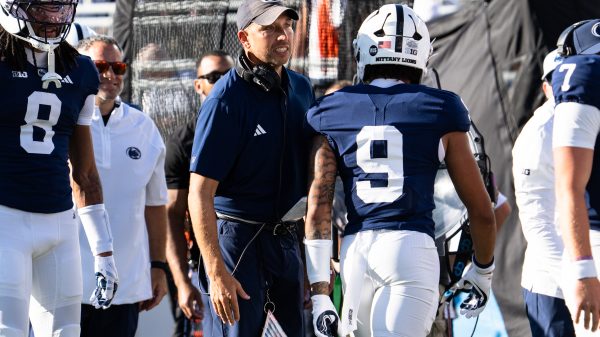



















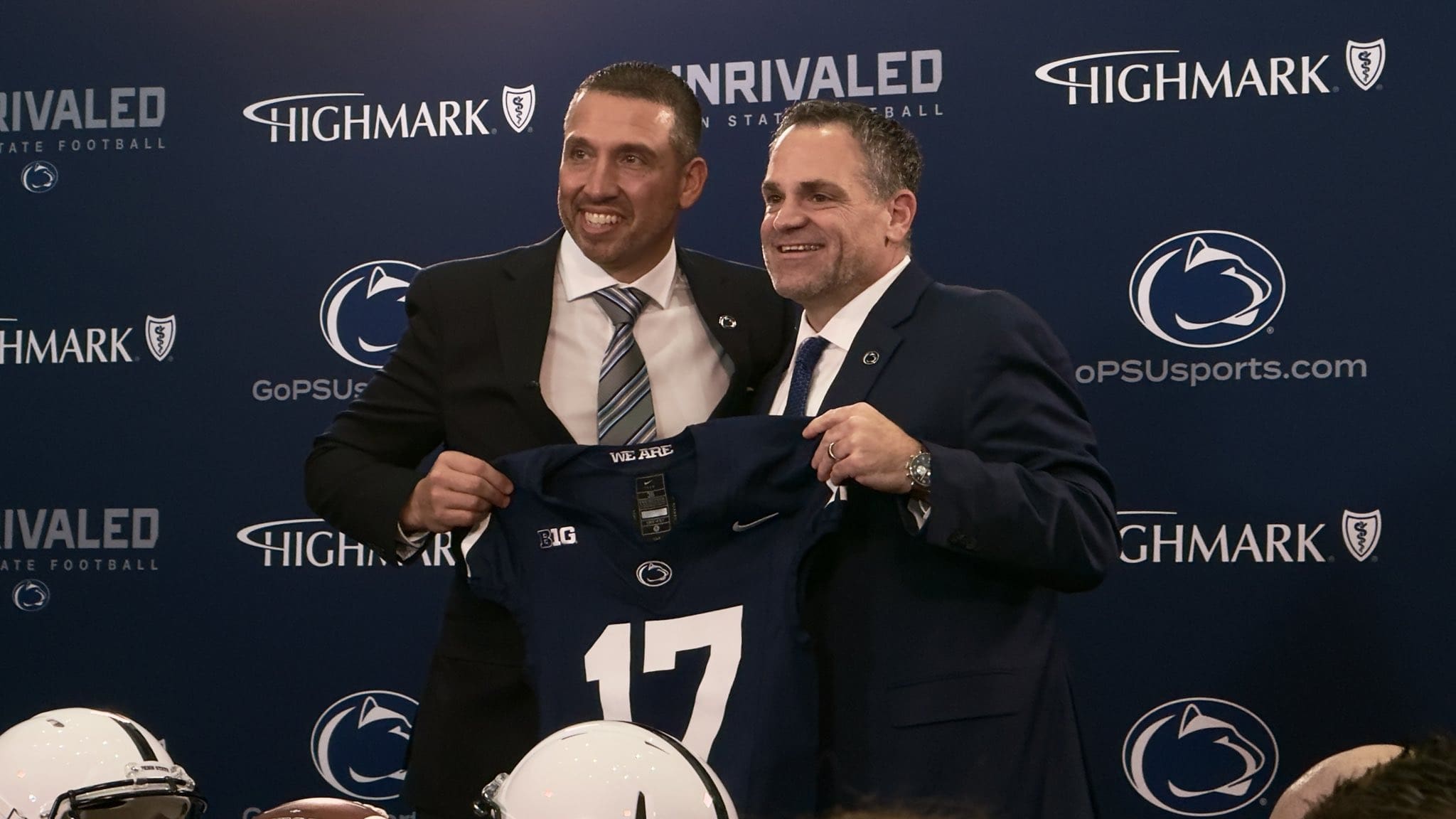
The whirlwind is only beginning for new head coach Matt Campbell as he assumes leadership of Penn State football.
Following a turbulent coaching search and weeks of internal uncertainty, Campbell now steps into one of the most scrutinized roles in college athletics.
His introductory press conference emphasized the values and mindset he intends to bring to Happy Valley.
“We’re going to do it one day at a time and do it from the ground up,” Campbell said. “We’re going to do it in a football program that’s going to demand toughness—mental and physical. Discipline at every corner. And most importantly, togetherness. Selflessness and togetherness: one team, one program, unified to continue the great pride and tradition of Penn State football.”
With that foundation laid, Campbell now faces an immediate set of priorities that will shape the early trajectory of his tenure. Here are five critical steps he must take to position Penn State for long-term success.
1. Embrace What Went Right, While Implementing Solutions to What Went Wrong
One of Campbell’s most important early tasks is evaluating the structure he inherits. His comments made clear that he intends to do this thoughtfully.
“I think if you’re going to build a championship team, you better have a championship staff. I want to take my time and talk to everybody here in-house. That’s really important.”
This approach gives Campbell an opportunity to learn from the James Franklin era. For all the controversy surrounding Franklin’s final few weeks at Penn State, there were important elements that worked overall: player development infrastructure, recruiting pipelines, and on-field discipline at various positions.
Campbell gains credibility and context by identifying what should be preserved.
At the same time, he can’t overlook the issues that contributed to Penn State’s recent instability. From cultural fractures to depth concerns to misalignments between players and staff, the areas that went wrong must be addressed with both urgency and care. The key for Campbell is balancing immediate fixes with long-term recalibration improving the program without destabilizing the foundation that’s still functional. A successful transition requires acknowledging the strengths of the past while clearly charting a new and improved path forward.
2. Terry Smith and Matt Campbell Must Lean Into Each Other
Perhaps the most pivotal relationship during this transition is the one between Campbell and Smith. Smith’s leadership through the interim period earned admiration across the program, and Campbell acknowledged his importance immediately, emphasizing how essential it was to retain him. Smith, for his part, spoke openly during Pinstripe Bowl preparations about wanting to work with a head coach who shares his values—something he believes Campbell embodies.
The challenge now is operationalizing that alignment. Internally and externally, Smith has built deep relationships with players, families, high school coaches, and influential program stakeholders. Campbell must rely on Smith’s institutional knowledge and cultural credibility to establish continuity and trust.
For Smith, this moment also represents a significant opportunity. As Campbell’s de facto No. 2, he can broaden his experience, expand his leadership portfolio, and absorb a different CEO-style perspective. This partnership, if nurtured properly, can become the stabilizing force that helps carry Penn State through a sensitive transition and into a more unified future.
 Add Nittany Sports Now as a preferred source in Google! Click here to add us.
3. Salvage the Class of 2026 and Stabilize Recruiting
The 2026 recruiting class cannot be treated as a lost cause. While the transfer portal will inevitably play a larger role this cycle, Penn State risks long-term roster imbalance if it neglects high school recruiting during this transitional year.
Four-star signees Jackson Ford (DE) and Peyton Falzone (QB) represent foundational pieces Campbell must build around. Retaining them, and maximizing their early development, sends a powerful signal to recruits and current players.
There is also real opportunity on the market. Reports indicate that four-star wide receiver Samson Gash (a Michigan State commit) and four-star defensive back Bryson Williams (released from his letter at Iowa State) have interest in Penn State. These are the types of prospects the new staff must aggressively pursue.
A realistic, stabilizing goal is landing 12–15 recruits with a high hit rate. Even a smaller class can be successful if those players meaningfully contribute. In a transition year, avoiding recruiting misses is just as important as securing major wins.
4. Be Aggressive and Strategic in the Transfer Portal
Campbell’s first priority in the portal is retaining as much of the current roster as possible. Every conversation with returning players matters; their buy-in determines whether the portal becomes a tool for enhancement or a desperate tool for replacement.
Once retention is stabilized, Campbell must be assertive in identifying transfers who can contribute immediately while maintaining multiple years of eligibility. That combination offsets a lighter recruiting class and supports sustained roster development.
Expect some Iowa State flavor in early portal additions, but the larger strategy should mirror programs like Indiana under Curt Cignetti—maximizing the portal to rapidly strengthen weak spots without compromising culture. With a favorable 2026 schedule, Penn State has an opportunity to secure a 10-win season if the right pieces are added. The portal is not just a stopgap; it is an accelerator when used intentionally.
5. Create Internal Unity and Rebuild Trust Across the Program
The coaching search exposed significant internal fractures. Leaked audio involving AD Pat Kraft, public accusations from LaVar Arrington about trustees Jay Paterno and Anthony Lubrano, rumors surrounding coaching candidates, perceived tensions with agent Jimmy Sexton, and players expressing frustrations on social media all pointed to a program operating without alignment.
If not for the Lane Kiffin vs. LSU drama dominating national headlines, Penn State’s internal disarray would have attracted even greater scrutiny.
Campbell must now become the unifying force that reconnects administrators, trustees, players, donors, alumni, and staff. Terry Smith described the requirement well when he assumed interim duties: everyone must “pull the rope in the same direction.” Campbell must reinforce that principle at every level of the organization.
For Penn State to compete with the Big Ten’s elite and meet the expectations Kraft has set, unity cannot be optional—it must be foundational.
Matt Campbell’s early decisions will define his tenure before a single game is played. If he embraces what worked, fixes what didn’t, builds a collaborative partnership with Smith, replenishes the roster, aggressively leverages the portal, and reestablishes internal alignment, he will give Penn State its best chance to reclaim its place among the sport’s premier programs.