













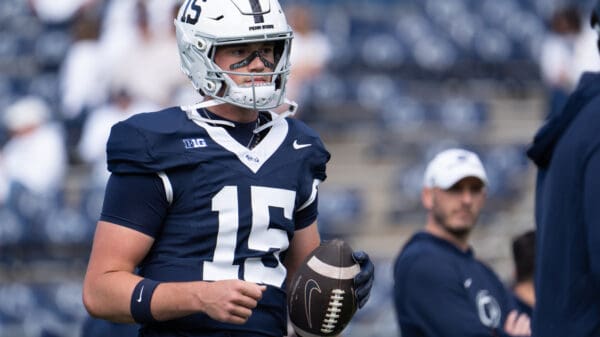

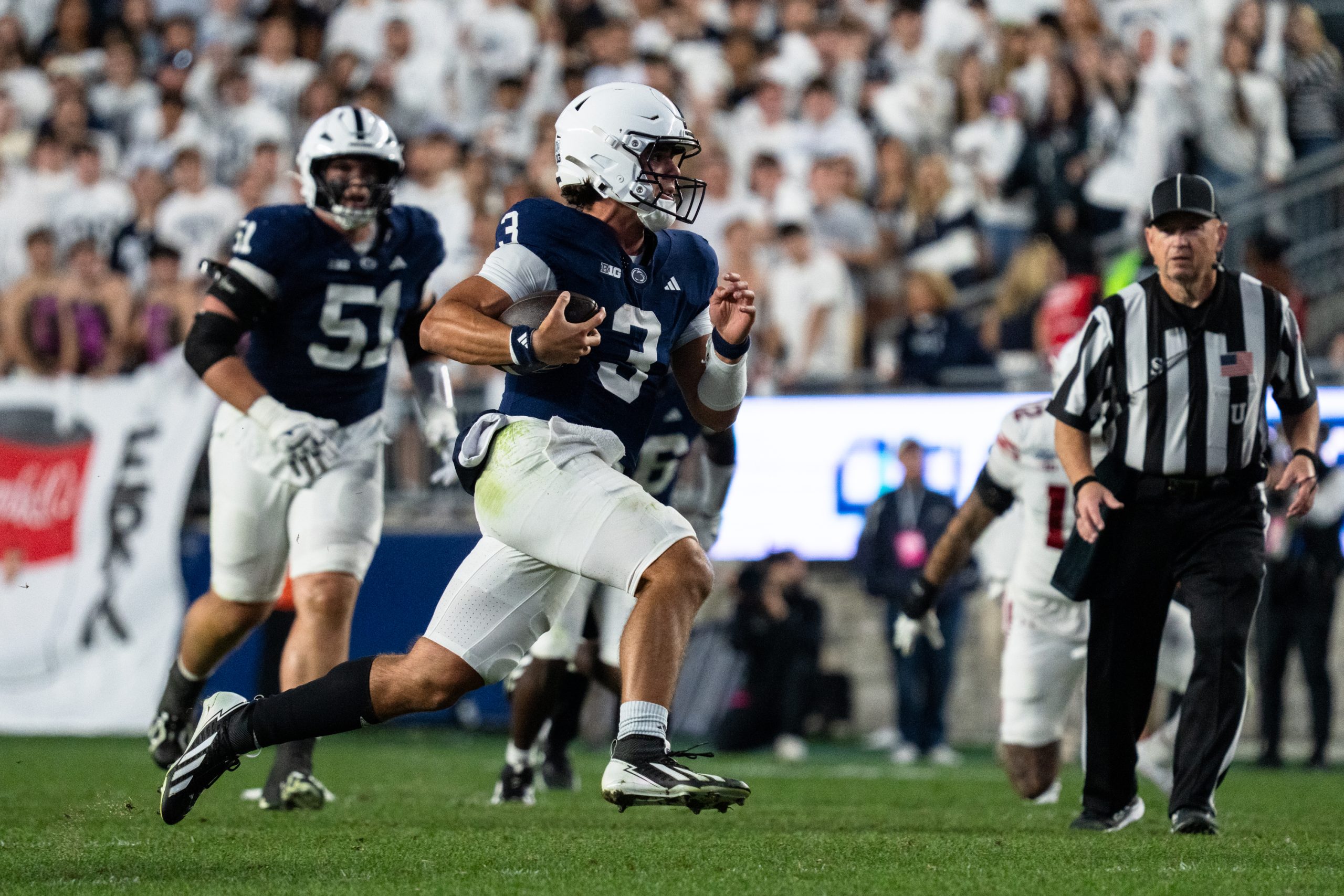
Quarterback Rocco Becht could have left the explanation at execution. Penn State needed better detail, more urgency and a cleaner start after halftime.
Then he offered something useful.
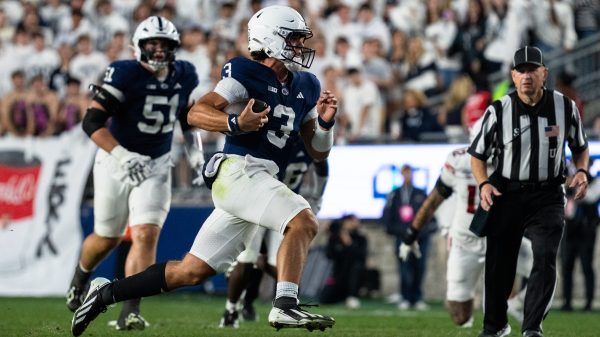
“But I guess when we go out there, sometimes I may be doing something on a play where I’m trying to make a play happen rather than just letting it happen,” Becht said Tuesday.
That admission gets closer to Penn State’s problem than a promise to play four quarters. When the offense stalls, its quarterback can feel the need to rescue it. The challenge is recognizing when that instinct starts making his job harder.
Washington provided enough evidence of how quickly a comfortable afternoon can change.
A 28-6 halftime advantage became a 28-25 victory.
The Nittany Lions scored nothing after halftime while Washington produced 19 unanswered points. An offense that finished with 414 yards still needed one final possession to keep the Huskies from getting another chance.
Penn State delivered that possession: 14 plays, 70 yards and the final 7:40 off the clock.
Both halves belong in the evaluation. Penn State nearly surrendered control of the game, then showed the patience necessary to finish it.
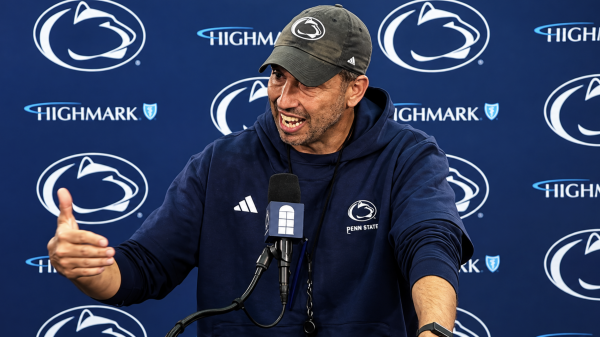
Matt Campbell saw a similar divide in how his players handled the pressure.
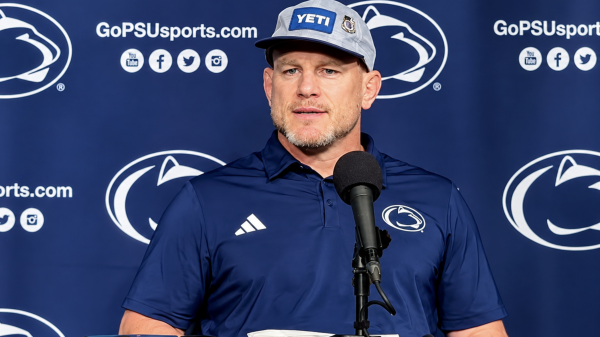
“There were some things I really didn’t like in the second half, I’ll be honest with you,” Campbell said after the game. “There were some things where I thought there was a lack of poise by some young players on the sideline when things were turning.”
Campbell also identified examples he wanted those players to study.
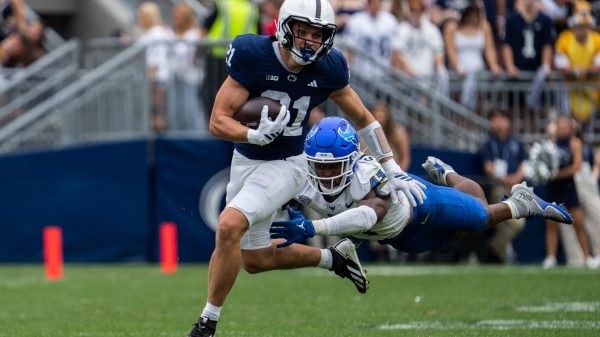
“I think when you can put the videotape on and you say, ‘Watch No. 3. Watch zero. Watch 68. Watch 21.’ Man, it may be not going good for a second, but watch how they carry themselves, and they never waver.”
Becht’s inclusion from Campbell matters, particularly alongside his own assessment Tuesday.
Campbell was praising how his quarterback carried himself through trouble.
Becht was acknowledging that his decisions within individual plays still needed improvement.
 Add Nittany Sports Now as a preferred source in Google! Click here to add us.
A player can provide the right example on the sideline and still need to settle himself once the ball is snapped.
That distinction gives Penn State something concrete to address before Minnesota visits Saturday.
“We’ve just got to be able to play the play, not overthink things, come out with a sense of urgency like we do in the first quarter and just be able to lock in, stay calm and stay poised,” Becht said.
He included himself in that responsibility.
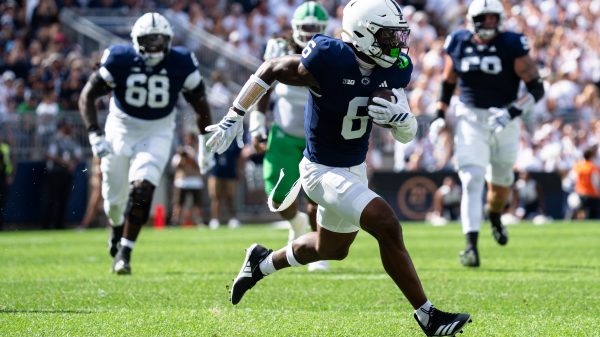
Penn State has enough offensive production to know what works. Against Washington, Becht completed 16 of 27 passes for 240 yards, two touchdowns and no interceptions. Carson Hansen rushed for 119 yards, while Chase Sowell caught four passes for 125 yards and a touchdown.
The pieces were there. Sustaining their effectiveness was the issue.
And the closing drive offered a useful example of what Becht described. Penn State did not need another touchdown. It needed to keep moving the chains until Washington ran out of time. The offense accomplished something important without adding another point.
For Campbell, the lesson extended beyond the playbook.
“Those are videotape evidence of, ‘This is who we’re going to be, and this is where we’re going.’ You’re either with us or you’re not,” he said.
“That’s the great thing about college football. You don’t have to be here for very long, right? You’ve got to choose. This is the standard, this is the expectation, and this is where we’re going.”
That is a demanding message after a win. It also explains why surviving Washington could not satisfy every concern.
Penn State enters Minnesota week at 5-4, with consecutive victories and a chance to become bowl eligible. There is progress worth protecting.
Becht’s task is helping the offense protect it without treating every difficult possession as something he must fix alone.
He already understands the difference between forcing a play and letting it develop. Saturday offers another opportunity to show that understanding when the first read disappears, a drive stalls or the lead starts shrinking. Penn State needs that response before another game reaches its final possession.