












UNIVERSITY PARK, Pa. – Penn State improved to 5-4 on the season with a major matchup with Minnesota looming on Saturday at Beaver Stadium.
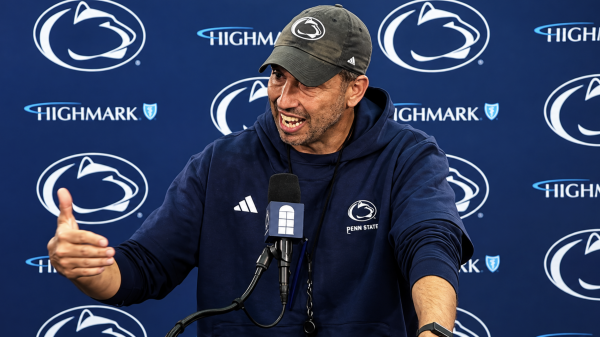
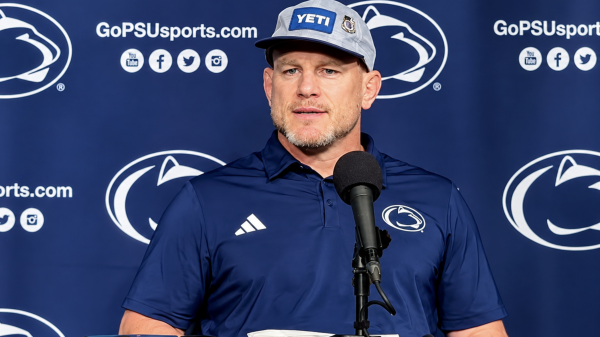
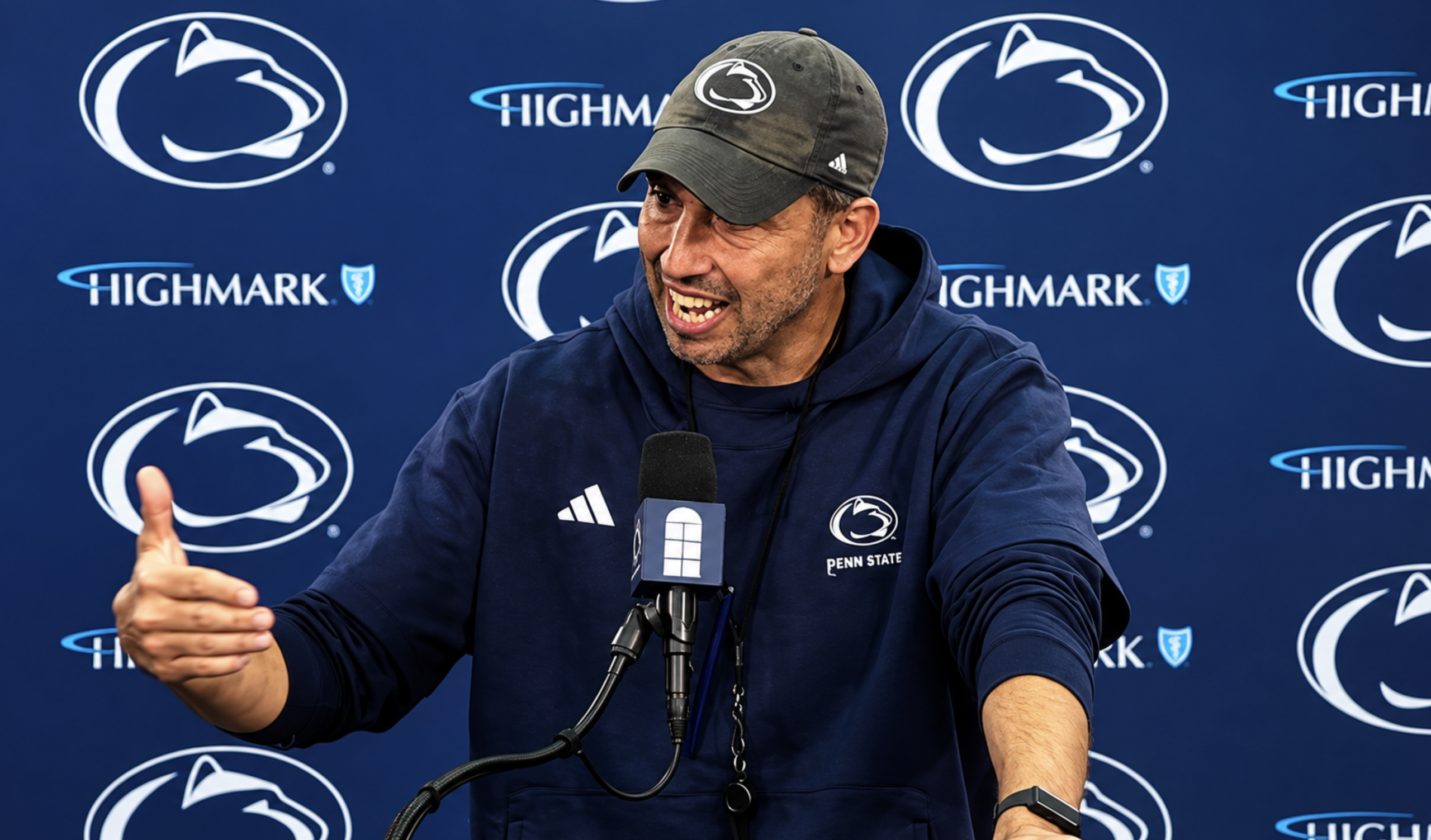
Penn State head coach Matt Campbell gave updates on Jack Ham, Koby Howard, Nittany Lion second half struggles among other topics. Here is what Campbell had to say th
Opening statement: Jack Ham’s condition
Matt Campbell: Just quickly, let me give you an update on Jack. We’ve gotten a lot of inquiries, and I want to make sure everybody knows what’s going on.
I talked to him a little bit yesterday and today. Number one, he is talking, he’s in stable condition, and he’s still out in Washington.
We got to see him after the game, which was awesome, and he was doing really well. I think that’s great progress, and hopefully we get him back here sooner rather than later.
I want to sincerely thank so many people who have reached out. Obviously, what Jack and his family mean to Penn State football is significant. On behalf of our program and the athletic department, we greatly appreciate the love and care we’ve received for Jack.
With that, I’ll open it up for questions.
Koby Howard’s injury status and leadership
Q: Can you provide another update on Koby Howard? What does it mean to have an injured player remain so involved with the team?
Campbell: Let me give you a little bit on Koby’s situation.
Nobody, as you can see, is pressing harder to get back on the football field.
I think we came to a decision Thursday or Friday that we’re in a pause state right now with Koby. We were trying to beat a timeline for his return, and the reality is, as I’ve continued to say, I refuse to put Koby on the field until he’s 100% ready to go.
Whether that pause means the end of the season or whether it’s postseason play, I promise I’ll let you guys know. Right now, we’re in a pause state to make sure we get him fully back to health.
On the other side of it, my challenge over the last couple of weeks has been that it’s really hard to be injured in college football.
We’ve got some great players, Max Granville and Alex Tatsch, who were coming of age in their careers and then faced setbacks. This is Koby’s first.
These are the future leaders of our football program. Great players have to stay involved, but they also have to keep growing.
I just got done telling our team that nobody really cares. Nobody cares that you went on a trip. Nobody cares that you don’t feel great. It’s Tuesday. Nobody cares.
There has to be a sense of urgency to grow.
That’s what I love about those guys. Watching what Max has done, what Alex Tatsch has done and how Koby has been involved as an elite teammate has been impressive.
The week before, you saw Chase Sowell doing the same thing.
I’ve really appreciated our guys buying into what it means to be a great teammate and a future leader.
Everybody is going to see how you led when things weren’t going well for you. That gives you the tools and the firepower when you come back and have the ability to use your voice in a powerful way.
Koby is doing a great job, and so are the rest of those guys.
Development of young receivers
Q: With Koby’s absence becoming more extended, what does that mean for Amareyn Jackson? How have you seen him grow in an increased role?
Campbell: I really don’t think it changes anything. We’ve been in this situation for the last seven weeks.
The bigger piece has been watching both Amareyn and Zay Robinson step in, make splash plays and show their young talent.
It hasn’t all been perfect for either of those guys, but you’ve seen some really exciting moments from both.
That’s what you hope happens on good teams. You lose a good player, and other people have to step up.
Watching Chase step into the critical role he’s played, and play great football over the last couple of weeks, along with these other guys taking important reps, has been awesome.
We’re really excited about the growth of both those guys.
Decision not to use timeouts before halftime against Washington
Q: With 1:48 remaining before halftime and three timeouts available, what went into your decision not to use them?
Campbell: They had three timeouts, too.
The first thing was to get the first down because the last thing I wanted to do was go three-and-out and give them the ball back.
We got our first first down, but then we took a negative play. We took a sack, and it became second-and-11.
From my standpoint, we had the momentum. The last thing I wanted to do was give that away.
 Add Nittany Sports Now as a preferred source in Google! Click here to add us.
We still weren’t in great field position. It probably would have taken one more first down.
If we’d had a positive completion there, I probably would have taken a timeout.
Usually, once we get under a minute in a two-minute situation, that’s when I start using those timeouts.
My bigger fear was having to punt the ball back. Number one, something poor could happen on the punt. Number two, we were getting the ball to start the second half, and I didn’t want to make a mistake.
It’s a really fair question, and we talked about it after the game.
If we don’t take the negative play, I probably don’t put us in that situation. But with the negative play, I felt like it was risky with the lead we had and knowing we were getting the ball back.
If we weren’t getting the ball to start the second half, I probably would have thought about it differently.
With all those things in mind, I thought we could dictate the momentum for the rest of the game.
Obviously, it didn’t work out in our favor that way, but it’s certainly a fair question.
Malachi Goodman and Garrett Sexton’s performances
Q: After reviewing the film, what did you learn about Malachi Goodman playing more than a half while not fully healthy? How did Garrett Sexton perform in extended action?
Campbell: I wish I had talked more about Garrett after the game, to be honest.
Both of those things were highlights for me.
You see Malachi growing. To not be 100% and play against a really talented freshman defensive end and a good interior defensive front was impressive.
A couple of those big runs, including the big run Cam makes, came off his block. That was outstanding.
It was great to see him. He just wore down as the game went along.
Then you watch Garrett go in, and the big block on Carson’s run at the end of the game was because of Garrett Sexton.
For Garrett, a young player who’s growing, and Malachi, who’s also a very young player developing, I thought Saturday was a huge step forward for both of them.
Penn State’s second-half struggles
Q: There’s a significant disparity in how Penn State has been outscored in the second half. Is that a depth issue, fatigue or something else?
Campbell: That goes back to the “nobody cares” point.
It’s a real problem. I’ll be honest with you.
My concern is that sometimes it’s a mental maturity issue. You’re ahead in some of those games, and it’s almost like a mental relapse.
We’ve got to figure it out, and it starts with the head football coach.
My bigger concern isn’t the fourth quarter. If you do the research, in one-score games, if you win the third quarter, you’re going to win the game 92% of the time.
We’ve studied that because we’ve lived in that world throughout my career over the last 10 years.
That’s probably my biggest frustration. It’s an area where we’ve been very good, and we haven’t been so far.
I think we’re getting outscored 42-9 in the third quarter of Big Ten games right now.
Why is that? What is that?
Believe me, there is an elite sense of urgency from the head football coach and our staff. Our players understand that it’s not okay.
It’s an area where we have to demand a pathway forward.
Whether we need to do a better job at halftime, have better schematic plans coming out of the second half or do a better job mentally preparing our guys to play, whatever those things are, it’s fair to criticize all of it.
It’s not getting done, and we have to be better.
It’s a great question and something we’ve talked about extensively, especially after what happened Saturday.