
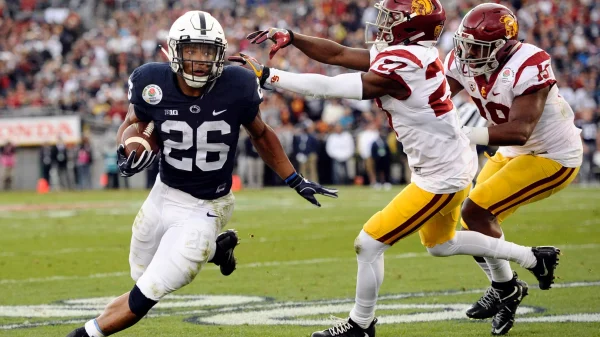













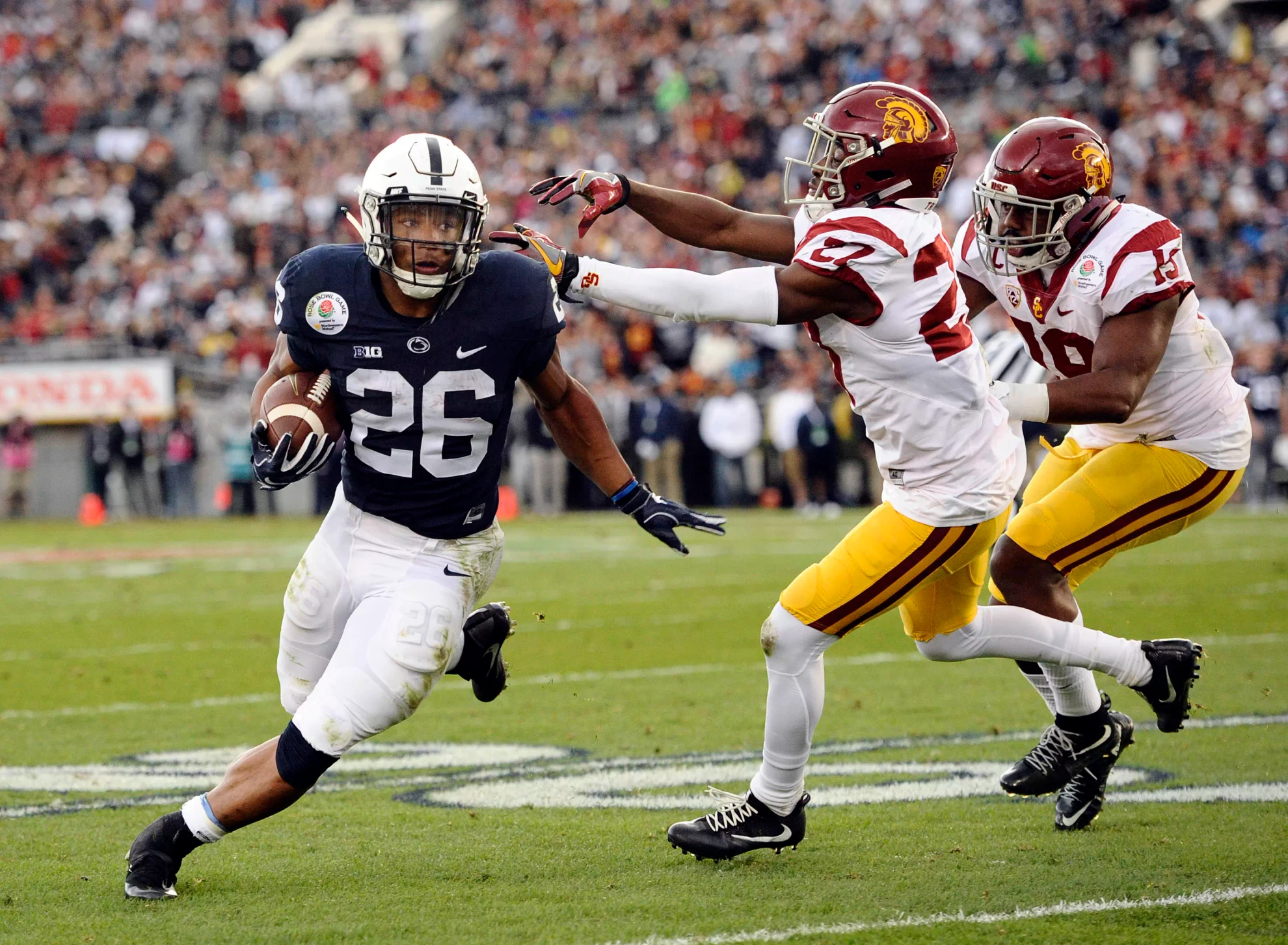
Saturday’s salute to Penn State’s 2016 team will bring back the familiar images: Grant Haley racing down the sideline, Trace McSorley launching another deep ball, Saquon Barkley making defenders miss in Pasadena.
The occasion also deserves a less comfortable memory.
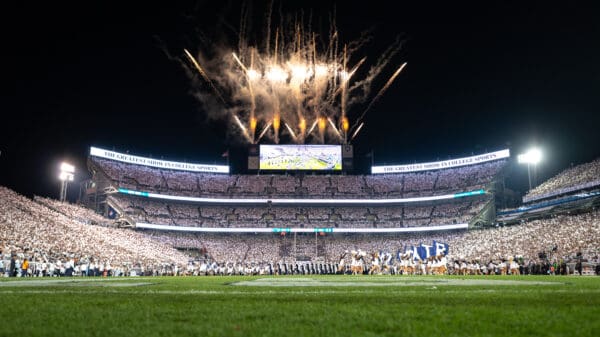
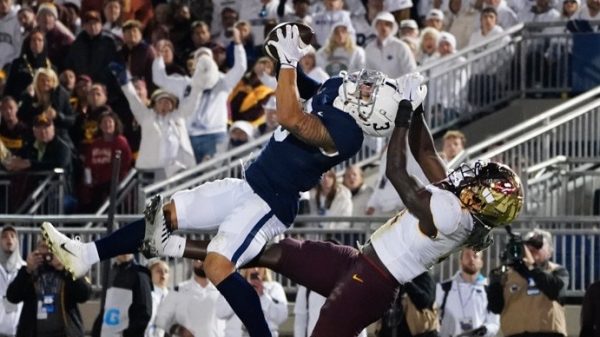
On Oct. 1, 2016, that same team went to halftime against Minnesota trailing 13-3 as boos and “Fire Franklin” chants sounded inside Beaver Stadium.
Ten years later, with Minnesota again visiting, the distance between those sounds and the championship celebration explains why this team still matters.
Its story was a change in what Penn State believed it could become.
James Franklin had opened his tenure with consecutive 7-6 seasons. The 2016 team arrived at the Minnesota game 2-2, a week removed from a 49-10 loss at Michigan.
There was little in that afternoon’s first half to suggest a Big Ten championship was approaching.
Franklin never forgot the reception.
“I remember that very clearly,” he said years later to Mark Wogenrich of Penn State On SI in 2020. “I probably always will.”
What followed gave the season its defining pattern.
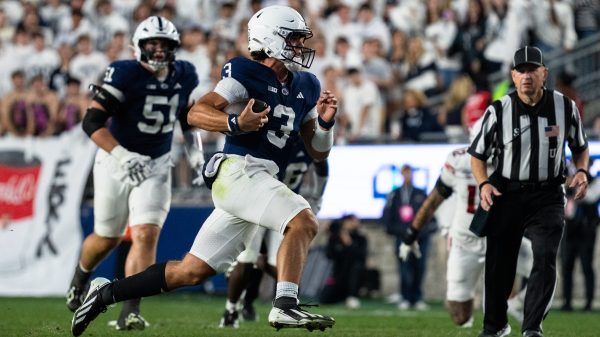
McSorley found Irvin Charles for an 80-yard touchdown in the third quarter. Later, with Penn State facing another deficit in the final minute, McSorley’s legs helped create the opportunity for Tyler Davis’ tying field goal.
Barkley ended overtime with a 25-yard touchdown on Penn State’s first offensive snap. The Nittany Lions won 29-26 and began a nine-game winning streak.
Anniversaries compress seasons into a handful of plays, making the outcome feel inevitable. Nothing about that October afternoon was inevitable. Penn State still needed a receiver to break a tackle, a quarterback to find room to run and a kicker to extend the game. Remembering those details gives the championship its proper scale: it emerged from a season that remained in doubt.
Minnesota supplied the first escape.
Ohio State supplied the national announcement.
Three weeks later, Marcus Allen blocked Tyler Durbin’s field goal attempt and Haley carried the ball 60 yards for the touchdown that delivered a 24-21 victory over the second-ranked Buckeyes.
A White Out became the setting for one of the program’s most enduring scenes.
 Add Nittany Sports Now as a preferred source in Google! Click here to add us.
The block remains easy to isolate as the season’s transformative moment. Even one that former Ohio State head coach Urban Meyer still hasn’t gotten over nearly a decade later.
“By rule, you can’t physically pull the field goal protector out of the way of the guy jumping through,” Meyer said, referring to how Penn State defender Ryan Bates pulled Ohio State offensive lineman Brady Taylor on the game’s most consequential play.
“They later came back and said it could have been and should have been a penalty, if I remember right,” Meyer said. “If they would’ve thrown that flag, obviously, we win.”
Its meaning grows when placed beside Minnesota: Penn State had already survived an afternoon when its own stadium questioned its direction. Against Ohio State, the players produced evidence that their ambitions could extend much further.
Under offensive coordinator Joe Moorhead, the offense developed the firepower to sustain those ambitions. McSorley finished with 3,614 passing yards and 29 touchdown passes. Barkley rushed for 1,496 yards and earned Big Ten Offensive Player of the Year honors.
The Nittany Lions broke 33 school records during the season. Offensively they have the ability to change a game quickly, with McSorley’s willingness to challenge defenses complementing Barkley’s ability to turn ordinary space into extraordinary gains.
That explosiveness made the comebacks possible. It also gave supporters a reason to keep watching when another early deficit threatened to take a game away.
During the 2016 Big Ten Championship in Indianapolis, it offered the fullest expression of that identity.
Wisconsin led 28-7 in the second quarter, then Penn State answered with McSorley throwing for 384 yards and four touchdowns. Saeed Blacknall contributed 155 receiving yards and two scores, while DaeSean Hamilton added 118 yards.
Barkley caught the go-ahead touchdown. The defense secured the finish, with Haley stopping Corey Clement on fourth-and-1 during Wisconsin’s last possession. Allen, Jason Cabinda, Garrett Sickels and Evan Schwan belonged in the championship story alongside the offensive stars.
The 38-31 victory delivered Penn State’s fourth Big Ten title and its first outright conference championship since 1994. Gus Johnson gave the celebration its lasting soundtrack: “Welcome back to Camelot!”
For a program that had spent years navigating sanctions and uncertainty, the call expressed the significance of winning a championship again.
The season still carried disappointment. Penn State finished fifth in the College Football Playoff rankings after many felt the Nittany Lions were among the four best teams in the nation.
The consolation prize was a trip to the Rose Bowl in Pasadena.
While USC won 52-49, no one will ever forget Barkley’s remarkable 79-yard touchdown run that was as close to any Barry Sanders highlight run and Chris Godwin’s 187 receiving yards remain inseparable from the pain of surrendering a fourth-quarter lead.
That ending belongs in the anniversary, too. The 2016 team was capable of exhilarating football and costly mistakes, sometimes within the same afternoon. Its appeal survives the imperfect finish.
An 11-3 record and a No. 7 finish in both major polls preserve the achievement. The fuller memory includes the uncertainty before Minnesota, the sudden possibility after Ohio State and the conviction that developed with every comeback.
Saturday offers a chance to applaud all of it: the stars, the defensive stops, the adjustments and the work between the highlights. The championship became possible because the players and coaches found answers while the season was still in doubt.
Ten years later, Minnesota is back, and Penn State can celebrate the team that changed the sound of its stadium.