

















Punting is often one of football’s most overlooked positions. Fans tend to notice the booming kicks or the occasional mistake, but rarely the countless details that determine whether a punt becomes a hidden-yardage victory or a momentum-changing mistake.
For new Penn State punter Nathan Tiyce, those details are everything.
The Australian native arrives in Happy Valley after spending the 2025 season at Mississippi State, where his opportunities were limited but productive.
Tiyce appeared in nine games, averaging 39.0 yards on 12 punts while totaling 468 yards. More importantly, seven of those 12 punts were downed inside the 20-yard line, highlighting the type of situational punter Penn State believes it has added. He also connected on punts of 54 and 51 yards, proving he possesses the leg strength to flip field position when asked.
Those numbers only tell part of the story.
“People think specialists just go out there and kick the ball,” Tiyce said. “But you get very little time to settle into the game. You’re expected to perform at 100 percent every single time.”
Unlike nearly every other position on the field, a punter rarely gets multiple opportunities to establish a rhythm. Every snap carries significance.
“The margin for error is so small,” Tiyce said. “You’re trying to get the ball off in around 1.3 seconds while still generating as much power and hang time as possible. That’s probably what gets overlooked—how difficult it is to be nearly perfect every single time.”
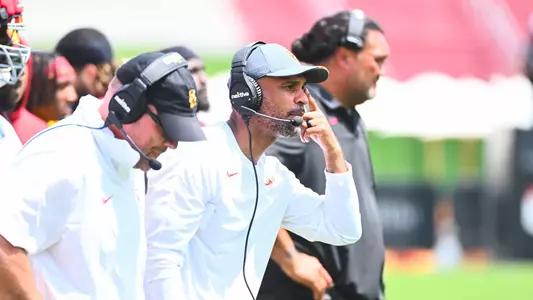
That mentality fits well with Penn State special teams coordinator Justin Lustig, whose units have consistently emphasized field position and execution over simply chasing distance.
Tiyce explained that every punt begins long before the snap.
Depending on field position, Lustig gives him a specific assignment before he steps onto the field. Sometimes the objective is maximizing distance. Other times, it’s placing the football inside the 10-yard line without allowing a return.
“Once I’m out there, it’s really all muscle memory,” Tiyce said. “Everything I’ve done in training and during the offseason takes over. I get into tunnel vision. Everything else kind of goes quiet, and I’m just doing my job.”
 Add Nittany Sports Now as a preferred source in Google! Click here to add us.
That level of preparation is no accident.
Like many Australian punters before him, Tiyce’s journey to American football began on the rugby field. He played for the Gerringong Lions, spent two seasons at Tocal College and eventually earned an opportunity through ProKick Australia, the development program that has become one of college football’s premier pipelines for international punters.
He also studied some of the best to make that transition.
Seattle Seahawks All-Pro Michael Dickson remains one of his biggest influences, while former Utah standout Tom Hackett and Lou Hedley helped shape his belief that Australians could succeed in American football.
“Lou Hedley was the reason I basically got into playing,” Tiyce said. “Seeing him come over and get picked up at 30 years old showed me what was possible.”
Now, Tiyce hopes to write his own story at Penn State.
While many players openly discuss NFL aspirations, Tiyce is intentionally keeping his focus narrow.
“My goal right now is just to play the best football I can for this team,” he said. “I want to do my job every day and execute at a high level. Obviously, playing professionally would be great, but I’ll worry about that when the time comes.”
For Penn State, that’s exactly the mentality coaches want from a specialist. Hidden yardage often determines close games, and consistency, not highlight-reel punts, is what wins those battles.
If Tiyce can continue pinning opponents deep while maintaining the calm, process-driven approach that brought him from Australia to the SEC to the Big Ten, Penn State’s newest specialist could quietly become one of its most valuable weapons this fall.