

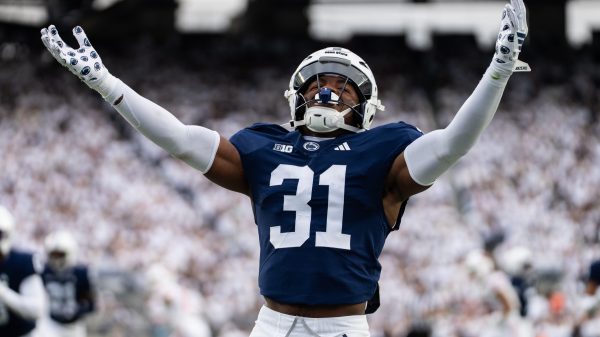









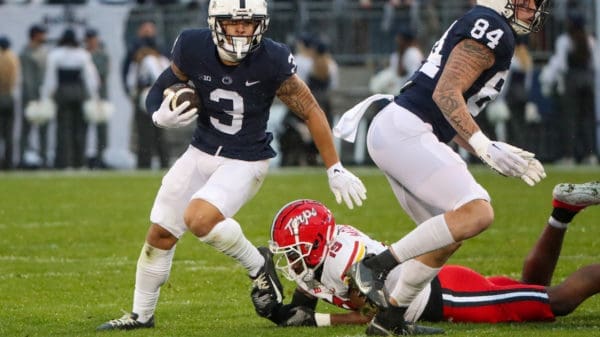

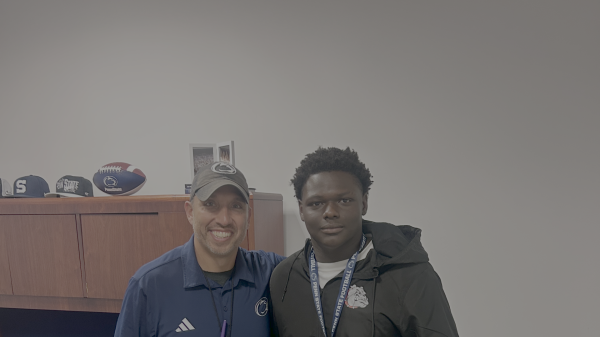
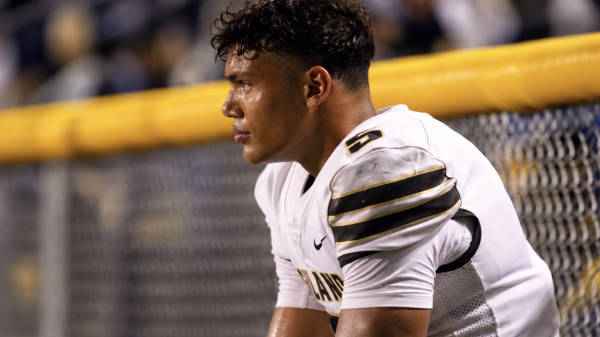


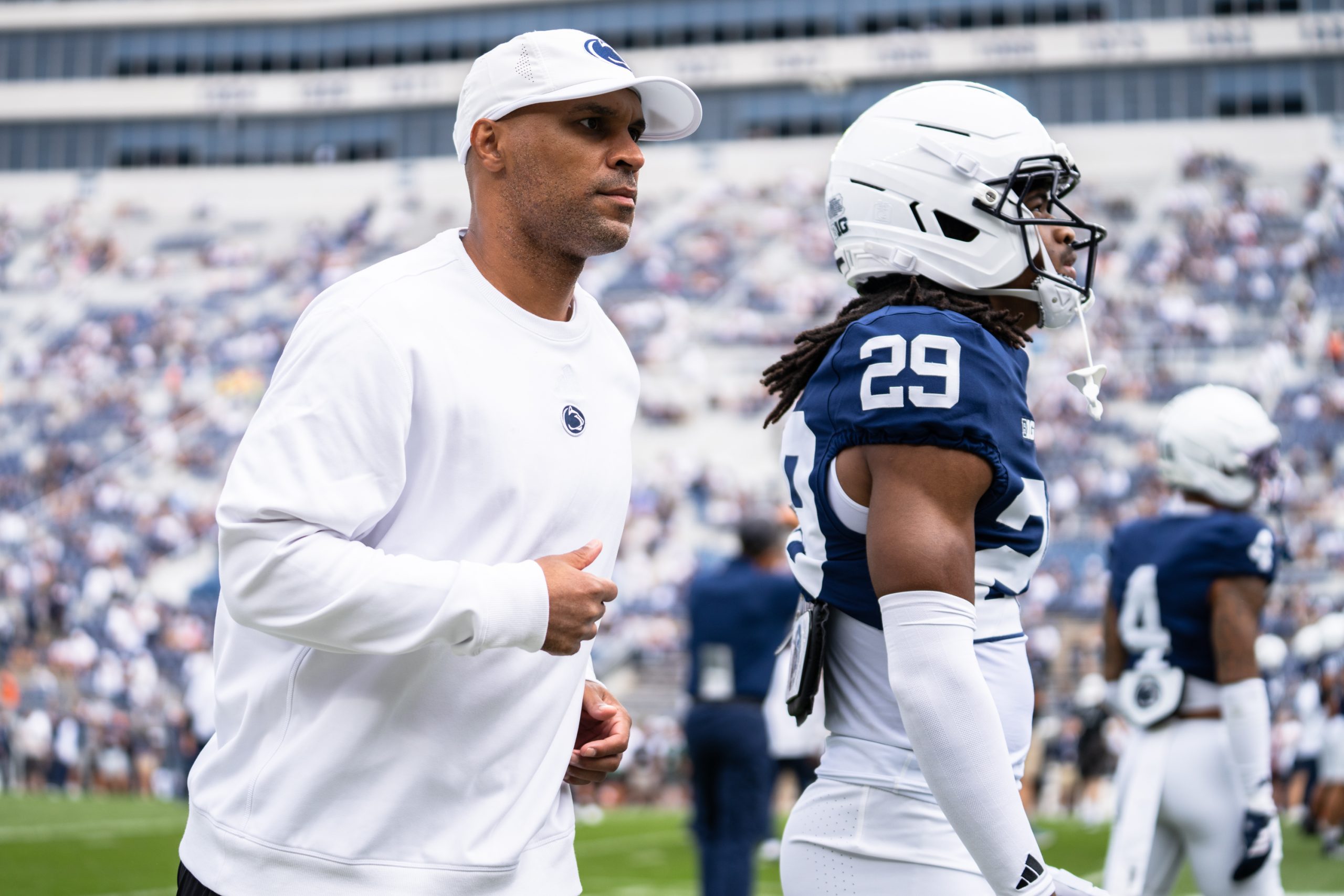
Through three games, there is very little to criticize about the results produced by defensive coordinator D’Anton Lynn’s first season at Penn State.
There are, however, enough details underneath those results to understand why Lynn isn’t treating the Nittany Lions as a finished product.
Penn State enters Big Ten play 3-0 after allowing 22 points across its first three games. The Nittany Lions rank fourth nationally in total defense at 201 yards allowed per game, second in passing defense at 90 yards and third in scoring defense at 7.3 points. The one number that stands apart is rushing defense, where Penn State ranks 51st nationally at 111 yards per game.
Stopping the run matters because Lynn and head coach Matt Campbell believe everything else starts there.
“I think we’ve had our moments,” Lynn said of the run defense. “I think we’ve shown that we can stop the run, but it’s about doing it consistently.”
That might be the most important evaluation of Penn State’s defense through September.
The Lions have been dominant without necessarily being dominant in every individual component.
LYNN’S DEFENSE ISN’T LIVING OFF ONE THING
The encouraging part of Penn State’s start is that Lynn hasn’t needed one superstar or one particular defensive concept to carry his unit.
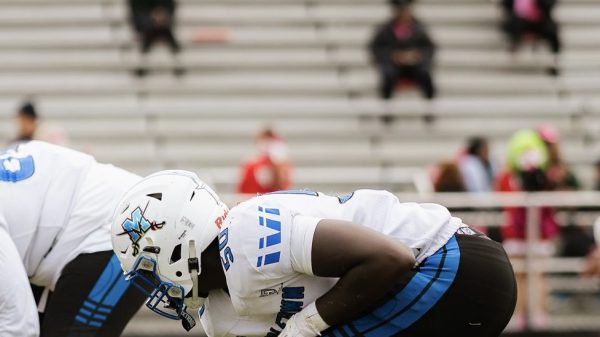
Penn State has also already used tremendous defensive depth. That becomes particularly important up front, where Lynn wants four or five defensive tackles capable of rotating without significantly changing what the defense can call.
Getting defensive tackle Armstrong Nnodim back helps. Lynn acknowledged that injuries forced some defensive tackles to play more snaps than Penn State wanted during the first two weeks.
“You need depth in the Big Ten,” Lynn said. “You need to keep guys fresh.”
The secondary gives him similar flexibility.
Tracy has moved from the slot to outside corner and looked natural enough there that Lynn said corner “is probably his best position.” Josiah Zayas has emerged as one of the defense’s most improved players and offers size, coverage ability and blitzing potential from the slot.
Tyler Armstead has played himself into defensive snaps through his practice and special teams performance.
Lynn can alter the picture without wholesale substitutions or asking players to do things they cannot handle.
THE PASS RUSH IS BETTER THAN FIVE SACKS SUGGEST
The biggest statistical contradiction remains Penn State’s pass rush.
As detailed earlier this week by Nittany Sports Now, Penn State has generated 50 pressures through three games but turned them into only five sacks. The progression has been significant: 17 pressures on 56 pass-rush opportunities against Marshall, 15 on 37 against Temple and 18 on only 34 against Buffalo.
Lynn sees the same distinction.
“Sometimes you can’t just go off sacks,” Lynn said. “I think some of the opponents have done a good job getting the ball out fast. But I feel like we’ve been winning the matchups we need to win.”
Advanced data reinforces that argument.
Yvan Kemajou has 10 pressures; one sack, three quarterback hits and six hurries, while producing Penn State’s best regular pass-rush grade at 72.0. Ike Ezeogu has eight pressures, including seven hurries, and a 71.5 pass-rush grade.
Then there is the collective production.
Penn State has five sacks, but those five are distributed among five players: Kemajou, Rojas, Ebel, Alex Tatsch and Caleb Bacon. Penn State’s official game notes confirm that distribution.
That might ultimately fit Lynn’s defense better than relying on one dominant edge rusher.
 Add Nittany Sports Now as a preferred source in Google! Click here to add us.
Kemajou is particularly intriguing because Lynn can use him in multiple places.
“He has the ability to rush off the edge,” Lynn said. “He’s one of our best guys inside.”
Lynn also praised Kemajou’s heavy hands and ability to disengage against the run despite not being an oversized defensive lineman. His development, Lynn said, has primarily been about turning occasional flashes into consistent production.
The next step is converting disruption into negative plays. Eighteen pressures against Buffalo producing only one sack illustrates both the progress and the remaining opportunity.
THE BACK END HAS BEEN THE CONSTANT
If the pass rush is developing, Penn State’s secondary already looks like the strength everyone expected.
Opponents have completed just 42 of 65 passes for 270 yards through three games, according to Pro Football Focus data. That works out to only 6.4 yards per reception.
More importantly, opponents haven’t found explosive plays consistently.
Penn State ranks No. 2 nationally in passing defense and eighth in explosive-play defensive percentage. Against Buffalo, the Lions allowed only 173 total yards and 60 through the air while holding the Bulls to 1-for-15 on third down.
But Campbell’s point after Buffalo was that the secondary’s success begins before the pass is thrown.
“If you’re going to play great pass defense, you’ve got to be able to play great run defense,” Campbell said.
That brings everything back to Lynn’s original point about consistency.
NOW LYNN GETS A DIFFERENT TEST
Marshall, Temple and Buffalo provided three games to install the defense, experiment with personnel and build confidence.
Wisconsin begins a different phase.
“They’re going to try to punch us in the mouth,” Lynn said. “They’re a physical team. They run the ball downhill.”
Wisconsin quarterback Colton Joseph adds another problem because he can create with his legs. He enters Beaver Stadium after throwing for 362 yards and three touchdowns while rushing for another 46 yards and a score against Eastern Michigan.
That combination attacks precisely what Lynn says Penn State still must prove: stopping the run consistently, controlling a mobile quarterback and creating pressure without compromising the back end.
Three games have provided enough evidence to say Lynn’s defense is working.
Penn State is preventing points, eliminating explosive passes, creating turnovers, developing a deeper rotation and increasingly affecting quarterbacks.
But Lynn understands September statistics aren’t the destination.
“We have the potential to be a pretty good defense,” Lynn said. “But we have to keep on doing that.”
After three games, the potential is obvious.
Big Ten play will determine how much of it is real.