









Longtime Oakland and Los Angeles Raiders owner Al Davis had a firm belief that head coaches had a shelf life before they began to lose their influence over the locker room.
Davis believed that shelf life was 10 years. After that, he felt a head coach’s message began to lose its impact.
That helps explain why Hall of Fame coaches John Madden, who coached the Raiders for 10 seasons, and Tom Flores, who coached them for nine, never went beyond Davis’ preferred timeframe.
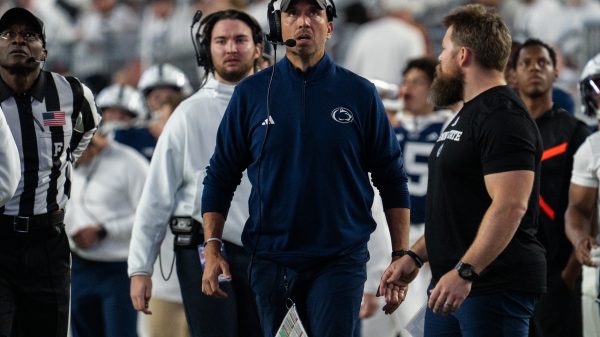
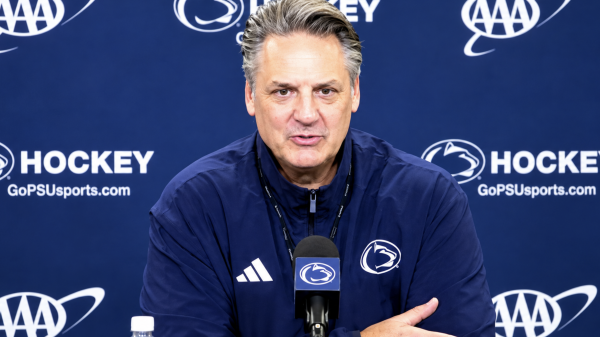
Former Penn State and current Virginia Tech head coach James Franklin has recently been on something of a media barnstorm, offering different details about how his tenure in Happy Valley ended and, perhaps more importantly, how he feels about it now.
Some may view it as Franklin fully processing his emotions, mental state and decisions after the 2025 season unraveled and ultimately led to his firing.
One new wrinkle to emerge from Franklin’s introspection is his regret that he did not leave Penn State on his own terms and the possibility that he simply stayed too long.
“I say that because of how it ended,” Franklin told The Athletic. “I didn’t feel like that at the time because when all these opportunities came, I turned them down because we were so close.”
One opportunity Franklin mentioned was USC in 2021.
Penn State went 11-11 over the two seasons following its 2019 Cotton Bowl triumph, although the COVID-19 pandemic prevented those results from significantly damaging Franklin’s reputation.
But what if Franklin had taken the USC job in 2021? How would that decision have shaped college football? Where would Penn State be today?
Let’s explore.
1. Penn State Doesn’t Have Its Most Successful Three-Year Run

PASADENA, CA – JANUARY 02: Penn State Nittany Lions quarterback Sean Clifford (14) celebrates with a rose in his mouth after the Rose Bowl game between the Penn State Nittany Lions and the Utah Utes on January 2, 2023 at the Rose Bowl Stadium in Pasadena, CA. (Photo by Ric Tapia/Icon Sportswire)
Franklin’s motivation helped produce one of the most successful stretches in Penn State history.
From 2022 through 2024, PSU won 34 games, the most victories in a three-year span in program history. Penn State’s previous high was 32 wins from 1972 through 1974.
That run was fueled by Franklin’s success on the recruiting trail. Penn State landed quarterback Drew Allar, running backs Kaytron Allen and Nicholas Singleton, tight end Tyler Warren and EDGE Abdul Carter.
It is difficult to imagine another coach available during that hiring cycle matching Franklin’s recruiting success or keeping that group together.
Without Franklin, Penn State likely doesn’t experience the same three-year run.
2. The Coaching Carousel Changes Completely

LOS ANGELES, CA – SEPTEMBER 28: USC Trojans head coach Lincoln Riley during the college football game between the Wisconsin Badgers and the USC Trojans on September 28, 2024, at the Los Angeles Memorial Coliseum in Los Angeles, CA.(Photo by Jevone Moore/Icon Sportswire)
Those who remember the 2021 coaching carousel know how chaotic it became.
Notre Dame lost Brian Kelly to LSU. USC poached Lincoln Riley from Oklahoma, which then hired Clemson defensive coordinator Brent Venables.
Miami fired Manny Diaz, who joined Franklin’s staff as Penn State’s defensive coordinator in 2022. The Hurricanes replaced Diaz with Oregon coach Mario Cristobal, who had played on two Miami national championship teams under Dennis Erickson.
Oregon responded by hiring Georgia defensive coordinator Dan Lanning.
Washington hired Kalen DeBoer, and, perhaps unsurprisingly, Florida was also searching for another head coach.
Would Penn State have been attractive enough to convince Riley to leave Oklahoma?
I doubt it. Much like USC is discovering now, Riley has never appeared to be an ideal cultural fit for that program.
Would Penn State have identified Lanning? More importantly, would the Nittany Lions have been willing to brand and spend the way Oregon has?
If you believe Franklin, securing the necessary resources was always an uphill battle. If you believe athletic director Pat Kraft and his predecessor, Sandy Barbour, Penn State spared no expense when it came to the football program.
 Add Nittany Sports Now as a preferred source in Google! Click here to add us.
Could Penn State have used its “Linebacker U” identity to lure Venables away from Clemson if the Oklahoma job had never opened?
There are several intriguing possibilities, but no obvious answer.
3. The Danger of Becoming the Next Nebraska

Nebraska coach Scott Frost.
Under Bob Devaney and Tom Osborne, Nebraska was an absolute juggernaut in the Big 8 and later the Big 12.
When the program began to struggle under Frank Solich, Nebraska lost more than the foundation that had made it one of college football’s elite programs. It appeared to lose part of its identity and soul, something the Cornhuskers have spent decades trying to rediscover.
Franklin had his shortcomings, but his run from 2016 through 2019 was Penn State’s most successful stretch since the program’s national championship years under Joe Paterno in the 1980s. PSU won 11 games in three of those four seasons.
Franklin then had to navigate the COVID-19 pandemic, which disrupted what could have been a championship-caliber team and one of the deepest rosters Penn State had assembled in years. He also had to manage the aftermath of that lost momentum.
Had Franklin left after the 2021 season, Penn State’s rebound may never have happened.
The program could have entered a downward spiral similar to the one Nebraska has spent years trying to escape.
4. Franklin at USC
Lincoln Riley enjoyed immediate success during his first season at USC because he was able to import an eventual Heisman Trophy-winning quarterback in Caleb Williams, a Biletnikoff Award-winning receiver in Jordan Addison and a collection of other high-end offensive transfers.
Franklin likely wouldn’t have enjoyed that same level of immediate portal success.
What he may have done, however, is something Riley has continued to struggle with: establishing control over southern California recruiting.
Franklin’s ability to build relationships and develop legitimate recruiting pipelines could have changed USC’s trajectory. The Trojans potentially could have become a consistent playoff threat under Franklin.
Of course, USC fans may eventually have grown frustrated by the same big-game shortcomings that wore down Penn State fans toward the end of Franklin’s tenure.
The location would have changed, but the conversation surrounding Franklin may have remained remarkably similar.
5. Where Would Penn State Be?
It is difficult to determine whom Penn State would have hired following Franklin’s departure.
I firmly believe Brent Pry still would have taken the Virginia Tech job, eliminating Penn State’s most legitimate in-house candidate.
Had Penn State landed Riley, Lanning or Venables, there likely would have been growing pains. By 2025 or 2026, however, the program would have reached a point where making the College Football Playoff became an expectation rather than a possibility.
But if Penn State had failed to land a major name, the threat of a prolonged decline would have been real.
Would the university currently be in the middle of a Beaver Stadium revitalization project costing more than $700 million?
Would Sandy Barbour have remained athletic director longer, or would the position still have been attractive enough to bring Pat Kraft to Penn State?
Perhaps there would have been an entirely different athletic director and head coach that are mystery options we can’t realistically identify.
Franklin may now believe he stayed too long, and considering how his tenure ended, that feeling is understandable.
But Penn State also benefited tremendously from the years he chose to stay.
He rebuilt the roster, produced the most successful three-year stretch in program history and helped position Penn State to make the type of financial commitment to football that many had demanded for years.
Franklin may regret not leaving on his own terms.
Penn State, however, may have been fortunate that he didn’t.