








Penn State is back in the rankings.
Ok, it’s probably not the rankings you’re thinking of.
No, Penn State won’t be in the AP Top 25 or the Coaches Poll.
But in ESPN’s FPI rankings, Penn State is No. 22, curiously ahead of Northwestern, which beat Penn State by 28 Oct. 2, and UCLA, which is 10-0 and No. 4 in the College Football Playoff rankings. Other Big Ten teams represented are No. 19 USC, No. 18 Nebraska, No. 17 Iowa, No. 9 Oregon (which has three losses), No. 8 Indiana and No. 5 Ohio State (which also has three losses).
It’s reasonable to be confused, so here’s how FPI works.
HOW IT WORKS
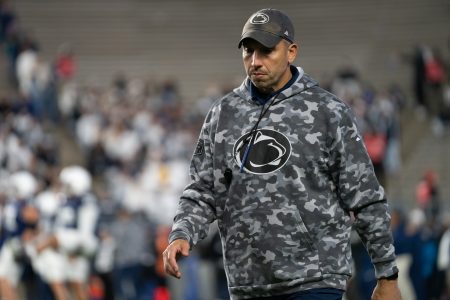
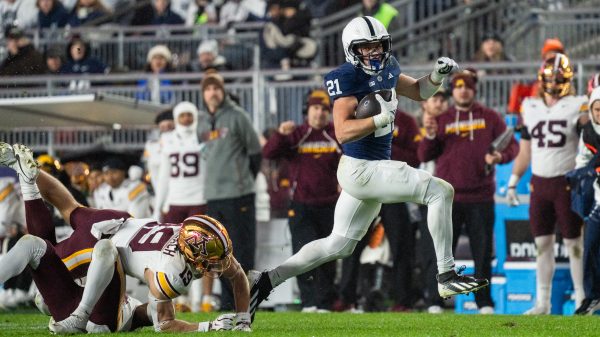
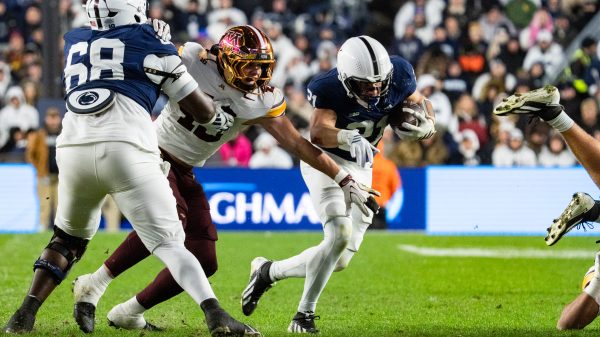
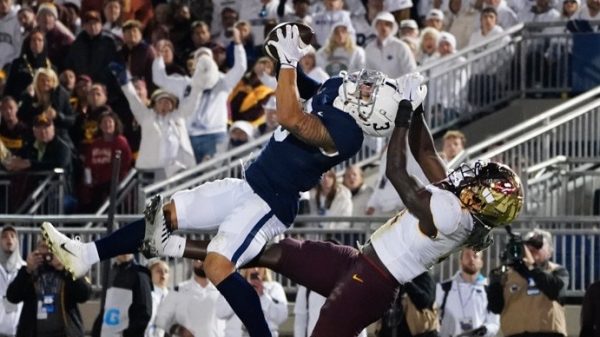
Photo by Matt Lynch, Nittany Sports Now
FPI is just one system that, like any other system, has its flaws.
It really isn’t that big of a deal.
 Add Nittany Sports Now as a preferred source in Google! Click here to add us.
By definition, FPI is a “predictiverating system developed by ESPN that measures team strength and uses it to forecast game and season results in American football. Each team’s FPI rating is composed of predictive offensive, defensive, and special teams value, as measured by a function of expected points added (EPA). That rating is the basis for FPI’s game-level and season-level projections.”
A great example of FPI being weird took place last season.
After losing to Indiana to drop to 3-6, Penn State still was No. 21 in the FPI rankings, and it was relevant enough for IU coach Curt Cignetti to cite when talking about PSU.
“They’re in the top 25 in the ESPN [College] Football Power Index,” Cignetti said at his weekly press conference before the Penn State game. “Still the same guys they started the year with for the most part that was ranked No. 1 to No. 3 in the country. So a lot of good football players at all positions, playing really hard.”
PENN STATE IS STILL PLAYING WELL
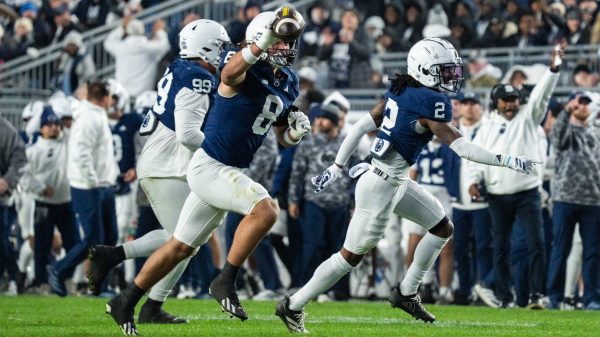
Although FPI is flawed, it’s hard to argue that Penn State isn’t one of the hottest team in the country.
Three straight wins against Big Ten teams by an average of more 15 points is solid, and Penn State will look to keep that going for the rest of the regular season.