


















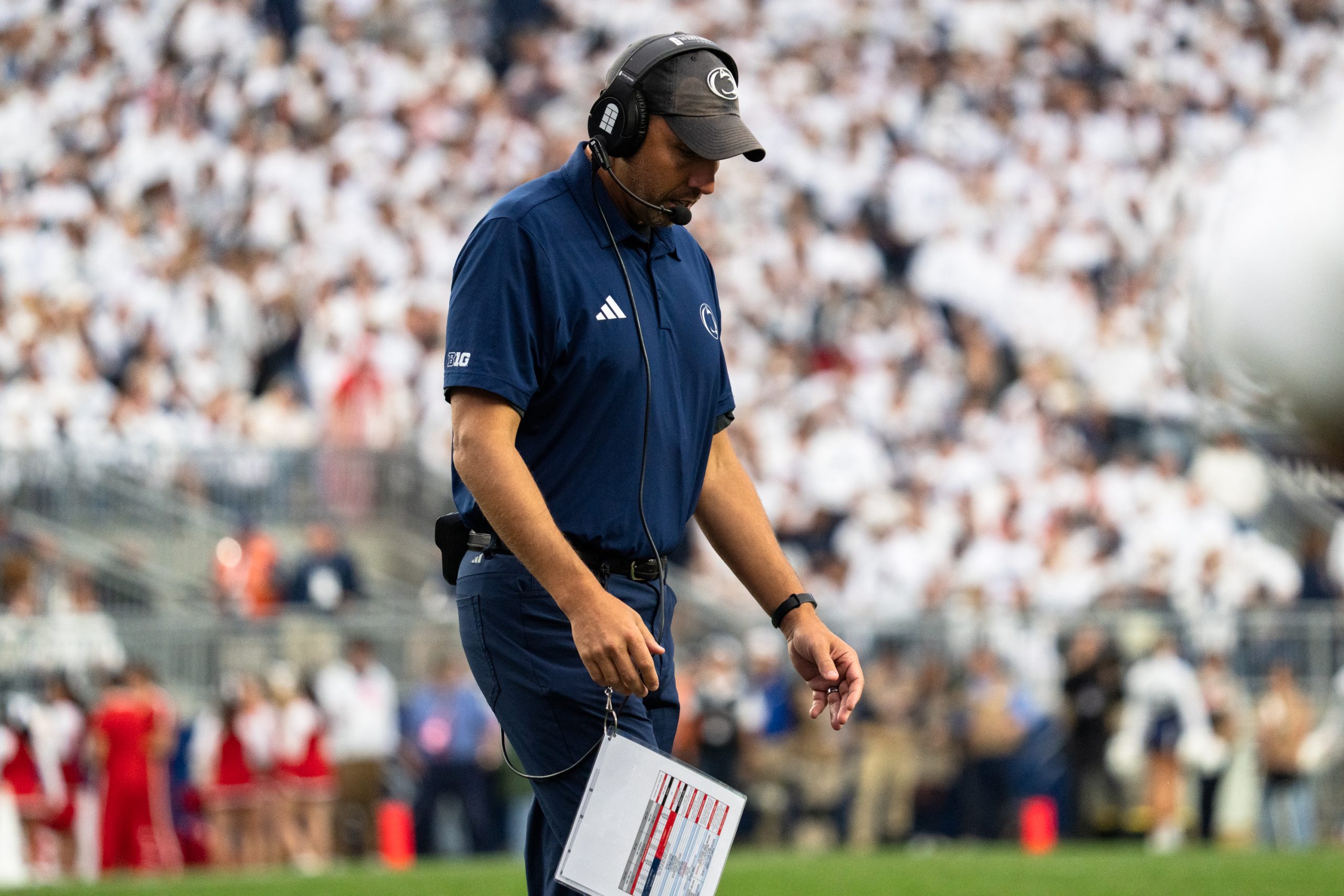
UNIVERSITY PARK, Pa. — A few weeks ago, I ranked Penn State’s five worst losses of the last decade.
I need a new No. 1.
Rutgers’ 25-24 victory at Beaver Stadium belongs above every game on that list.
Above the Michigan beatdowns.
Above nine overtimes against Illinois.
Above Northwestern running through Penn State earlier this season.
Even above the UCLA disaster that helped send this program toward a coaching change last season.
For my money, this is the worst of them.
Consider who walked into Beaver Stadium and won.
Rutgers entered 2-8. It had lost to UMass to begin the season. Its defense was allowing more than 191 rushing yards per game. Its leading receiver, KJ Duff, was unavailable because of an ankle injury. Quarterback AJ Surace was playing with broken ribs and, according to Greg Schiano, threw zero passes in practice all week.
Penn State was favored by 24.5 points.
According to ESPN Insights, Rutgers’ victory tied the second-largest upset by an FBS team this season. Since the beginning of last season, Penn State has lost three games as a favorite of at least 20 points. The rest of the FBS has six such losses combined.
Sit with that.
One program accounts for a third of those defeats.
Penn State even built a 16-0 lead Saturday before finding a way to lose to Rutgers for the first time since 1988.
How many advantages does this program need before somebody accepts responsibility for using them?
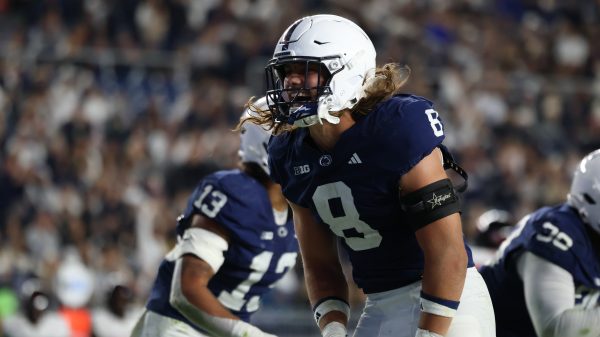
Afterward, I asked defensive end Ike Ezeogu a question that went beyond the final touchdown, the lateral or the uncovered receiver on the deciding two-point conversion.
“With so much movement in college football and players coming from different programs, does this team understand the significance of losing to Rutgers, something that hadn’t happened to Penn State since the late 1980s?”
His answer should bother everyone responsible for this program.
“I feel like the mentality was a little wrong at the beginning of the game — not really the beginning of the game, but throughout the whole week,” Ezeogu said.
“Just the way Rutgers’ mentality was, the way our mentality was, I feel like their mentality was just a little different.”
Throughout the whole week.
Penn State had already endured a four-game losing streak. It had already received enough painful instruction about preparation and finishing games to fill an offseason.
And somehow, the mentality was still wrong for Rutgers.
Ezeogu deserves credit for answering honestly. His answer also exposes how far this team remains from understanding the place it represents.
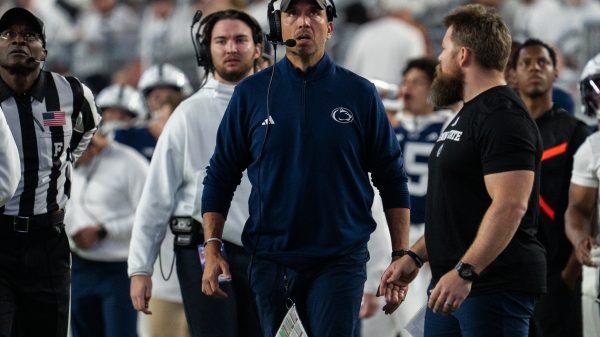
Matt Campbell has called Penn State’s history its “superpower.” He has spoken about the former players whose work created the opportunities available to the men wearing the uniform today.
Saturday made me question how much of that message has actually reached this team.
Superman’s strength carries an obligation to use it. Penn State’s advantages carry an obligation, too: prepare properly, respect the opponent and uphold the standard that made those advantages possible.
You cannot put on the cape and assume the work is finished.
The helmet does not make the tackle. The history does not convert fourth-and-1. Former players cannot come out of the stands and cover somebody on a two-point conversion.
The current team has to earn its place in that history.
Campbell’s postgame answers offered little reassurance.
 Add Nittany Sports Now as a preferred source in Google! Click here to add us.
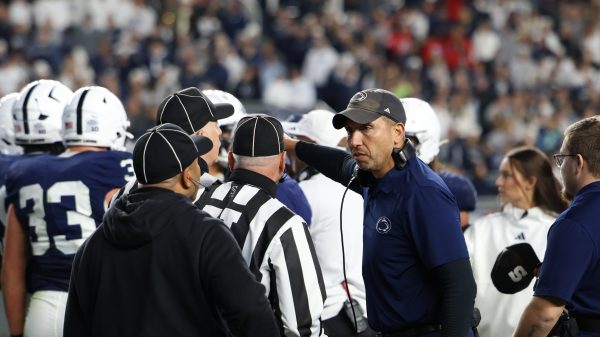
He accepted responsibility for the preparation and repeatedly put the failure on himself. It would be unfair to suggest he blamed everyone else.
But the repeated promises to evaluate film, identify inconsistencies and find answers later read as painfully inadequate for the occasion.
“To me, our ability to do hard things is still escaping this team,” Campbell said.
It is late November.
How is that still the diagnosis?
I cannot tell you Campbell does not care. His answers, however, read as detached from the magnitude of what happened. There was an almost apathetic quality to the familiar explanations, even as he accepted blame.
A program can only hear that it needs to learn how to finish so many times before the obvious question becomes why its coaches have failed to teach it.
The discussion reminded me of what happened at LSU after Sam Leavitt left the field before the alma mater following the Texas loss. His response to questions about it intensified criticism over whether players arriving through the transfer portal understood the school they represented. Kiffin subsequently defended Leavitt and disputed the expectation that LSU traditionally sings after losses.
Still, the underlying question is legitimate at both schools.
How do you make a collection of players understand their responsibility to a place?
I am not trying to make Lane Kiffin a bastion of everything Campbell should become. His own team had just surrendered a late lead against Texas.
But Kiffin’s explanation conveyed an unmistakable understanding of what LSU had let slip away.
“We’re not going to f—king cover the guy?” he recalled thinking.
Then came the part about the supporters who had invested their energy in that night: “I just felt really upset that we couldn’t win the game for them.”
The profanity is incidental. The specificity matters.
He connected a football failure to the players’ work and the people who cared about the result. He understood what had been wasted.
Penn State wasted plenty Saturday, too.
And while Campbell will receive the patience generally afforded a first-year coach, Pat Kraft cannot use that same protection.
Kraft led the coaching search.
Kraft chose the direction.
When Penn State dismissed James Franklin, Kraft said the change was intended to advance the program toward Big Ten and national championships. Those were his stated expectations.
He bears full responsibility for the leadership decision and for demanding evidence that it is working.
That does not require declaring Campbell’s tenure finished after one season. It requires refusing to make the first year an exemption from accountability.
Onward State circulated footage of Kraft’s reaction after the loss. Whatever he was thinking in that moment, the question hanging over his leadership is now unavoidable: Has his chosen direction moved Penn State any closer to the standard he promised?
A camera cannot establish that Kraft recognizes the failure of his approach. The result should force him to confront it.
His program just lost at home to a depleted Rutgers team whose quarterback could not throw a practice pass all week.
Penn State had the resources. It had the lead. It had every reason to understand the consequences of letting another opponent survive.
Rutgers had the better mentality.
That is Ezeogu’s assessment of the week, and it is the most damning explanation anyone offered.
Campbell knows how to describe Penn State’s superpower.
Now he and Kraft have to answer for a team that still does not understand the responsibility of possessing it.