





UNIVERSITY PARK, Pa. — One play can change the perception of an entire performance.
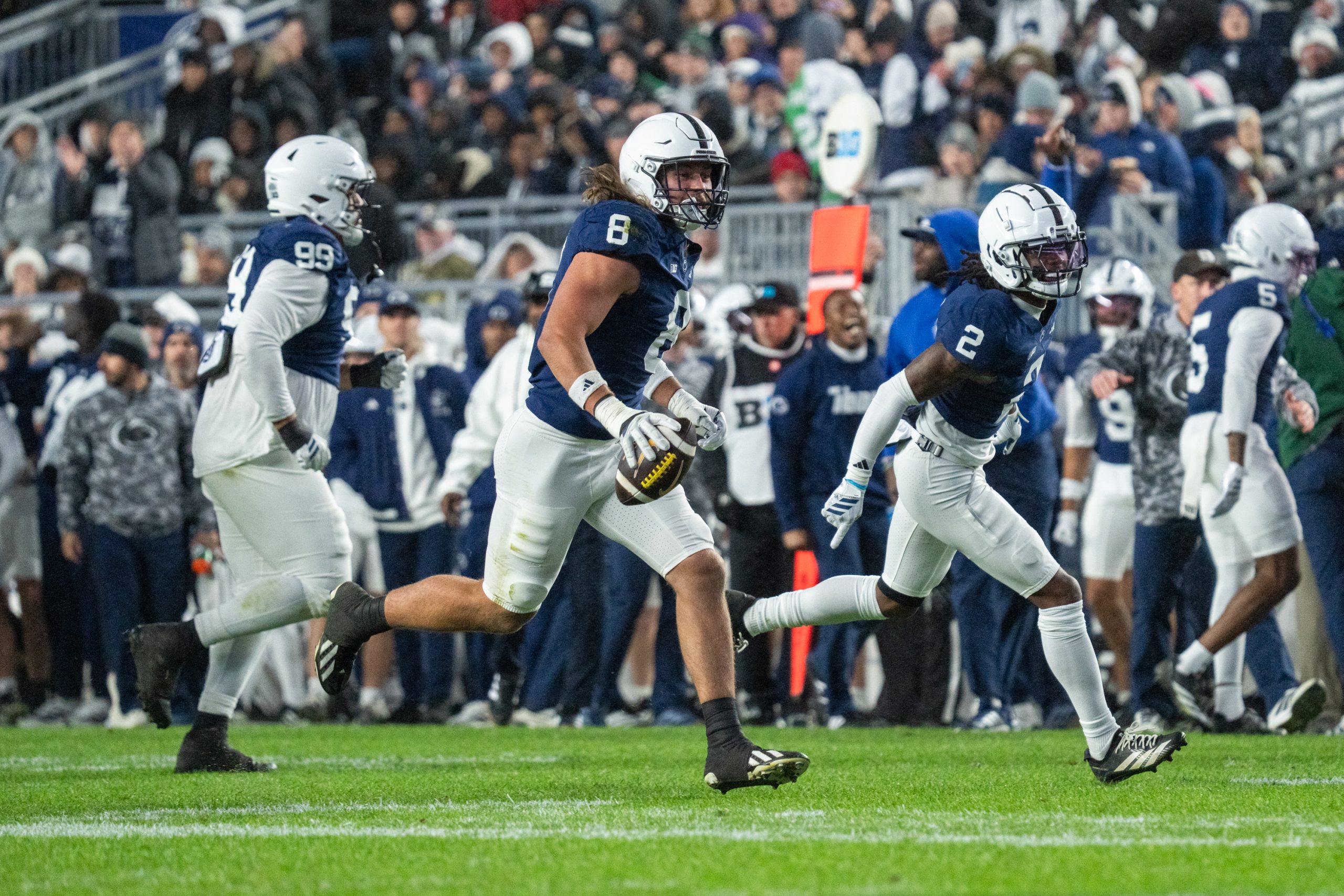
For Penn State linebacker Kooper Ebel, the final seconds of Saturday’s stunning 25-24 loss to Rutgers threatened to overshadow what had otherwise been the best tackling performance of his collegiate career.
While the conversation surrounding Ebel has centered on Rutgers’ improbable lateral touchdown, the bigger story may be how far the senior linebacker has come and what his development means for Penn State’s defense.
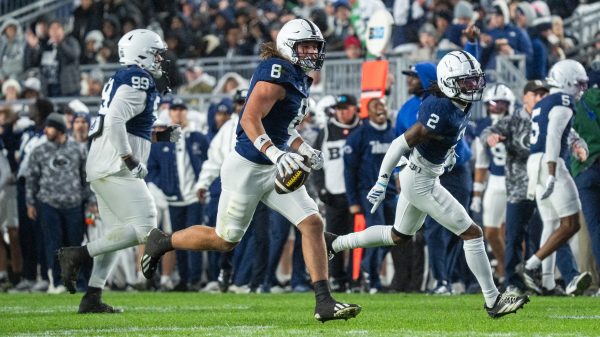
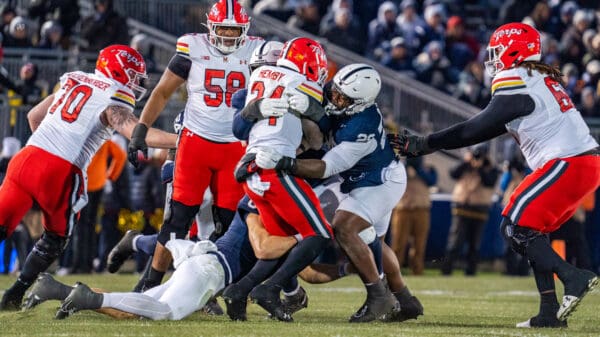
Ebel finished Saturday’s contest with a career-high 14 tackles, including five solo stops, nine assists, a tackle for loss, a pass breakup and a quarterback hurry.
His previous career high was 11 tackles, achieved twice, most recently against Northwestern earlier this season.
Alongside Tony Rojas, who recorded 15 tackles, Ebel helped Penn State accomplish something it hadn’t done since 2012. The duo became the first Nittany Lion teammates to record at least 14 tackles apiece in the same game since Gerald Hodges and Glenn Carson accomplished the feat against Nebraska.
But Ebel’s growth goes beyond the traditional statistics.
According to Pro Football Focus (PFF), Ebel earned an 86.0 tackling grade against Rutgers, his highest of the season, while playing 74 defensive snaps.
He also registered an 80.0 run-defense grade and a 74.2 overall defensive grade.
Perhaps most significantly, PFF credited Ebel with zero missed tackles.
For a linebacker who has worked extensively to improve his tackling fundamentals, those numbers represent meaningful progress.
His season-long tackling grade now sits at 65.8, a considerable improvement from his 45.7 mark at Iowa State last season.
The improvement becomes even more apparent when examining his missed-tackle percentage.
In 2024, Ebel missed 24.7% of his tackle opportunities, according to PFF, and improved to 20.0% in 2025.
To provide context, anything above 20% is poor, 10% is good, and anything under 8% is elite.
This season it has dropped to 13.4% overall with PFF crediting Ebel with no missed tackles in three of the last four games.
These are not insignificant improvements. They represent a player becoming more reliable at one of the position’s most fundamental responsibilities: finishing tackles.
For Rojas, who has played alongside Ebel throughout the season, that development has been impossible to ignore.
“Yeah, shout out to him. I think he’s one of the biggest risers on our team,” Rojas said following the Rutgers loss.
Rojas pointed to Ebel’s willingness to accept criticism early in the season and continue working through the details rather than allowing those struggles to define him.
“Maybe he doesn’t get looked at as much as everybody else, but he was getting critiques earlier in the season, and he kept showing up,” Rojas said.
“Whether it was at practice, in the film room or wherever, he just kept wanting to get better.”
 Add Nittany Sports Now as a preferred source in Google! Click here to add us.
That improvement hasn’t happened by accident.
Rojas credited Ebel’s work with linebackers coach Tyson Veidt and assistant Dan Connor, along with additional practice repetitions focused on fundamentals, including work on the tackling sled.
“I think he’s one of our better players on the team, and that’s why it’s showing up every day, because of the work he puts in,” Rojas said.
That workload and production provide evidence of a player increasingly capable of handling significant responsibilities within Penn State’s defense.
Still, the Rutgers loss illustrates the unforgiving nature of football.
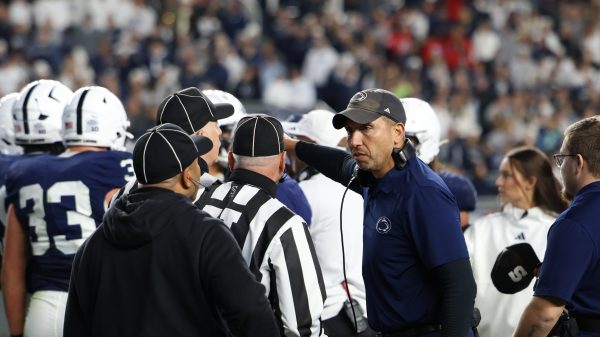
Ebel found himself involved in the final touchdown sequence, when Rutgers running back Antwan Raymond lateraled the ball to Ben Black III, who scored as time expired.
The play ultimately helped turn Penn State’s 24-10 fourth-quarter advantage into a one-point defeat.
Ebel acknowledged afterward that he wished he had knocked the initial pass down before Raymond had an opportunity to lateral.
Rojas, however, refused to allow the responsibility for the defeat to fall on one player.
“I don’t think he’s down on himself. Obviously, he wishes he could have it back, but it’s on all of us,” Rojas said.
“We have to rally to the ball and not put it in the hands of the referees to decide whether it’s a touchdown or not.”
That perspective is important because Penn State’s defensive struggles against Rutgers extended beyond the final sequence.
The Nittany Lions surrendered two fourth-quarter touchdown drives, including a 19-play possession that consumed 9:38 and allowed Rutgers to get back within seven points.
There are certainly lessons to be learned from Saturday’s finish, and Ebel isn’t exempt from them.
But evaluating his season through the lens of one play would overlook the larger body of work.
At a position where consistency, technique and physicality often determine success, Ebel has made measurable strides in each area.
His improvement has been recognized by his teammates, supported by the advanced metrics and demonstrated through a career-best tackling performance.
Penn State couldn’t finish the job against Rutgers.
But for Ebel, the journey from a linebacker struggling with missed tackles to one becoming an increasingly dependable presence in Penn State’s defense deserves recognition beyond the outcome of one unforgettable play.