









There are moments in football that remind everyone the game is only part of the story.
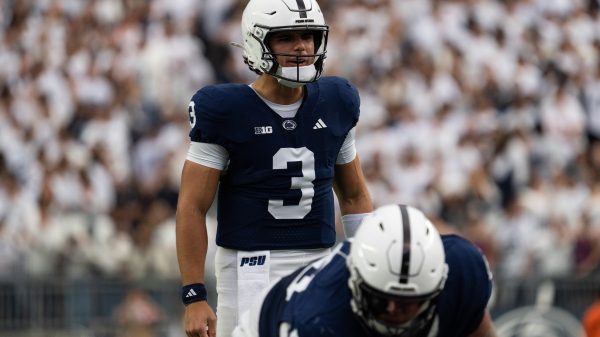
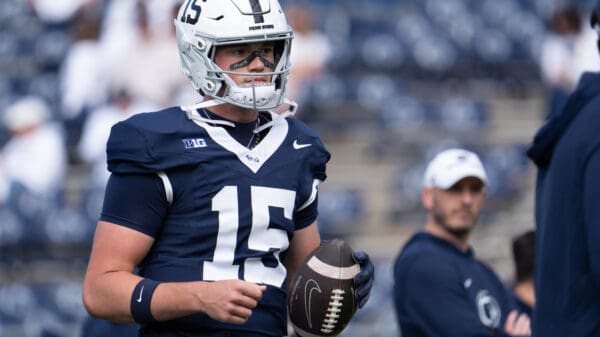
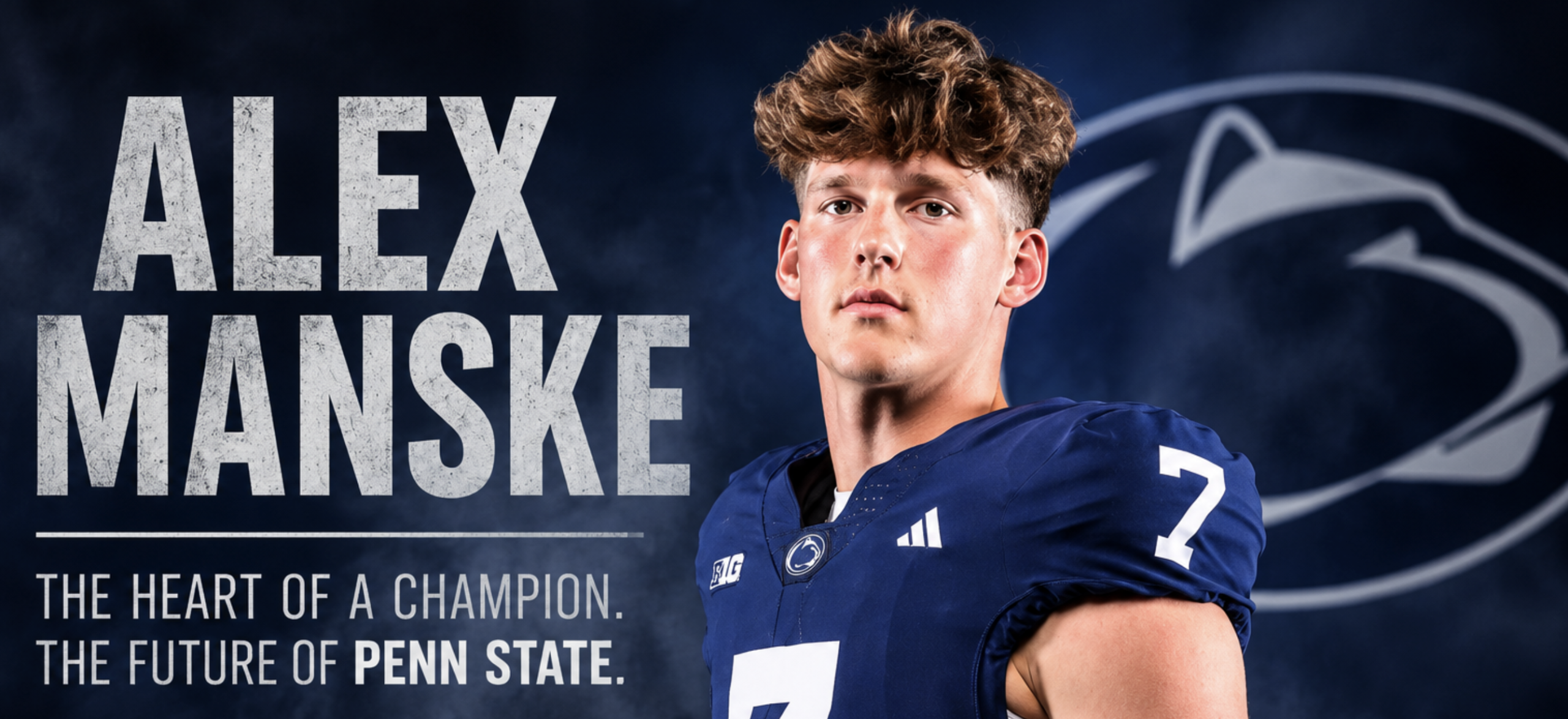
Penn State quarterback Alex Manske’s journey back from open-heart surgery is one of those moments.
Five months ago, the future of one of Penn State’s most promising young quarterbacks wasn’t measured in touchdowns or depth charts. It was measured in heartbeats.
A routine echocardiogram after arriving in State College revealed something no one expected. Manske had a dilated aortic root and a dilated ascending aorta, a condition he never knew existed because he had never experienced a single symptom. Left undiscovered, one hit to the chest on a football field could have changed everything.
Instead of preparing for spring practice, Manske was preparing for open-heart surgery at the Mayo Clinic.
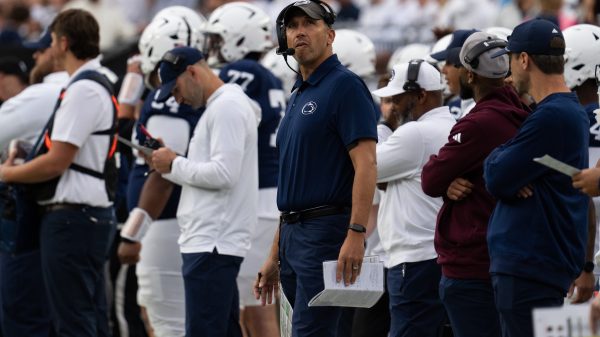
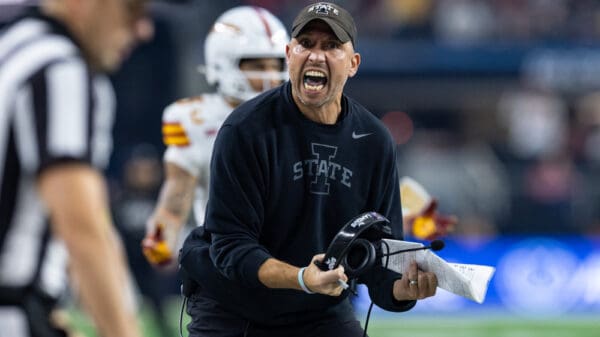
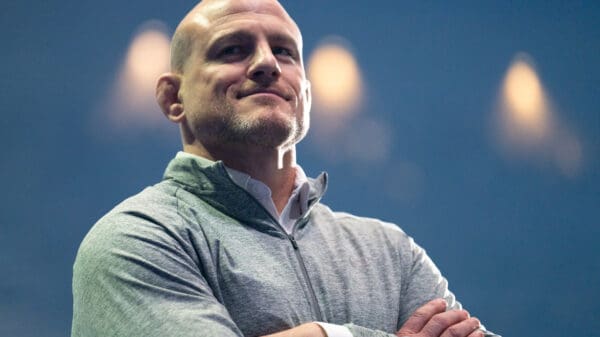
For Matt Campbell, however, the diagnosis never changed the way he viewed the quarterback he had recruited years earlier at Iowa State.
Speaking Thursday, Campbell reflected on watching Manske endure one of the most difficult stretches imaginable.
“Had such a connection for three years, you know, with his family and what they’re about. Him choosing to come to Iowa State was a big deal for us. We watched him go through a really tough surgery at the end of his high school career. I think I talked a little bit about that. He had the same injury that Brock did, and his high school career got cut short.
“He comes to Iowa State and had to sit out the spring, trying to come back from that. To watch him work to come back and get the season last year, it felt like he just kept getting better through the fall, but he didn’t get the spring. To watch him emotionally and mentally, the taxing aspect of wondering, ‘Are you even going to be able to play football again?’ He’s worked so hard to get to this point.
“Knowing what that family went through, I think heart surgery, let alone the sport of football, is scary. I think there were some scary moments pre-surgery. There were scary moments post-surgery, just fighting back from it. I just think it tells you the mentality of this kid. Not only to be able to go through it, but where he is today, it’s a miracle. It’s a blessing, and we’re all really grateful for it.”
Campbell’s words carried the weight of someone who had witnessed far more than a quarterback developing on the field. He had watched a young man stare directly into uncertainty.
The day Manske received the diagnosis still feels surreal.
After a workout inside the Lasch Building in February, Penn State director of football sports medicine Joe Resendez asked him into his office. The news was immediate and life-changing. Football was put on hold. Open-heart surgery was unavoidable.
Like anyone in that situation, Manske’s mind immediately raced.
He called his parents.
Thirty minutes later, Campbell asked him to come to his office.
Rather than discussing football, Campbell offered something much more valuable: certainty.
“I know this isn’t the end,” Campbell told him. “You have a lot more football in you.”
Those words became the foundation of all the hope and belief Manske needed in one of his most trying times.
That didn’t mean there weren’t difficult nights. Manske admitted he spent evenings searching the internet, trying to understand every possible outcome. His thoughts naturally drifted toward worst-case scenarios. His mother later confessed she privately feared her son might never play football again.
Yet the people around him never allowed those fears to define him.
Resendez presented a recovery plan from the beginning with Campbell reinforcing it.
Quarterbacks coach Jake Waters, offensive coordinator Taylor Mouser, teammates and family continually reminded Manske that his story wasn’t ending, it was simply taking an unexpected detour in life.
On March 16, surgeons at the Mayo Clinic removed the weakened portion of his aorta and replaced it with a graft.
 Add Nittany Sports Now as a preferred source in Google! Click here to add us.
Just days later, he returned home to Iowa to begin cardiac rehabilitation.
For one of the best athletes on Penn State’s roster, recovery became an exercise in patience.
Instead of competing against Big Ten defenders, he found himself doing cardio alongside patients decades older than him.
“They were all looking at me wondering what I was doing there,” Manske joked.
Little by little, the milestones returned of throwing a football, lifting weights, increasing his workload.
Finally, the words he had waited months to hear arrived during a follow-up appointment at the Mayo Clinic.
If there had been a game in three weeks, doctors would have cleared him to play.
Today, Manske once again looks like the quarterback Penn State envisioned when he followed Campbell from Iowa State.
His nine-inch scar remains.
So does a perspective that few 20-year-olds possess.
Rather than seeing the scar as a reminder of fear, Manske sees it as proof of grace.
Without Penn State’s entrance physical and mandatory heart screening, he may never have known the condition existed. Iowa State did not perform the same echocardiogram. Had he stayed in Ames, the diagnosis might never have come.
That realization has transformed the way he views his future.
Manske now hopes to advocate for greater heart screening among young athletes because he understands firsthand that not everyone gets a second chance.
Football has always celebrated toughness, playing through pain, fighting through adversity, and competing when everything hurts.
Alex Manske’s story reminds us that true toughness sometimes looks very different.
Sometimes it means trusting doctors, coaches, and family.
Sometimes it means trusting that tomorrow is still possible when today feels overwhelming.
Campbell called Manske’s return “a miracle.”
On a football field, miracles are often described as impossible catches or game-winning touchdowns.
This one happened in an operating room.
And because of it, Penn State’s quarterback of the future still has every opportunity to write the rest of his story.